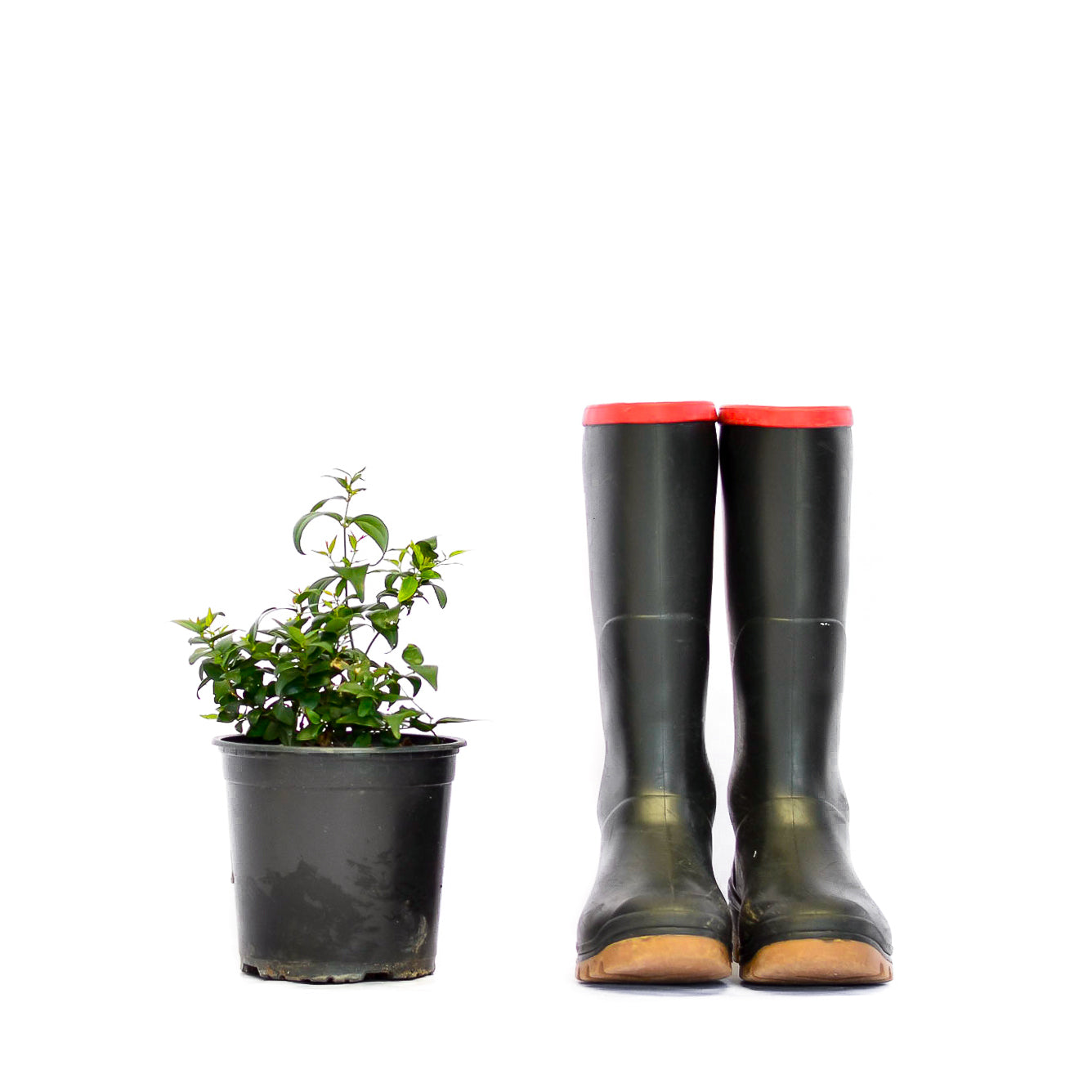
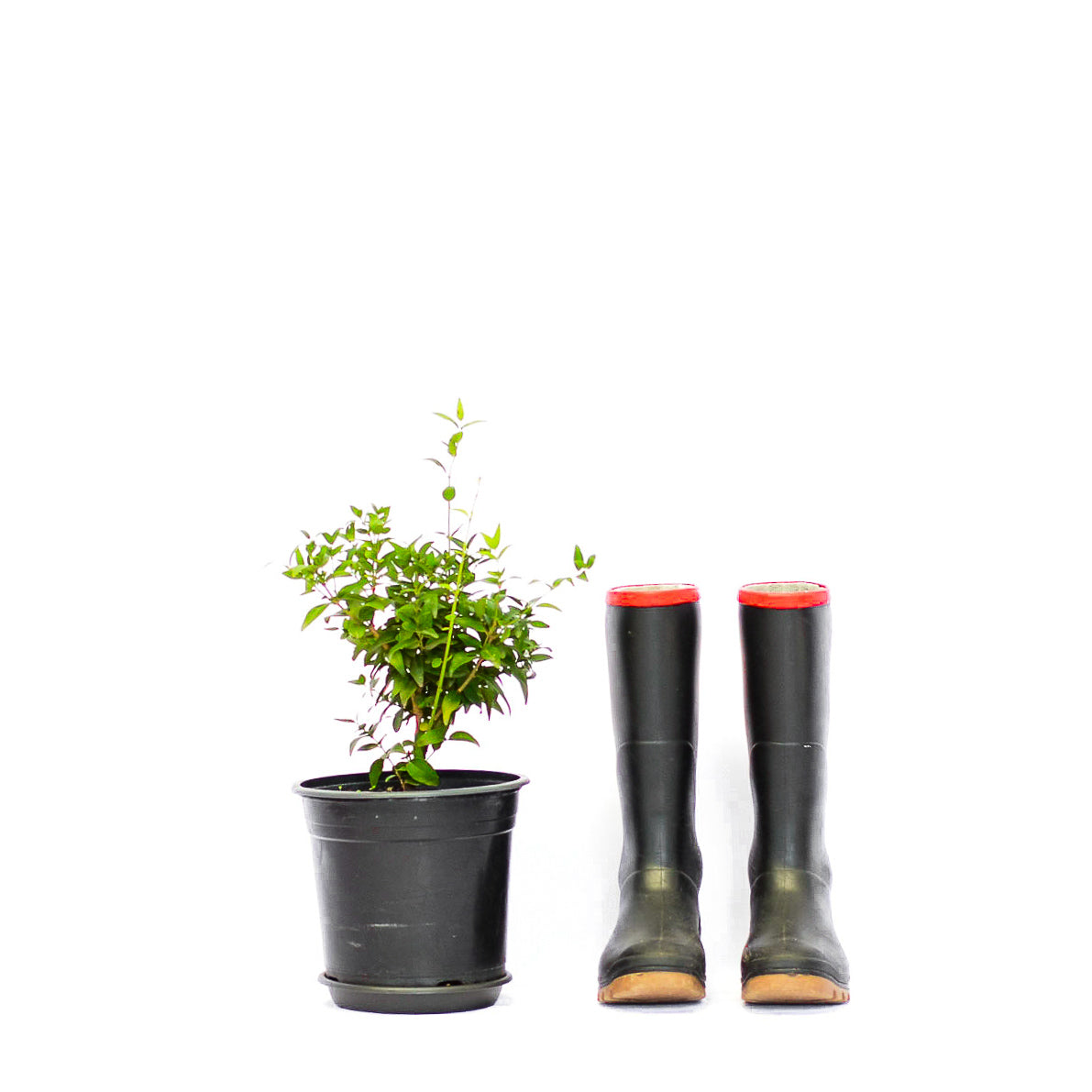
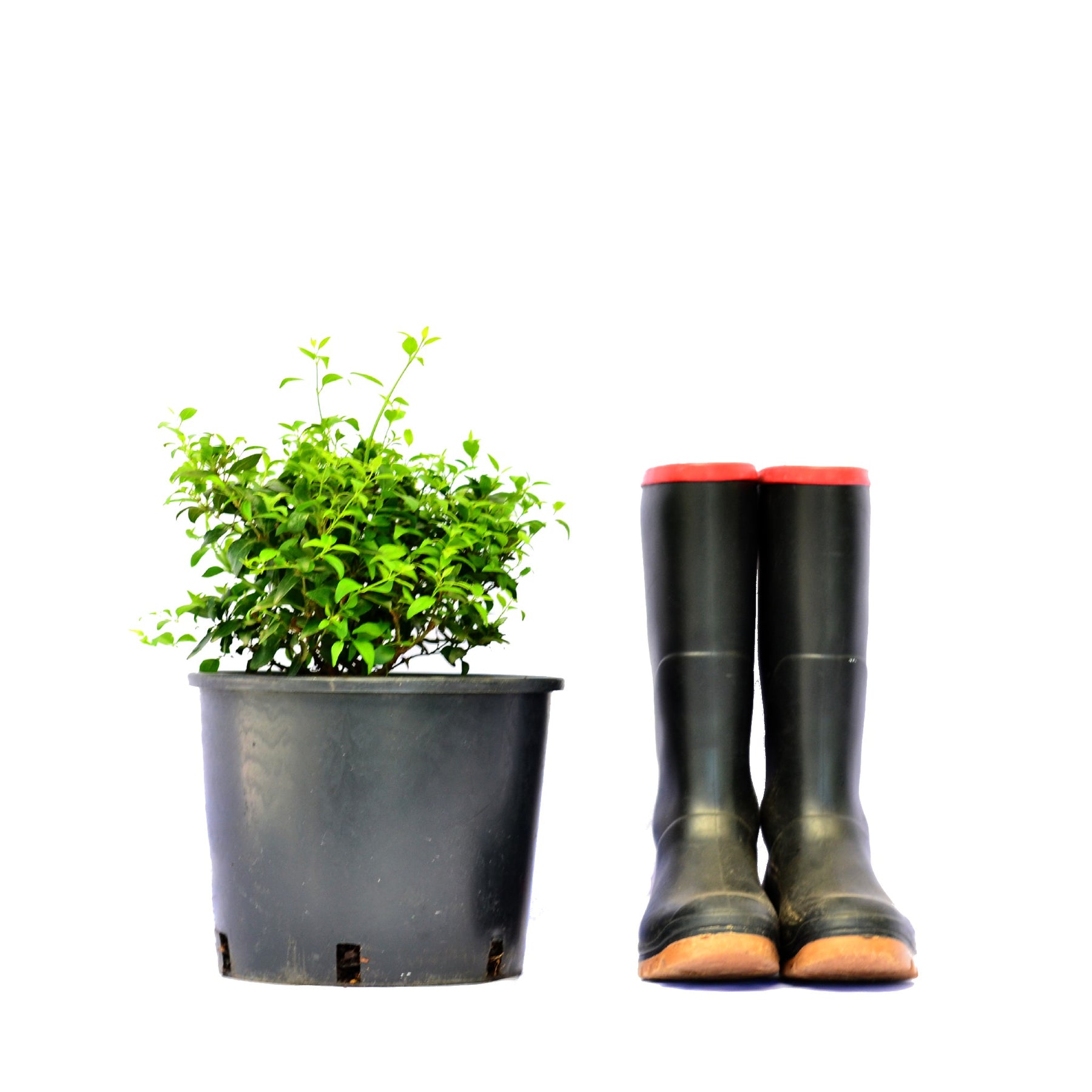
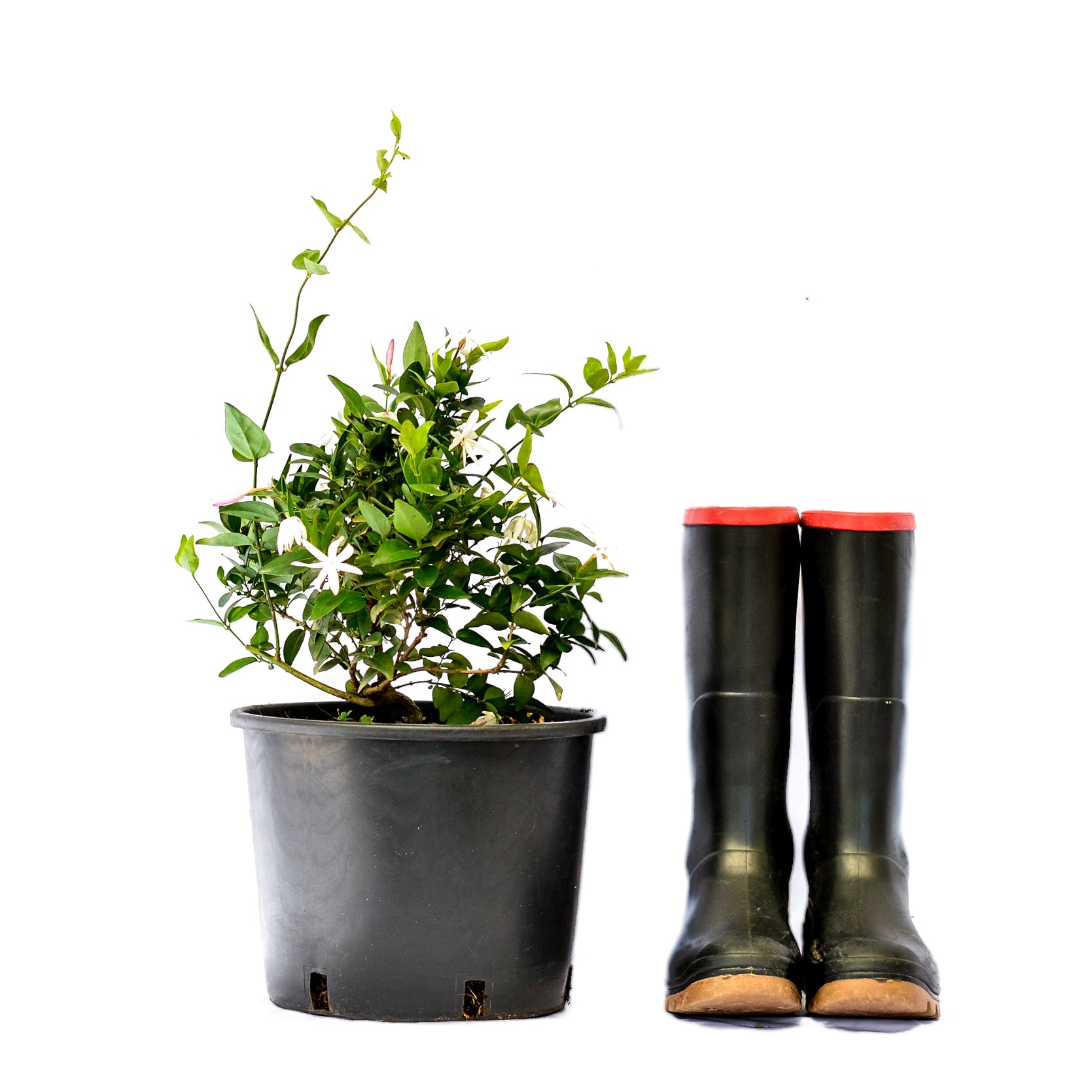
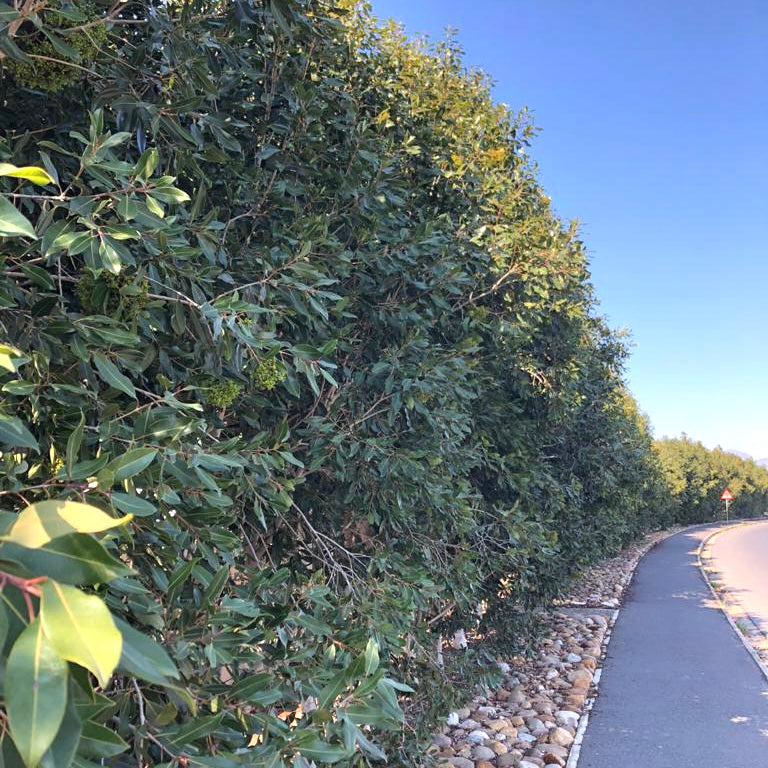
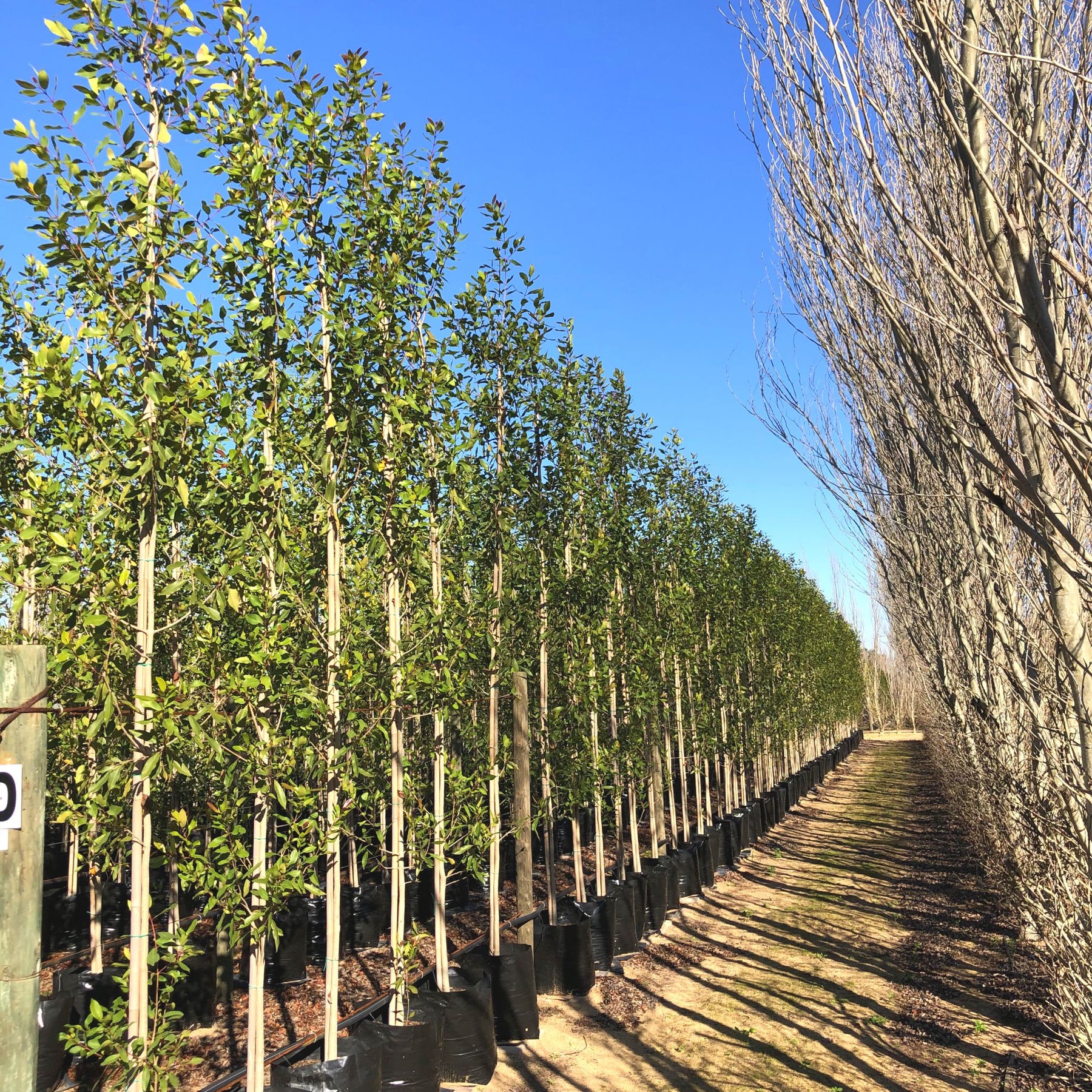
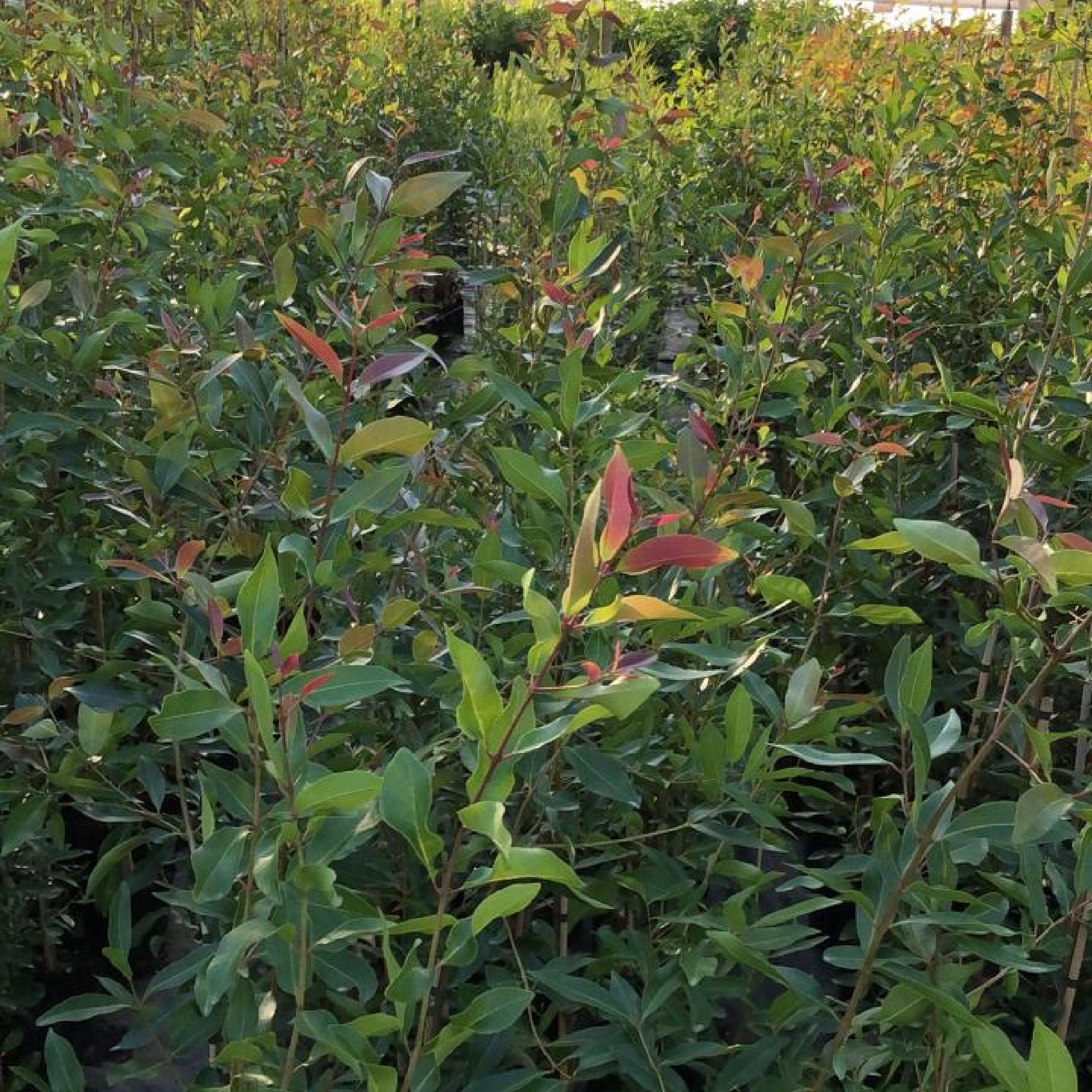
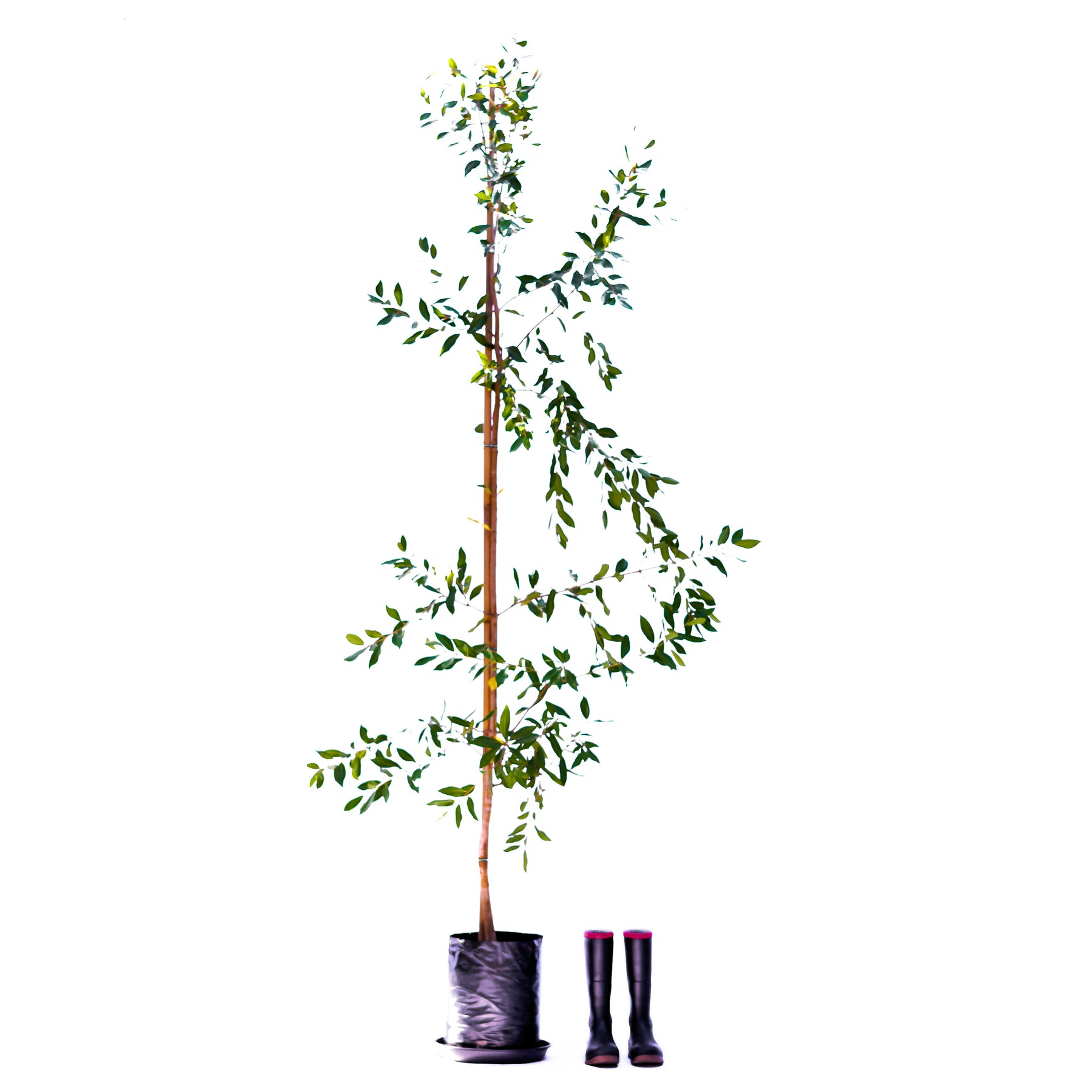
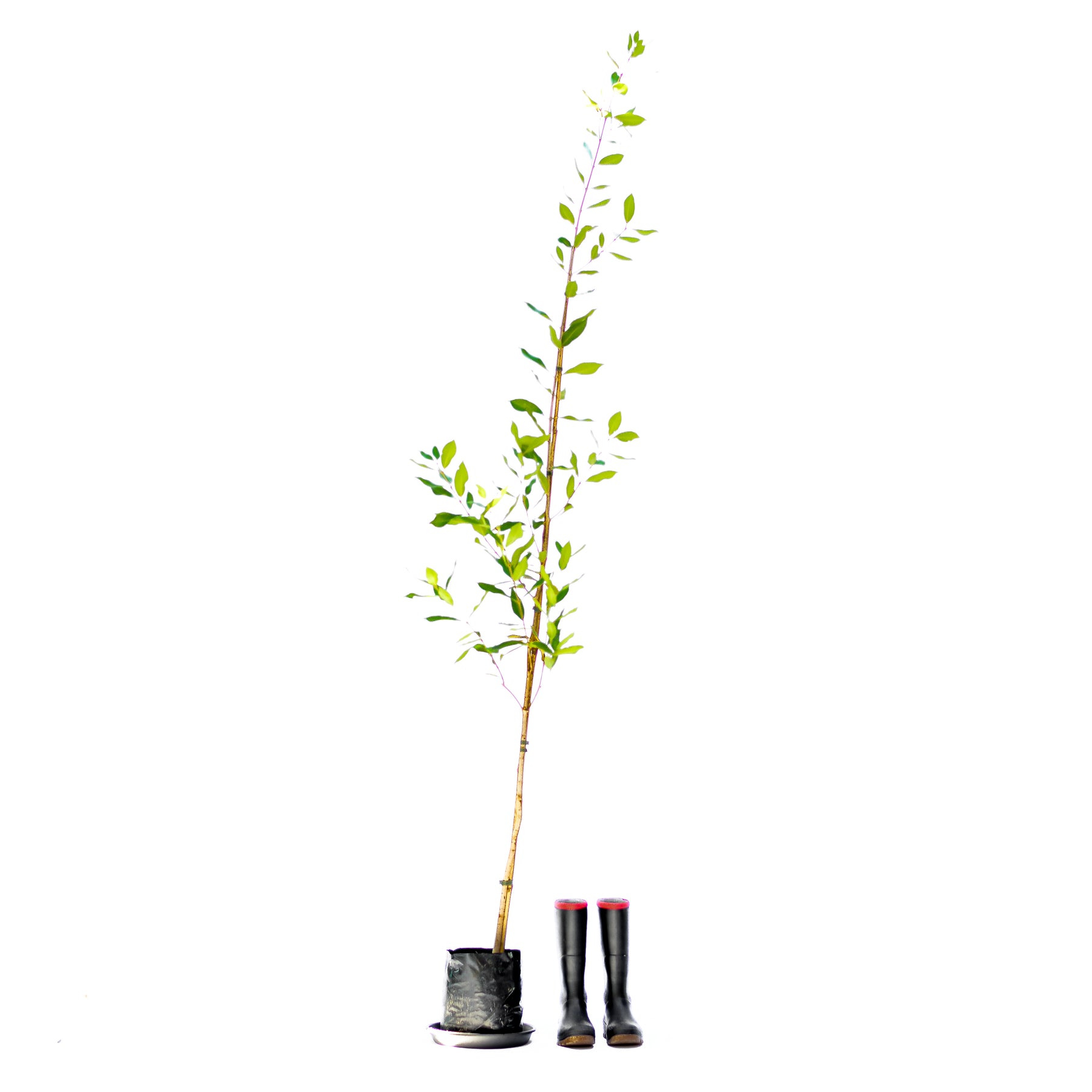
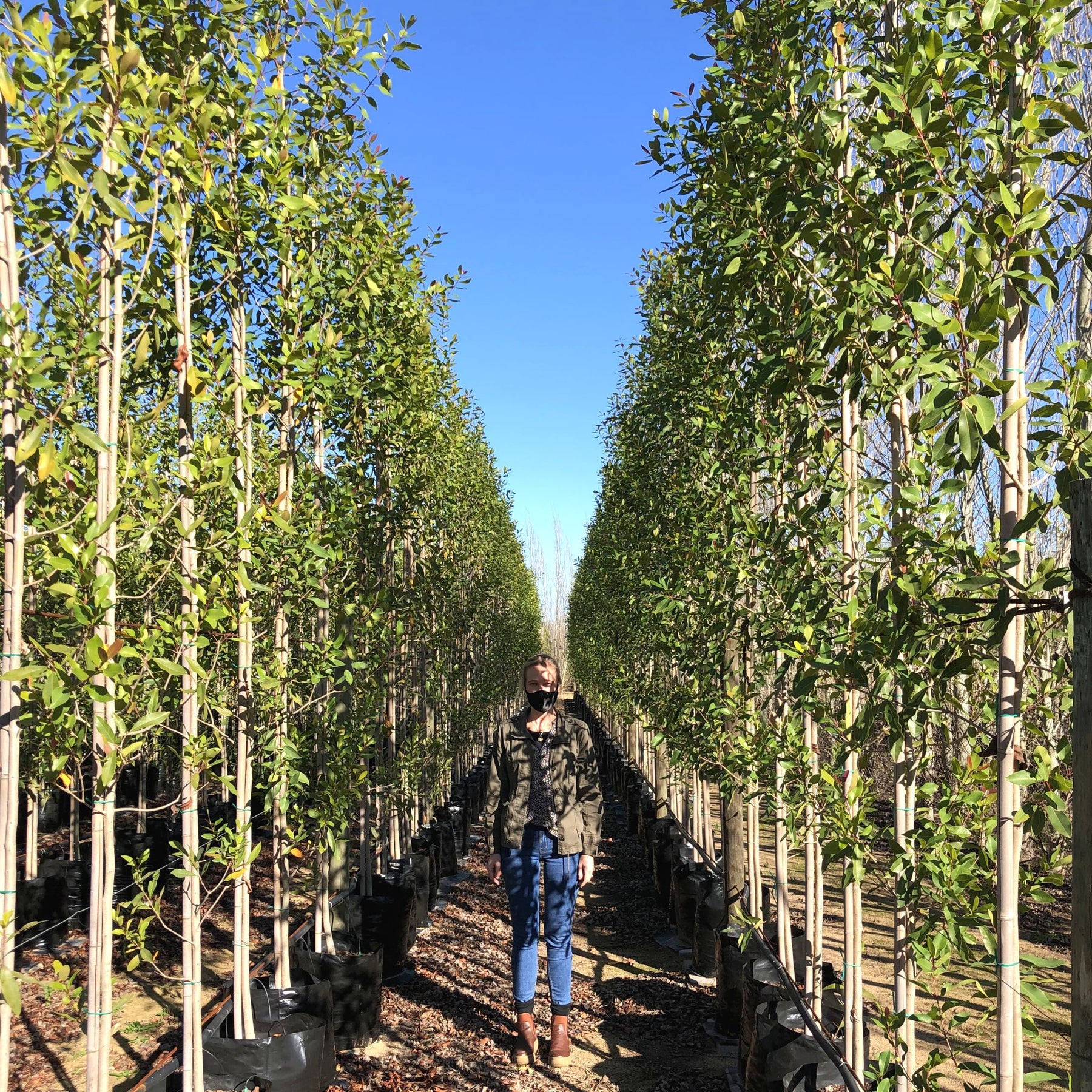
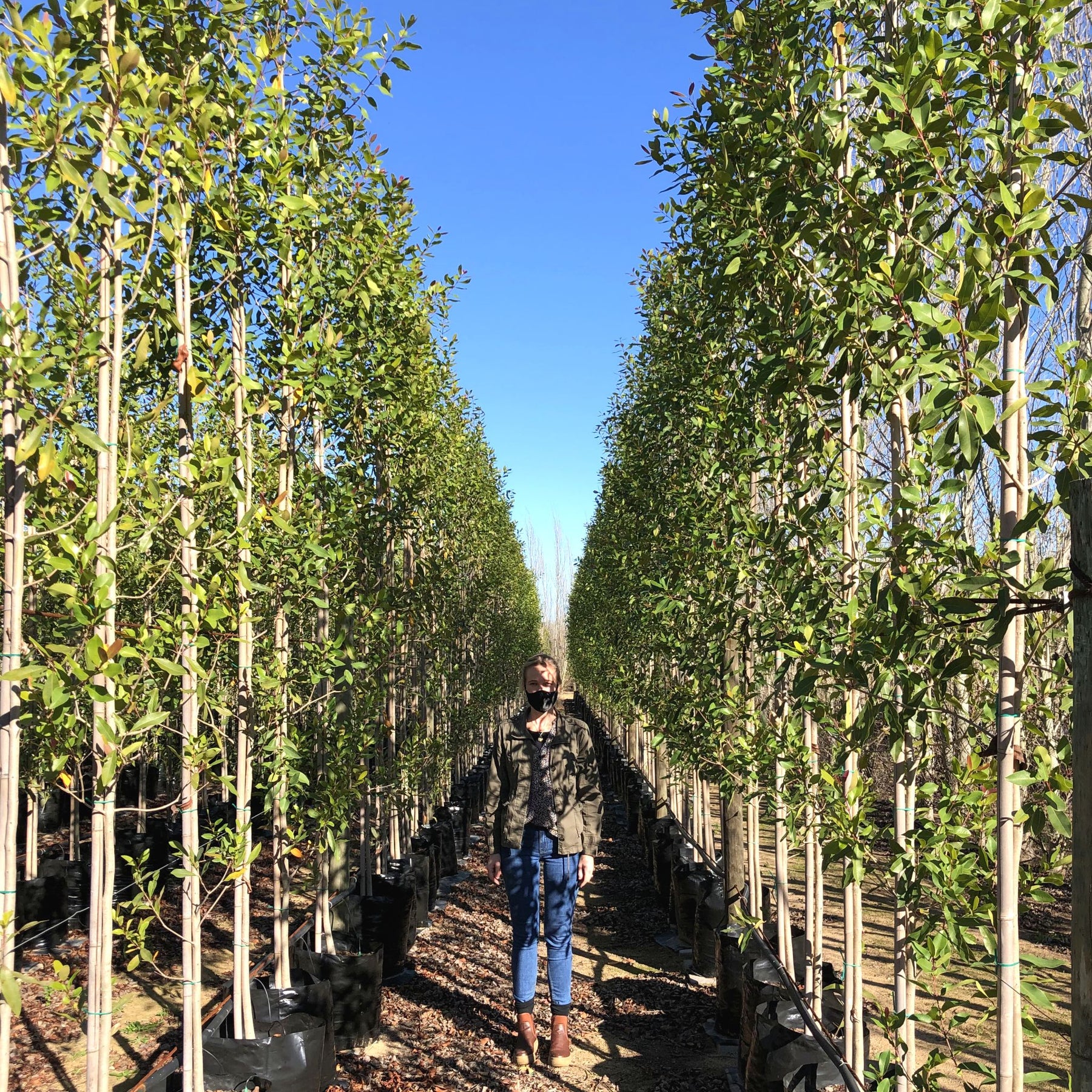
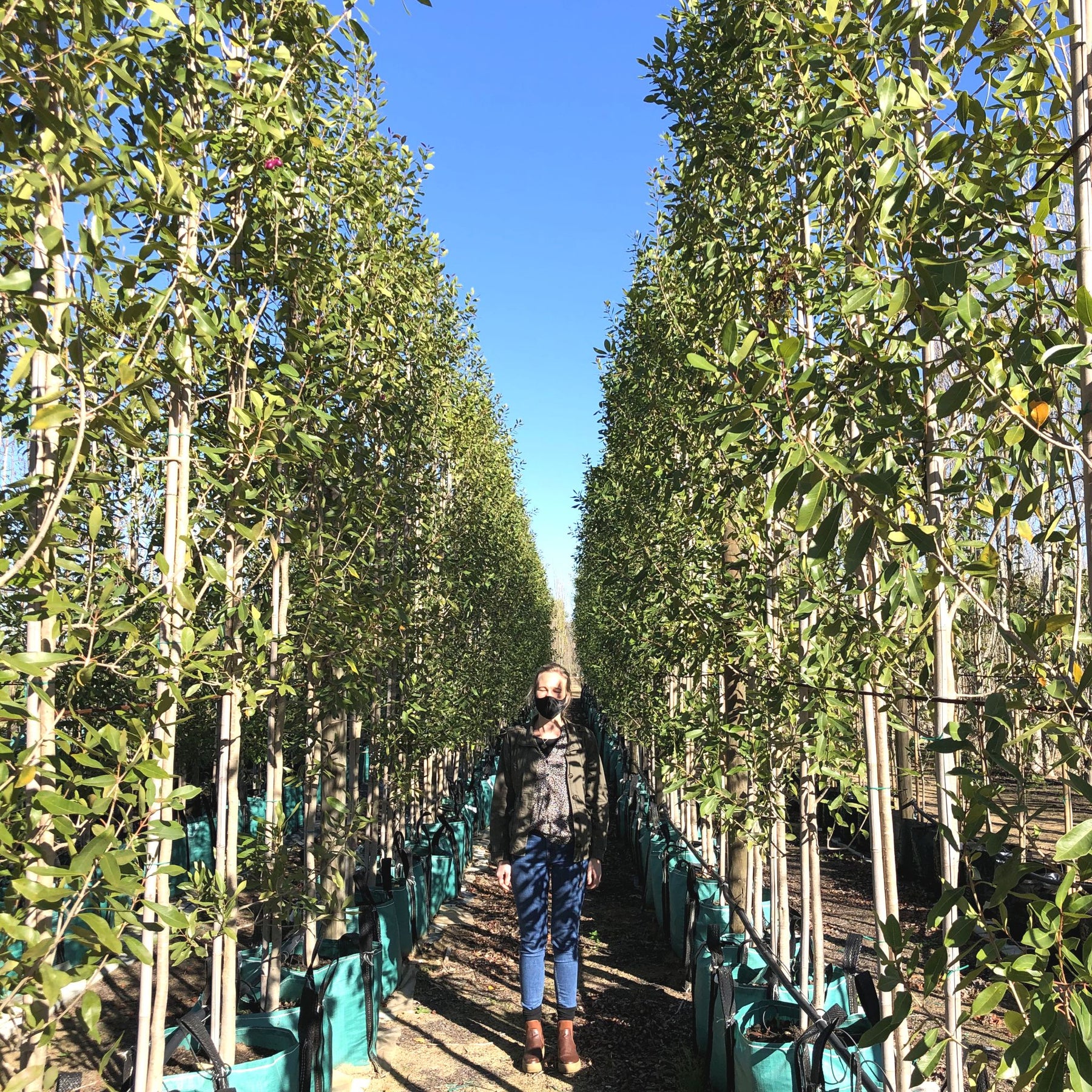
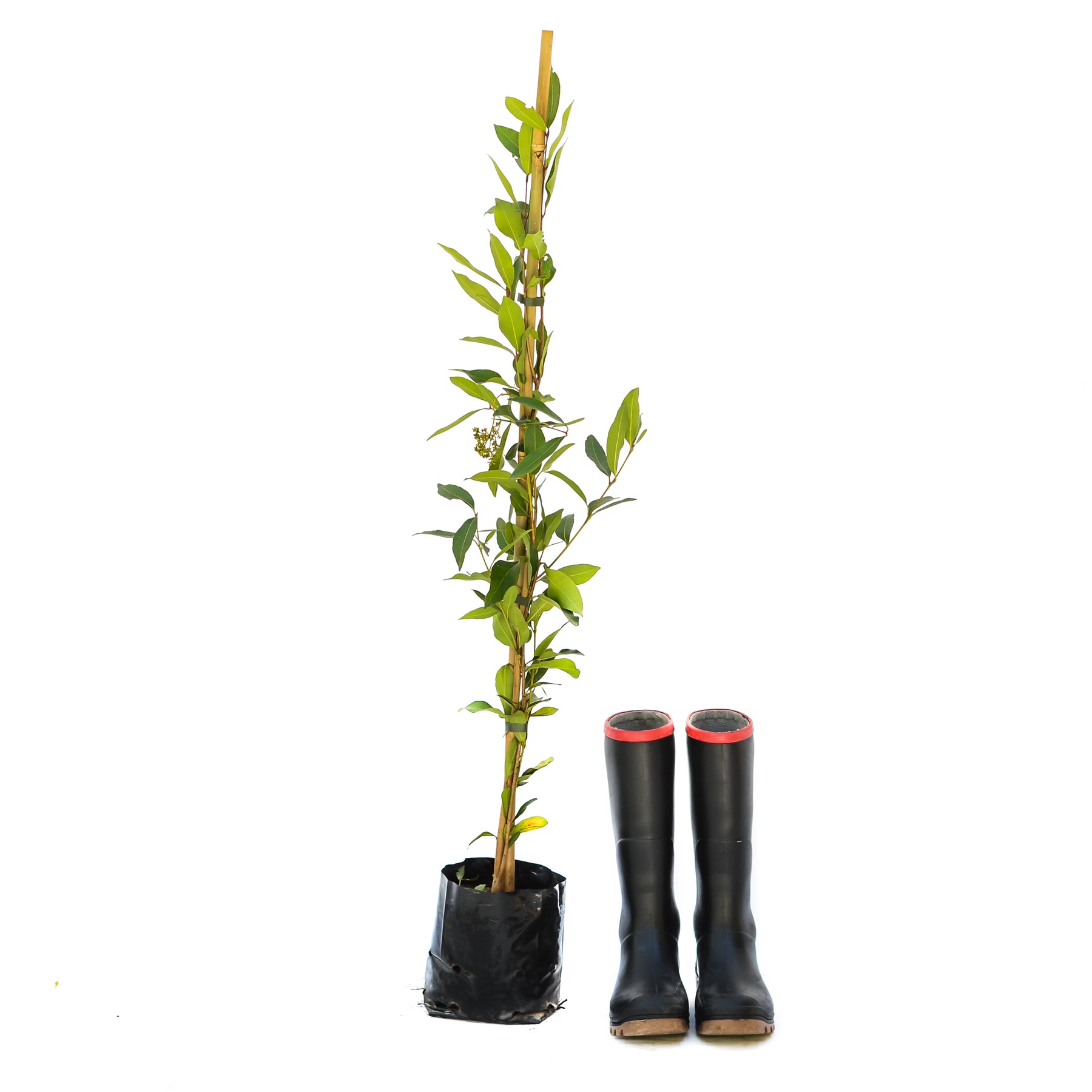
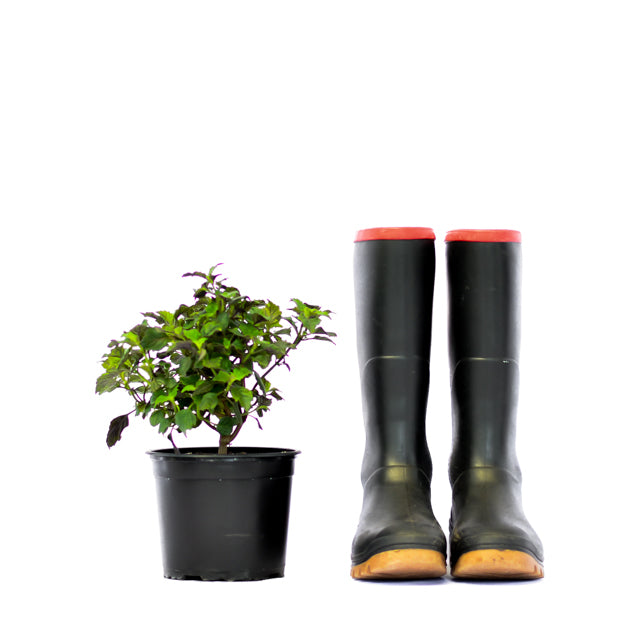
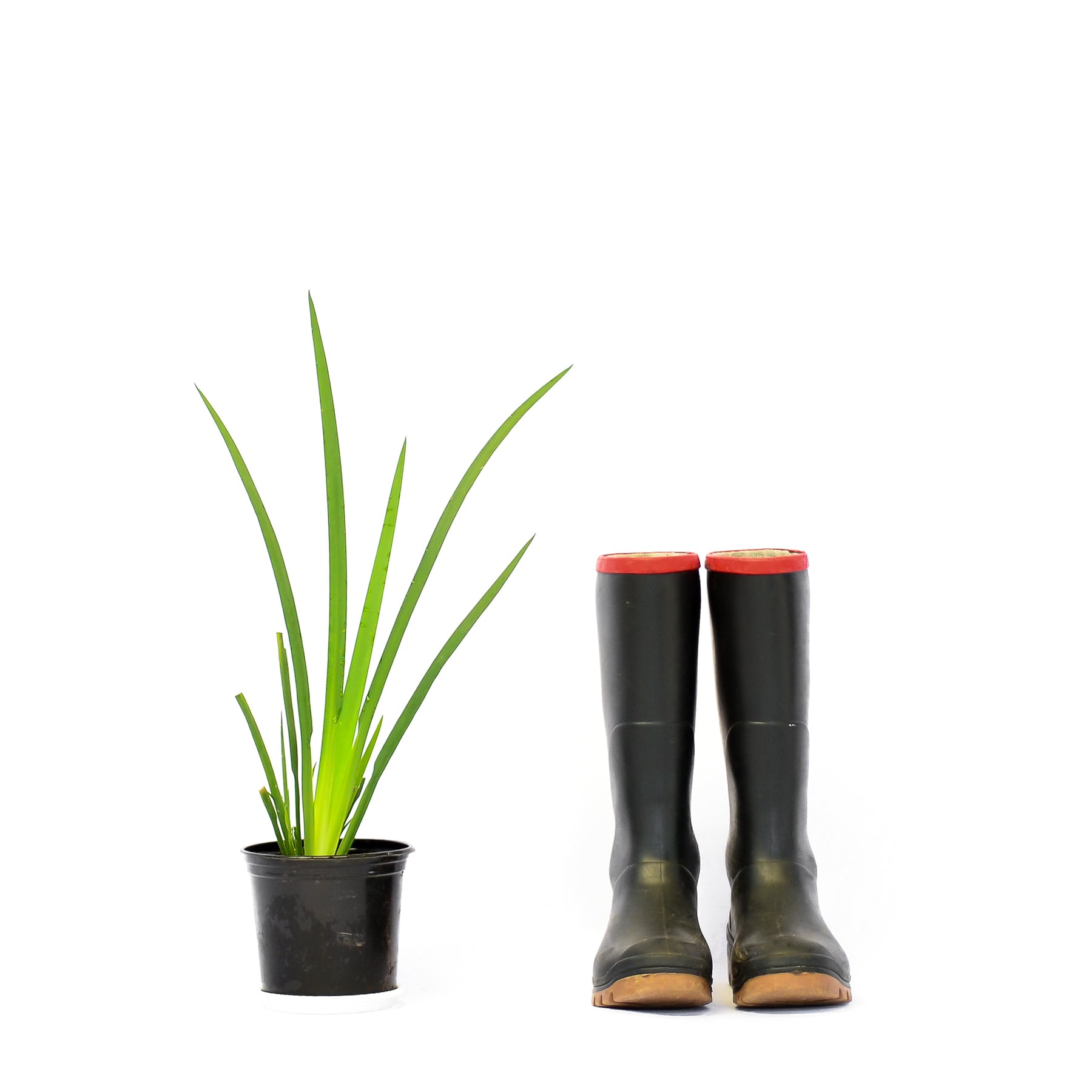
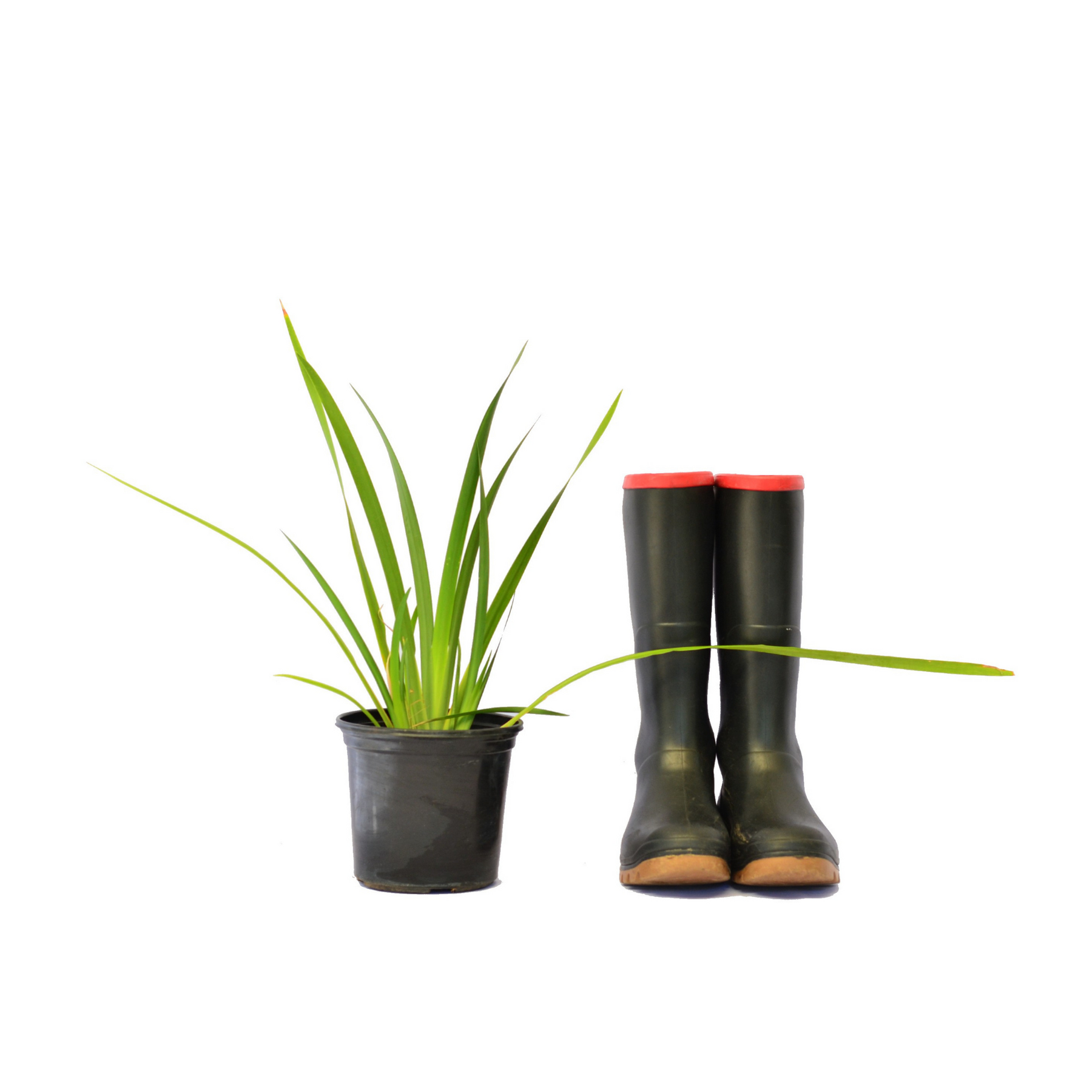
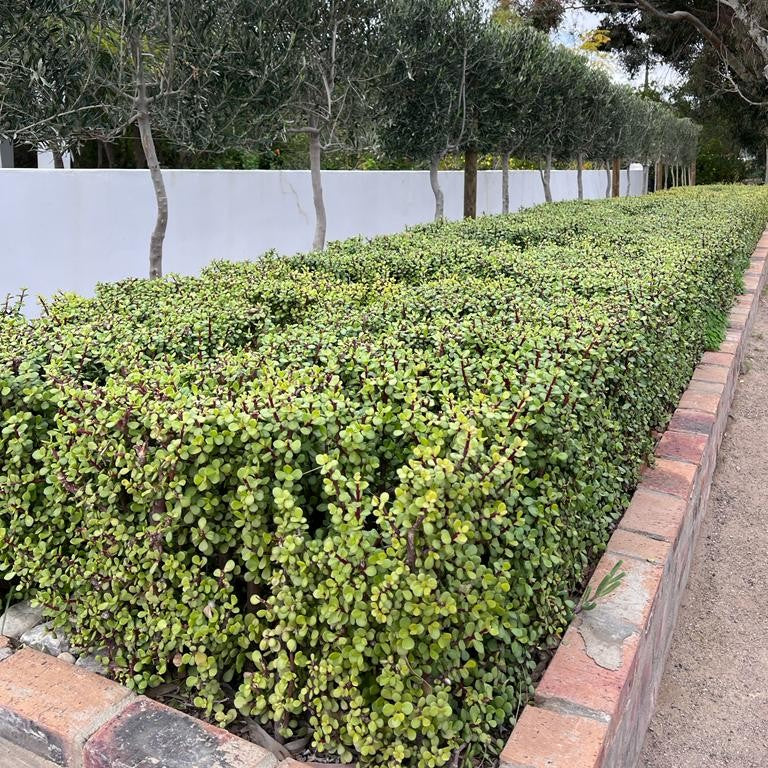
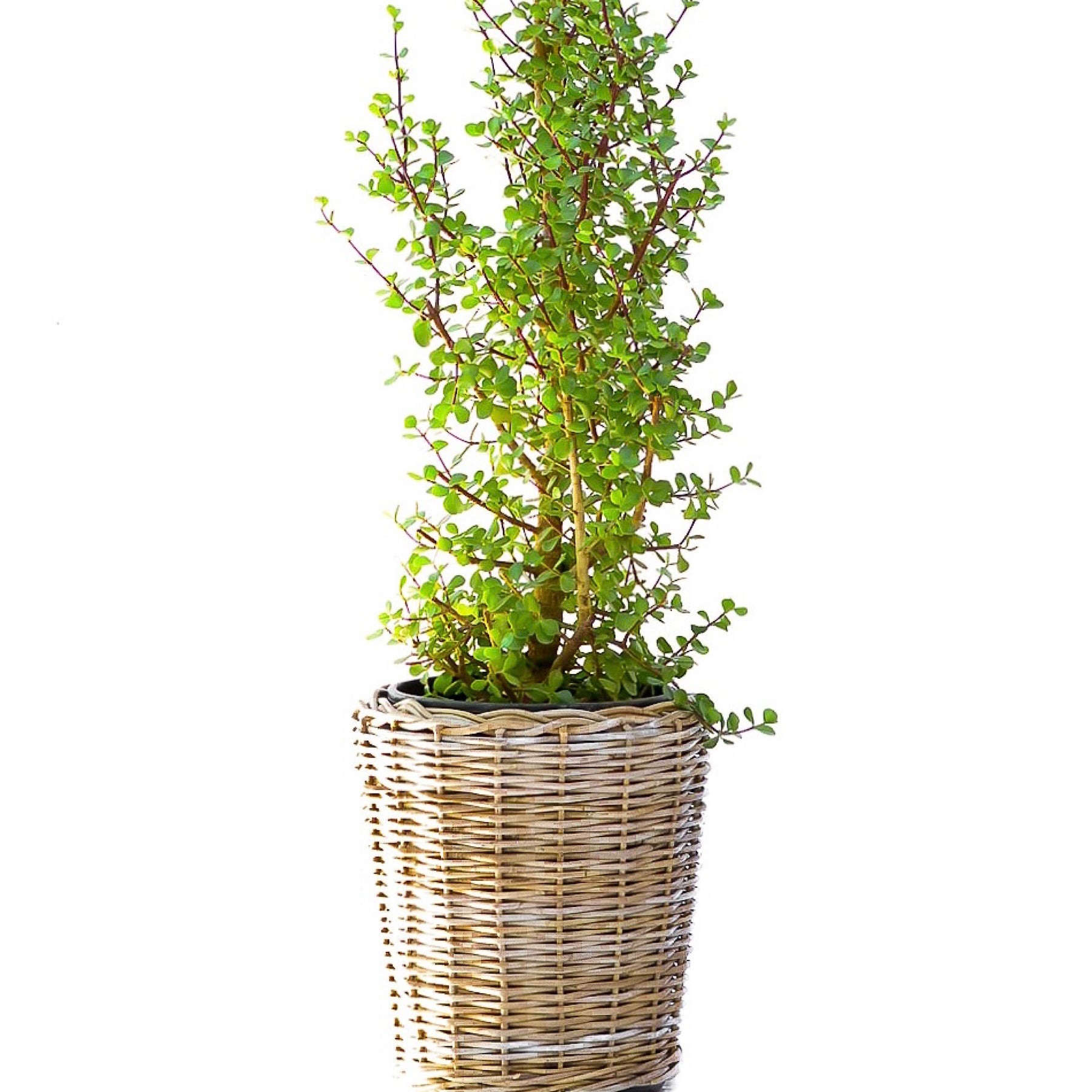
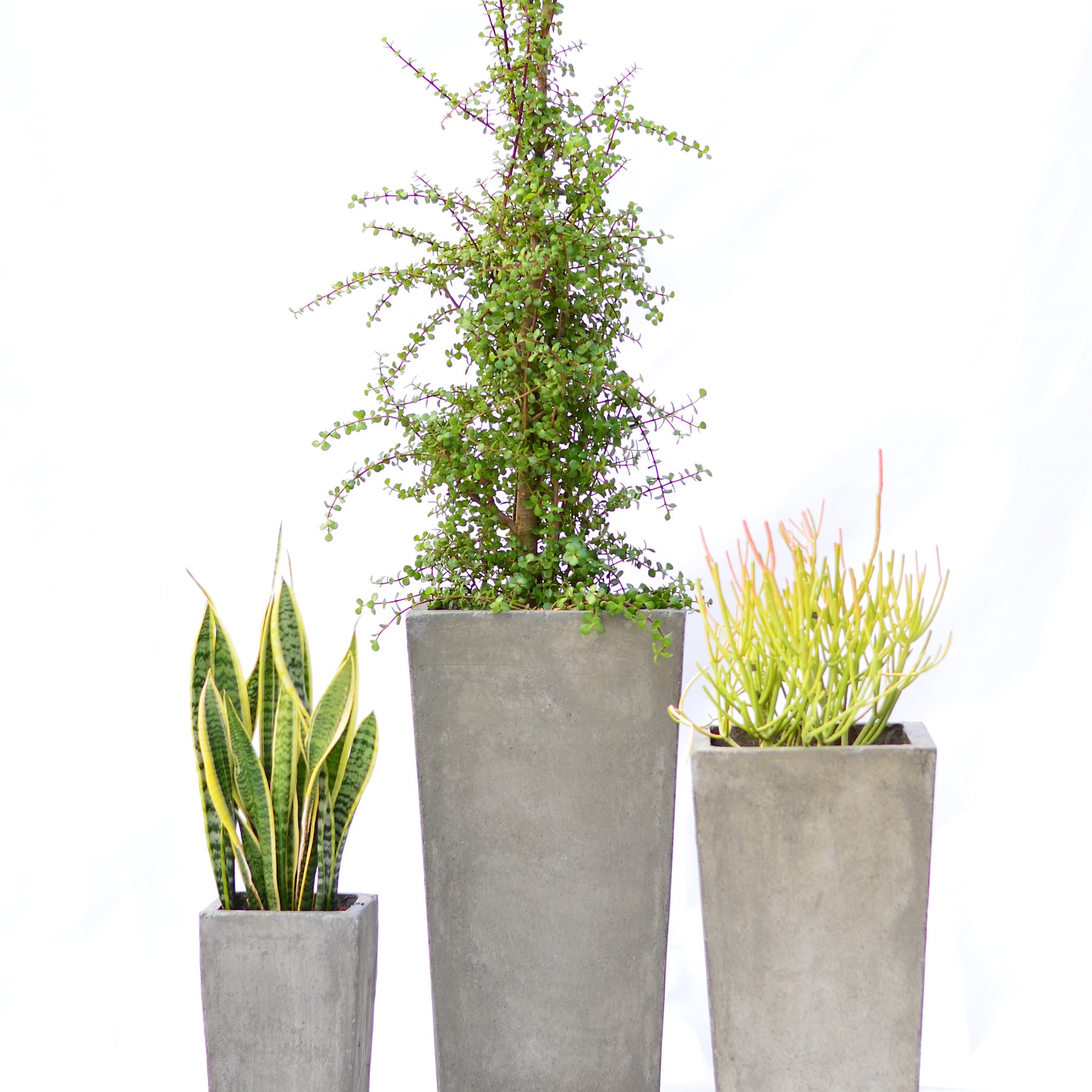
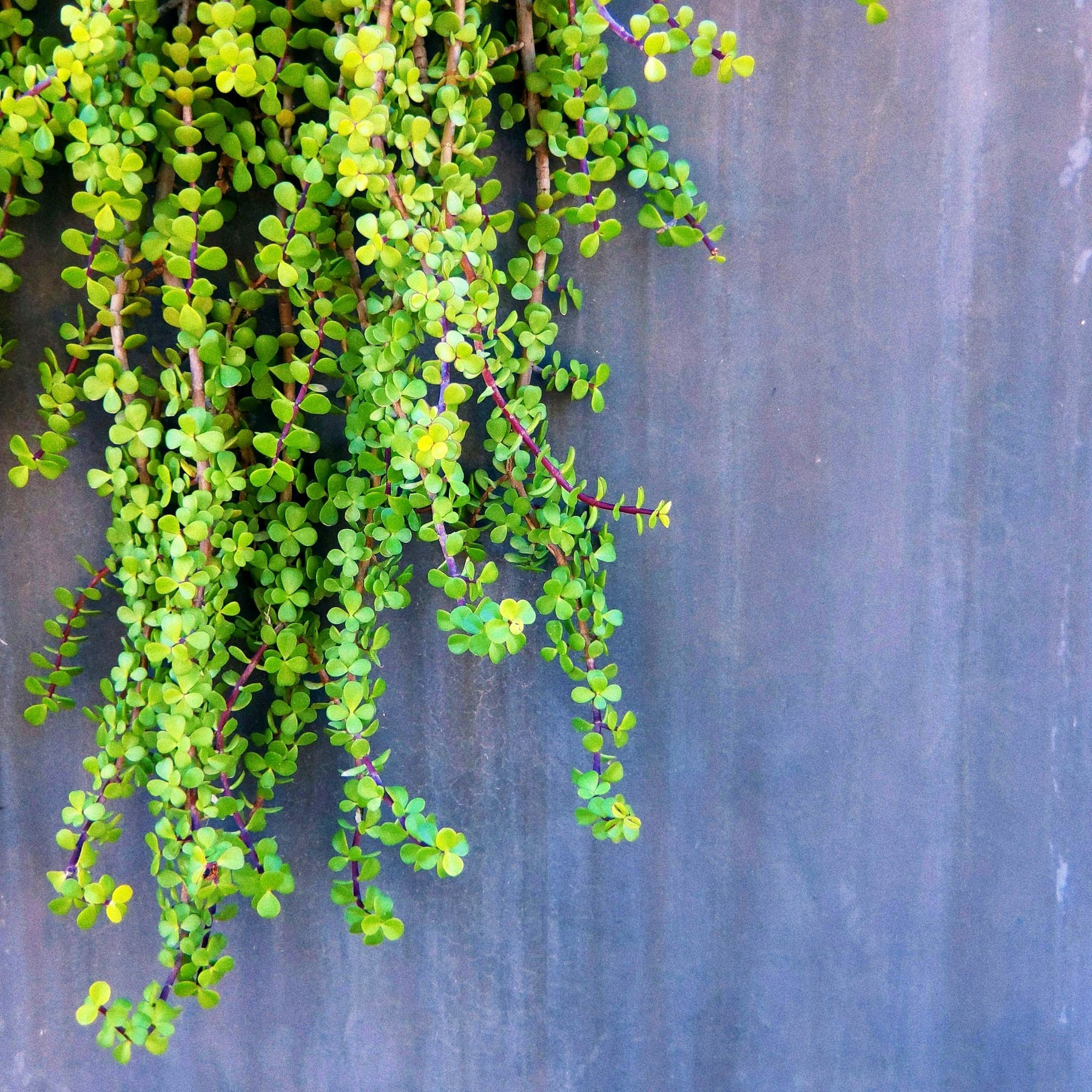
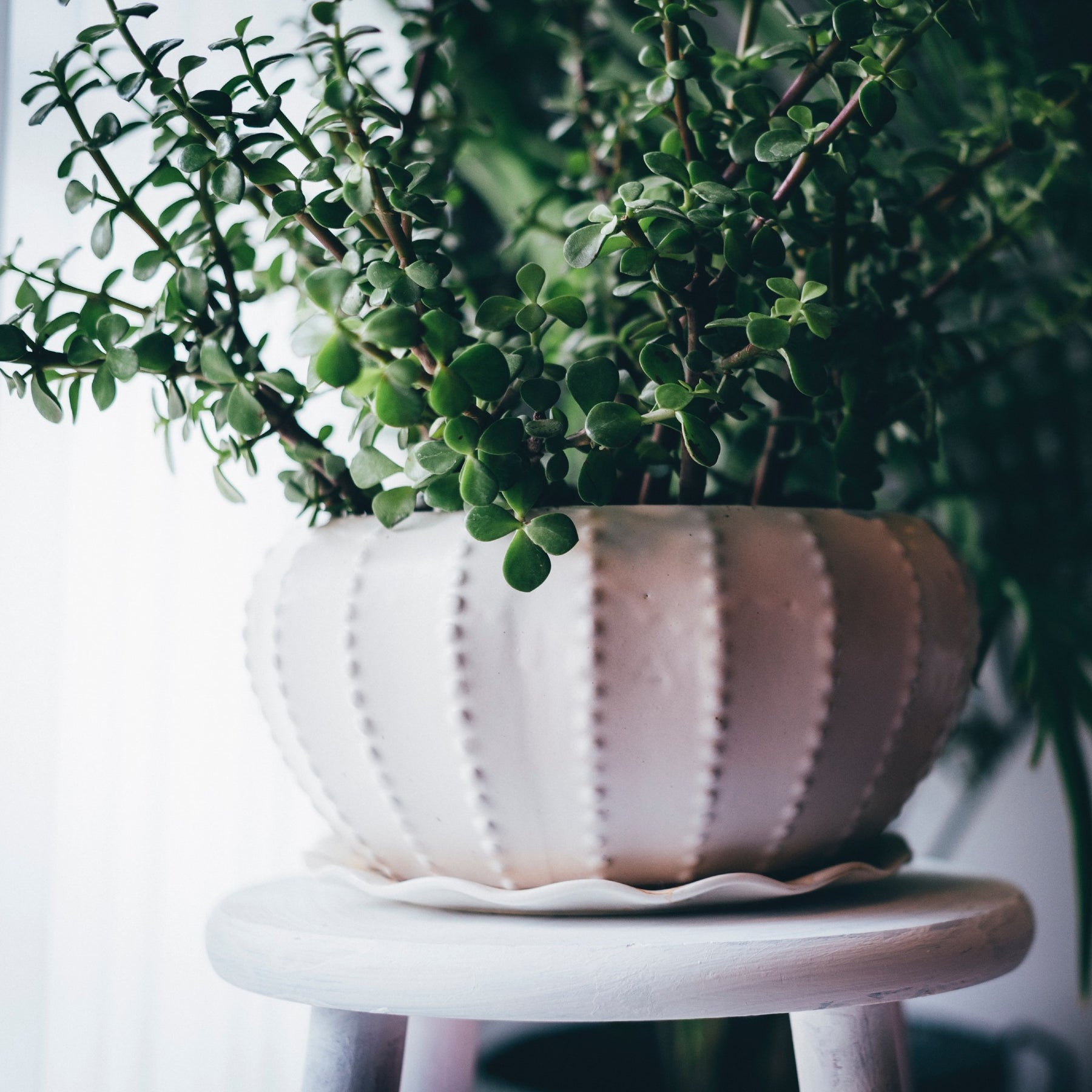
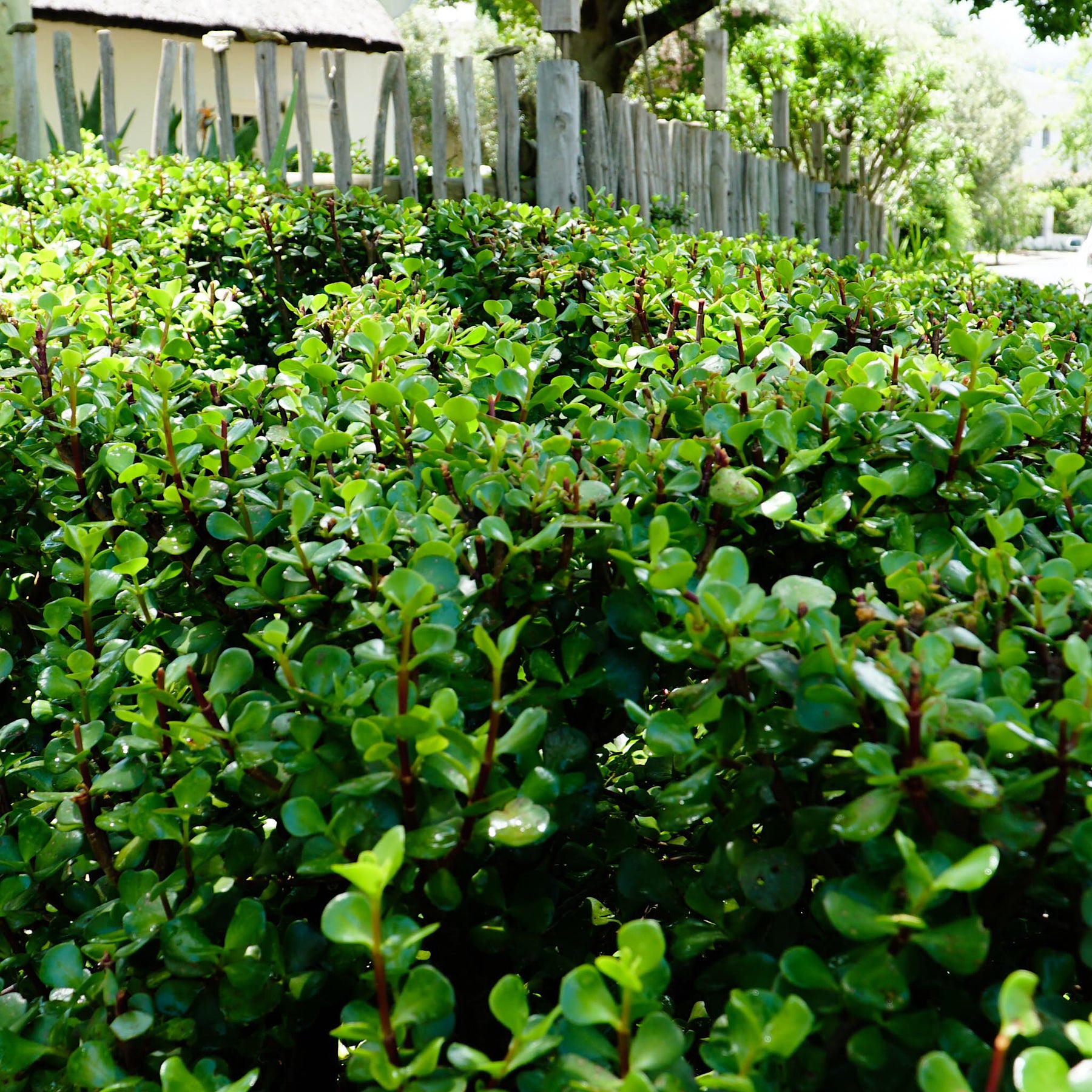
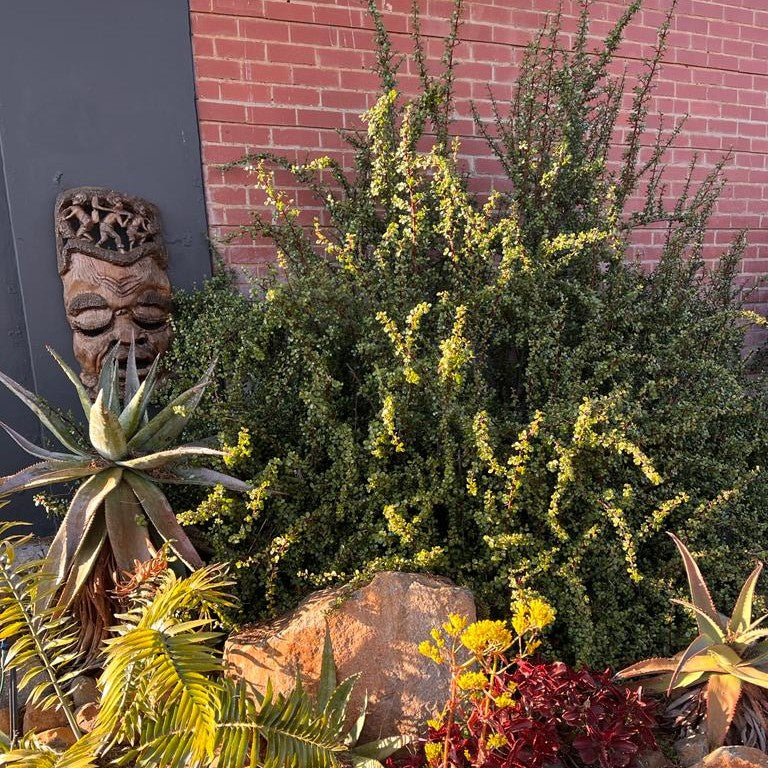
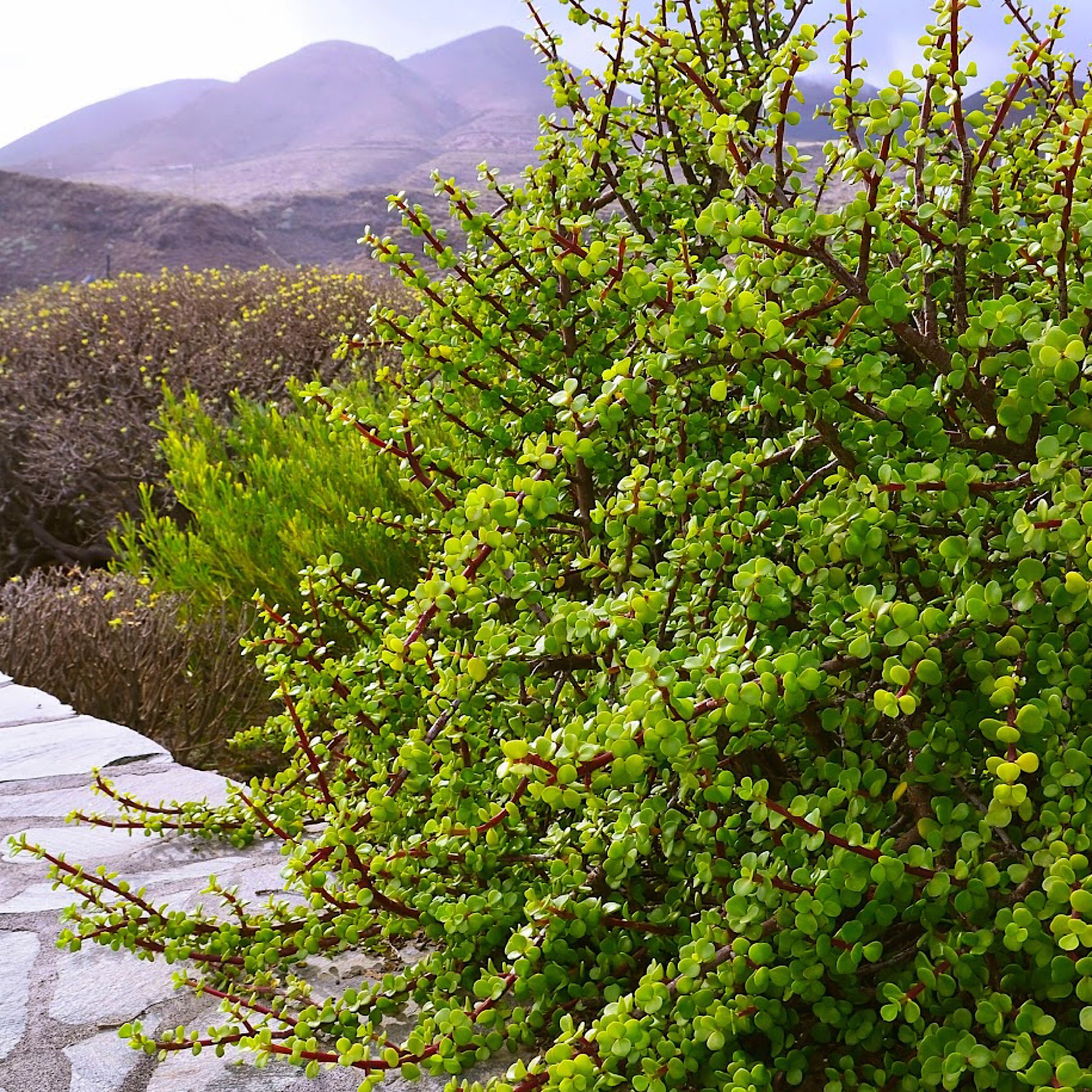
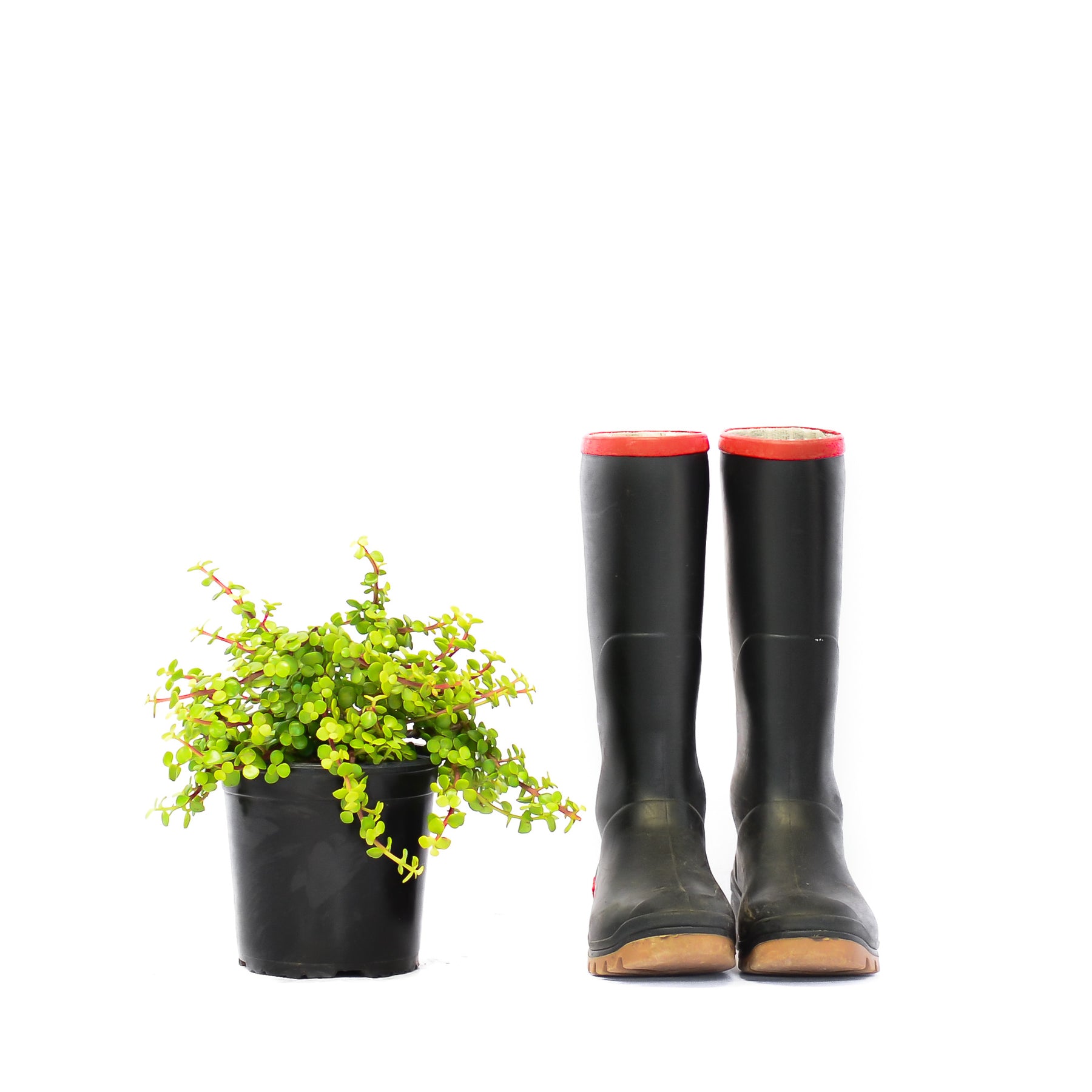
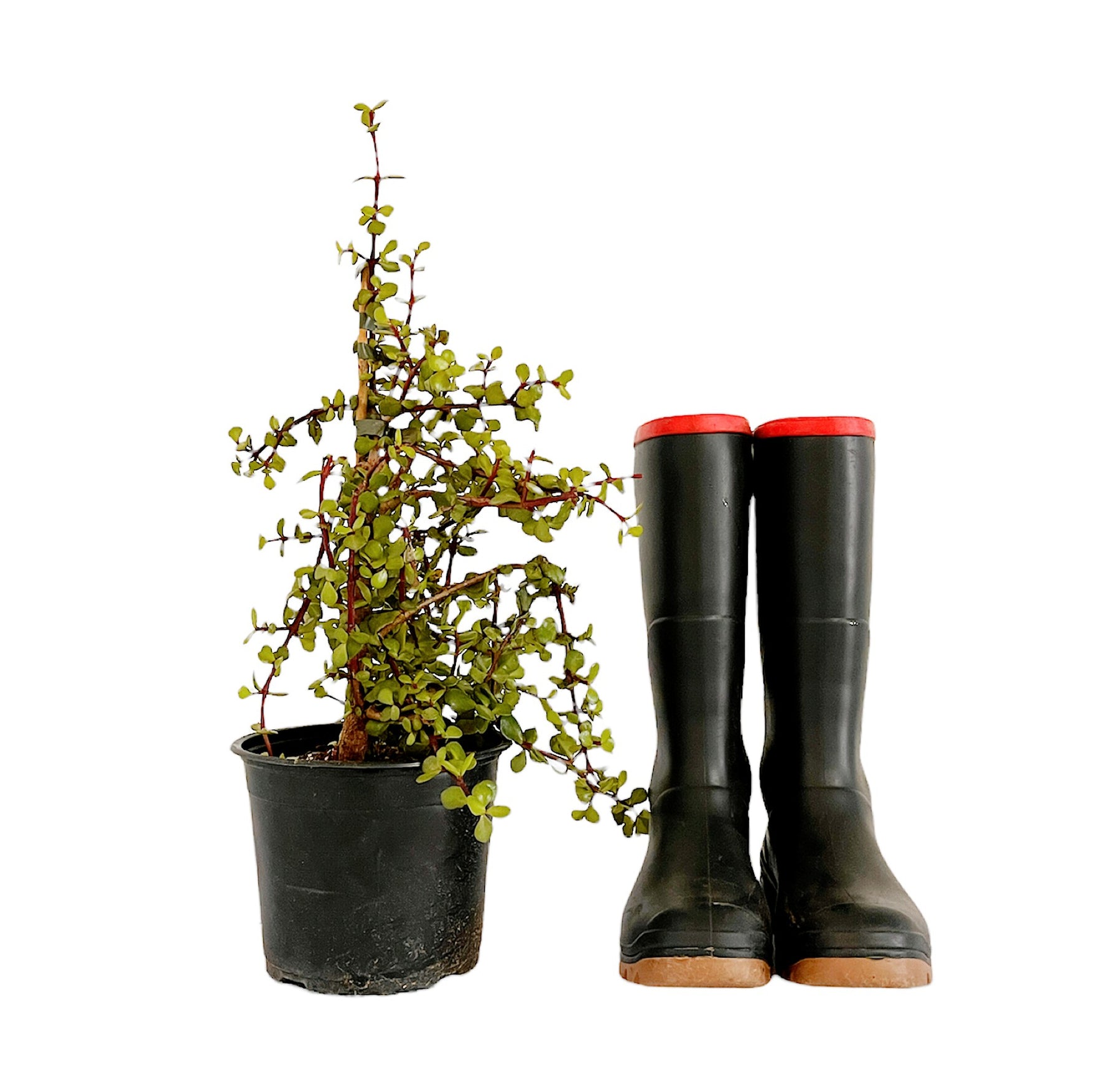
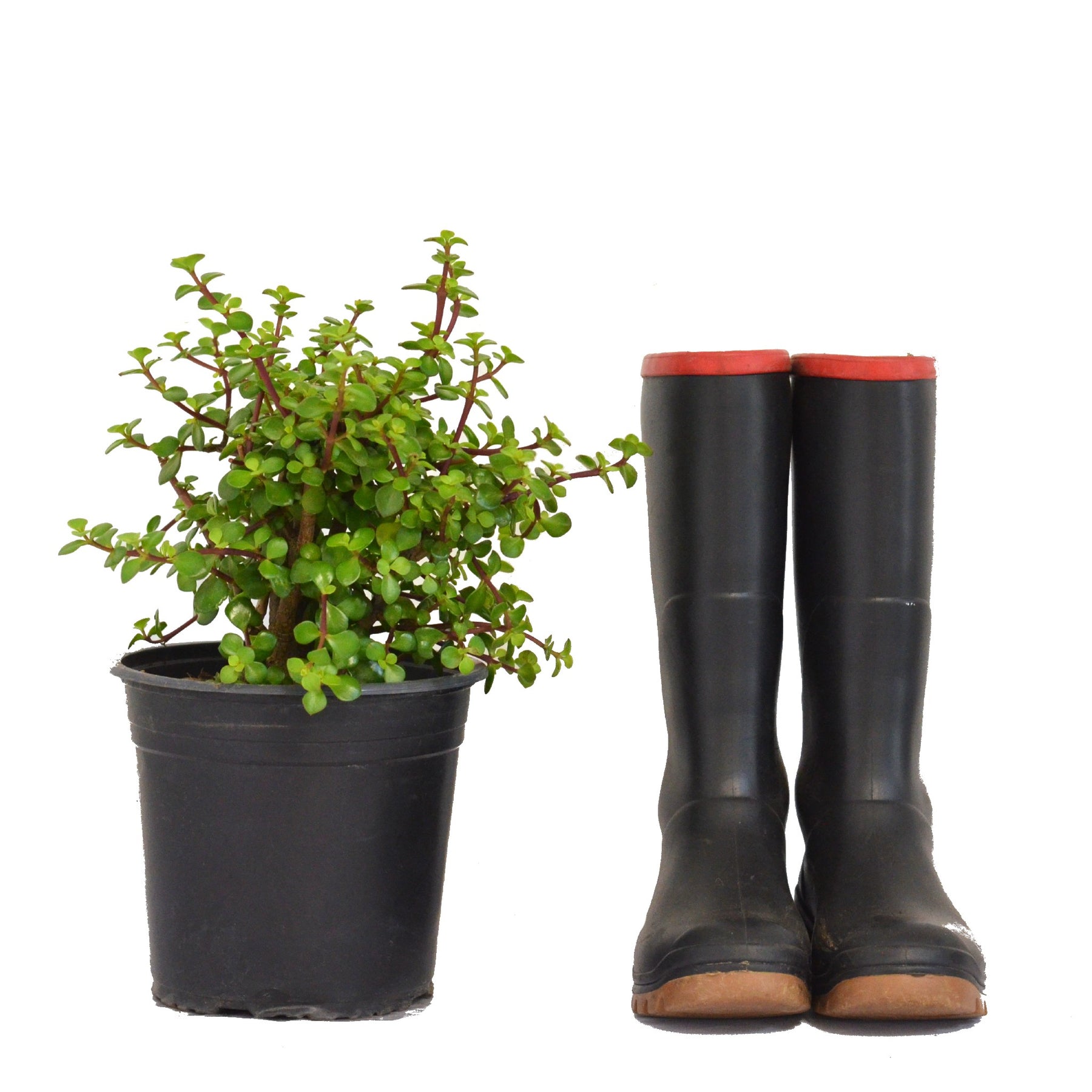
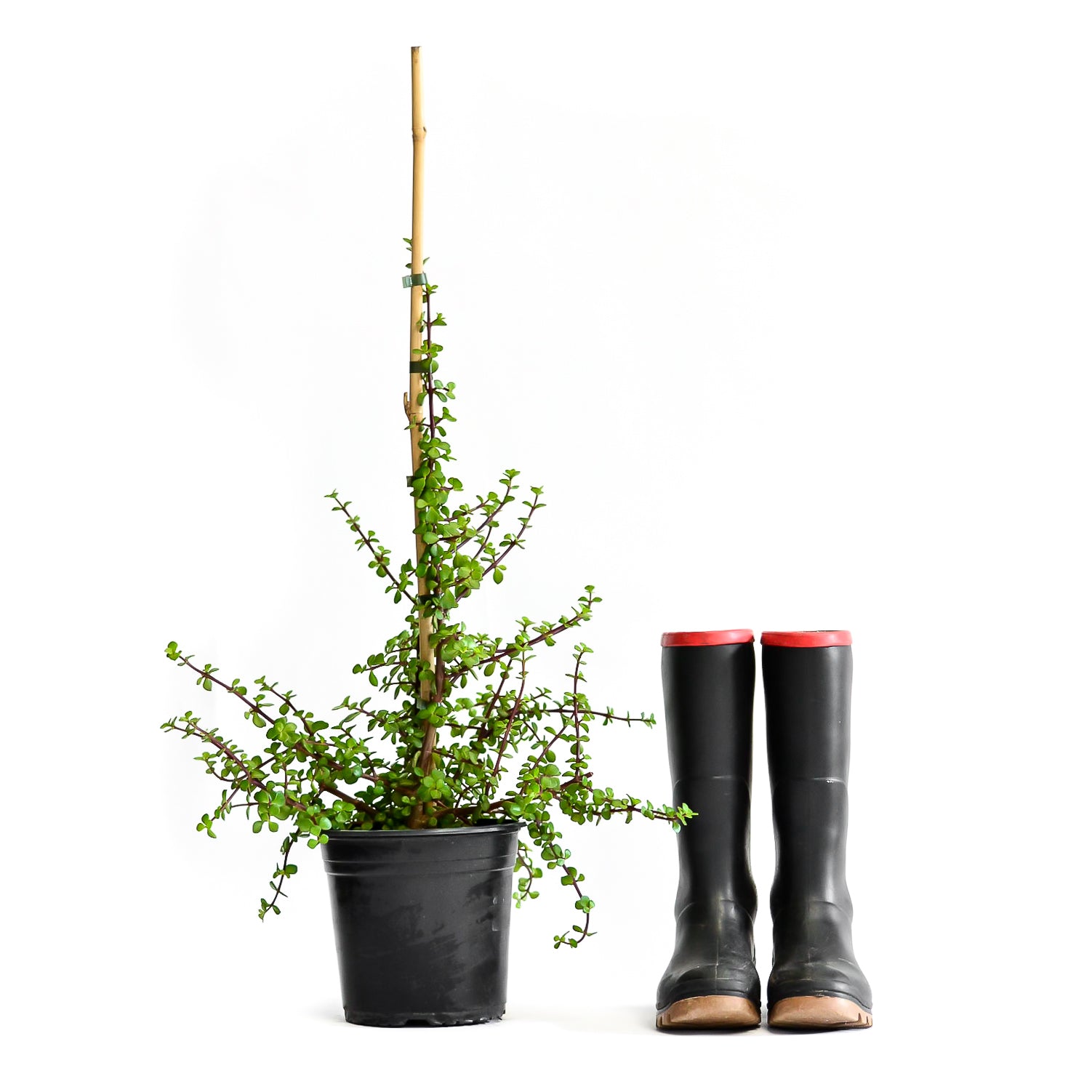
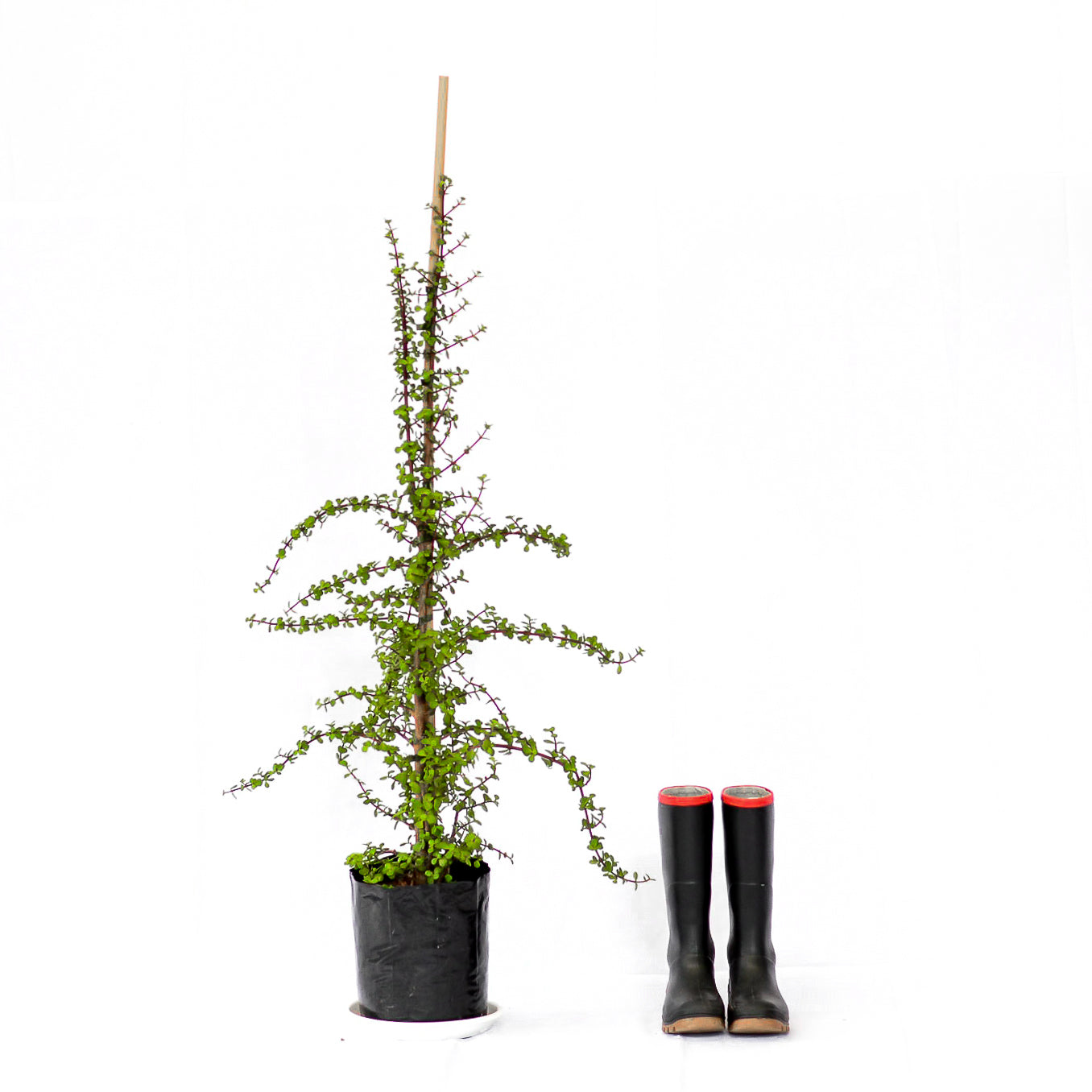
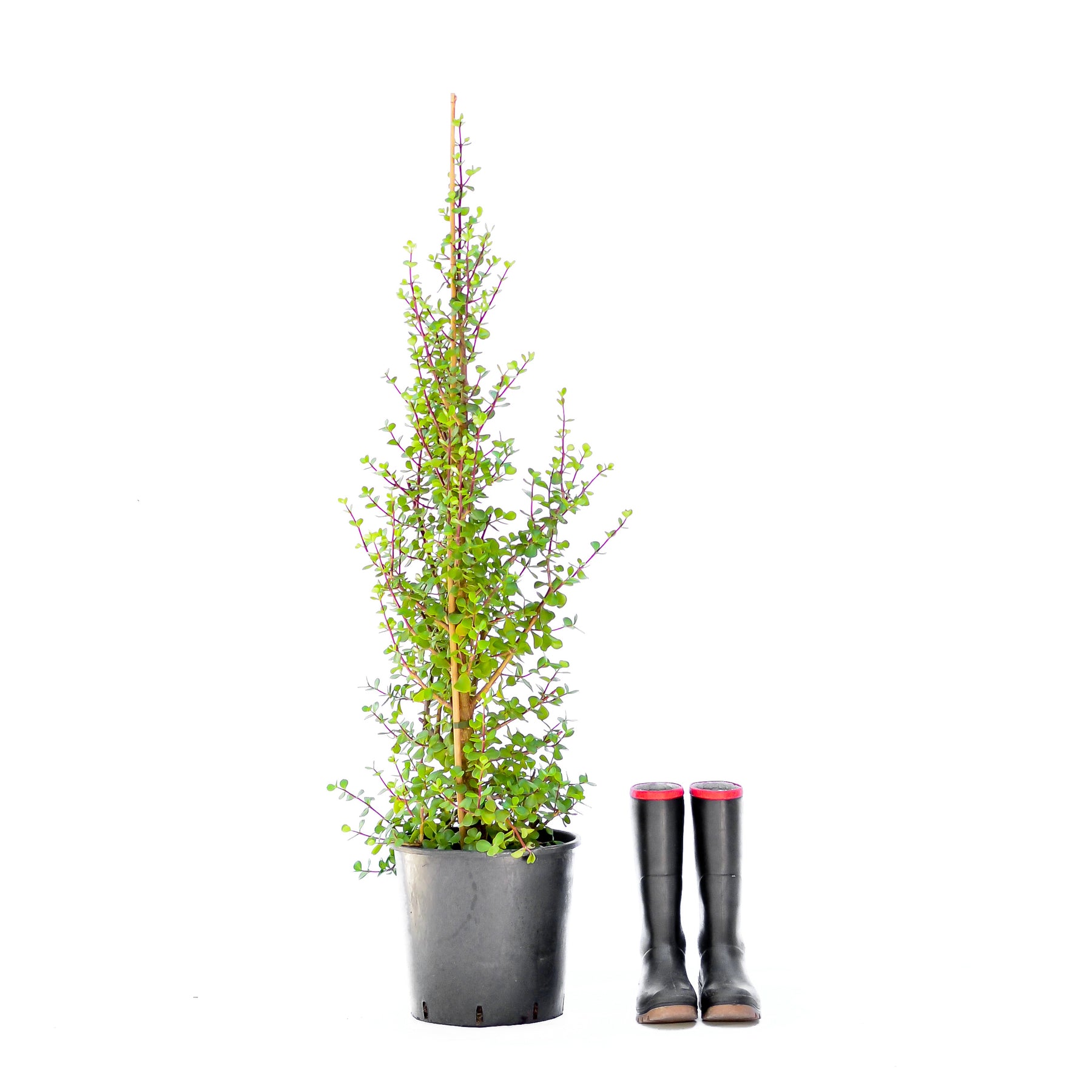
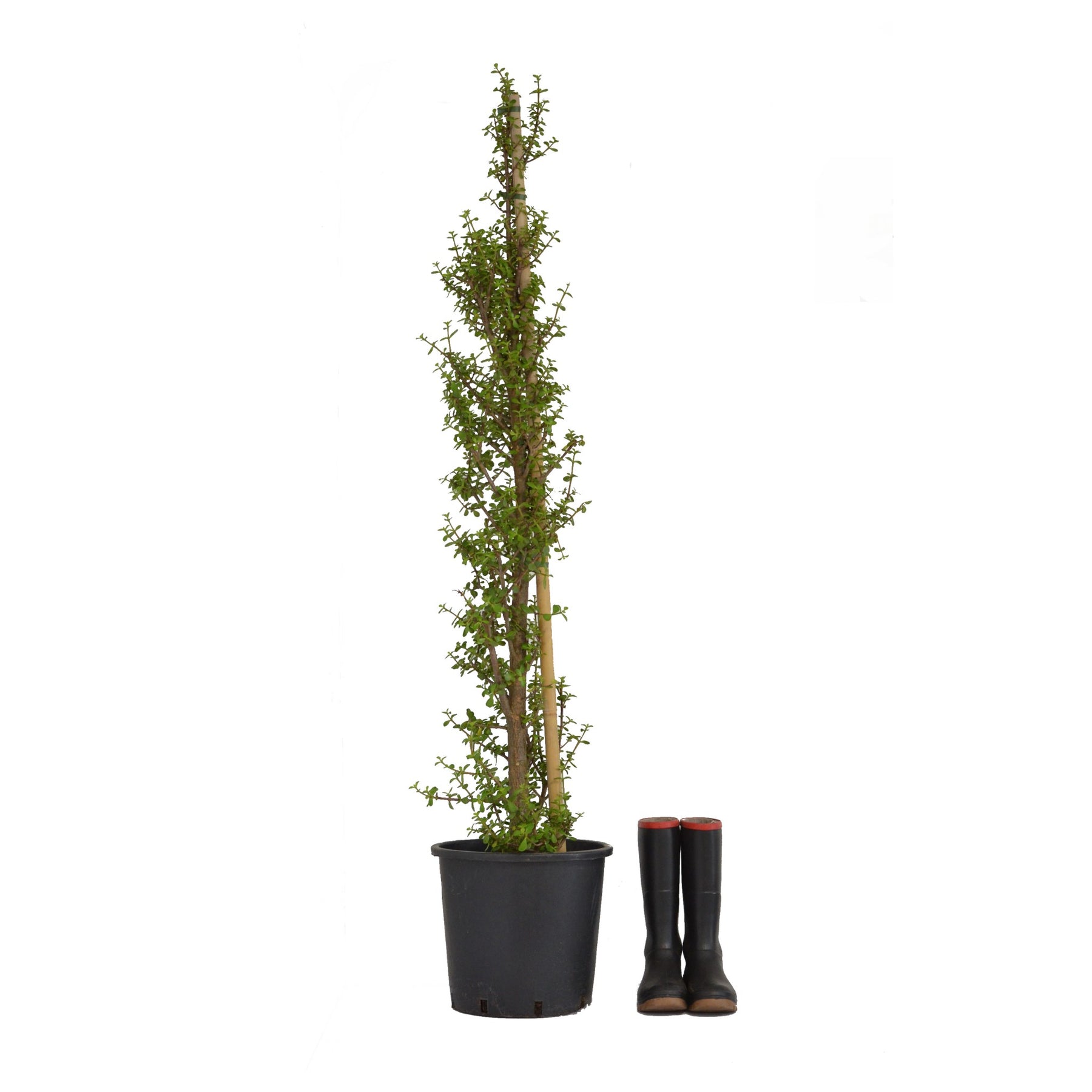
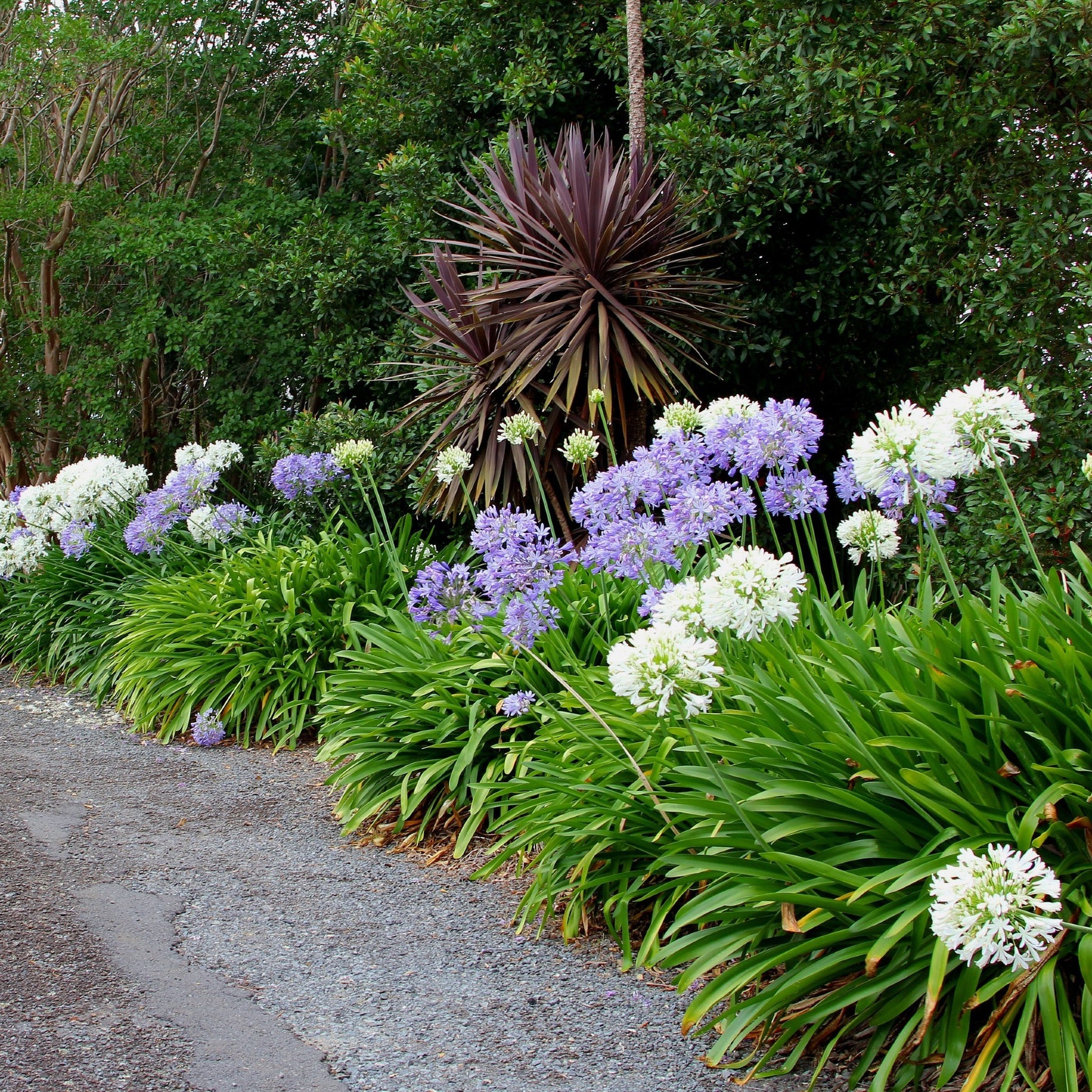
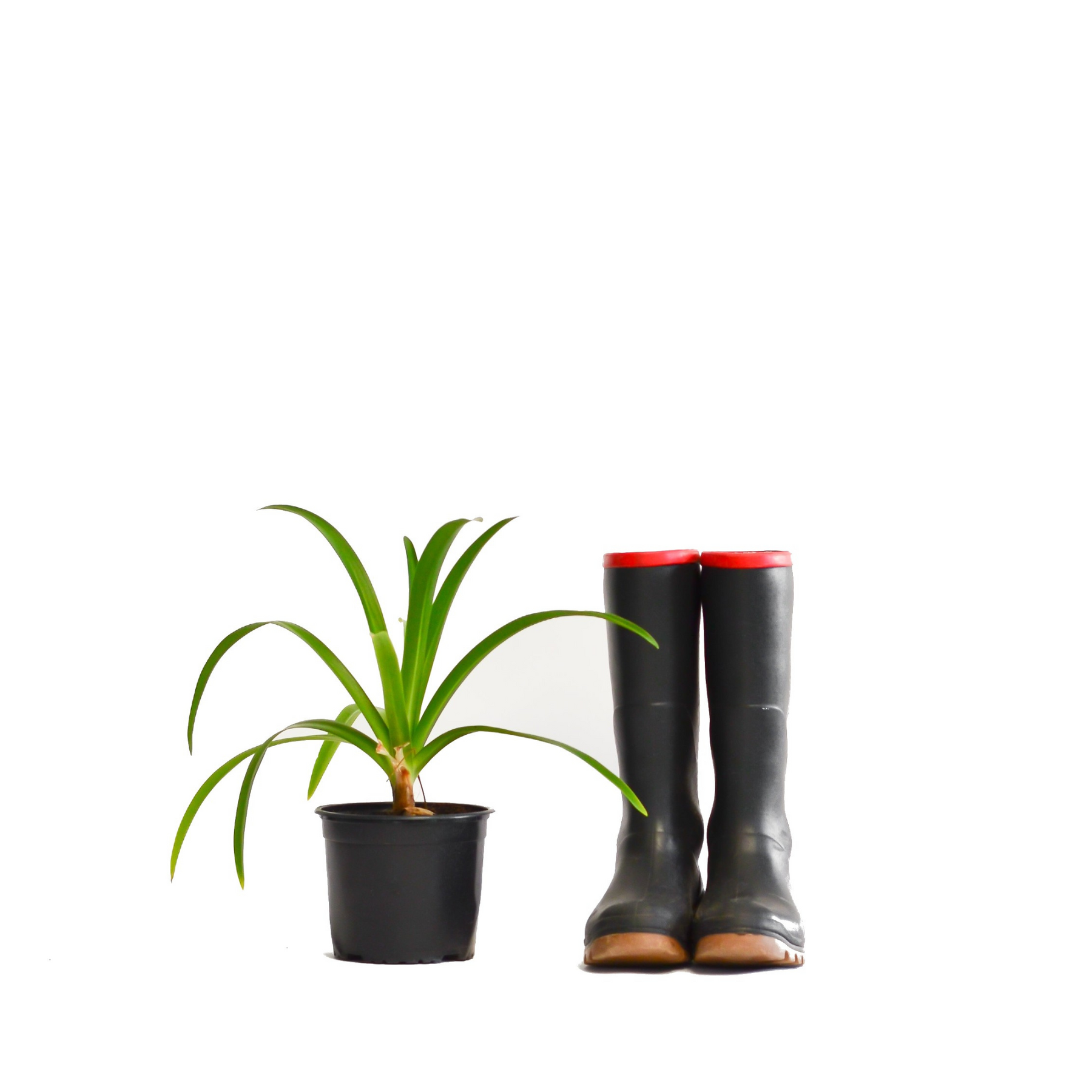
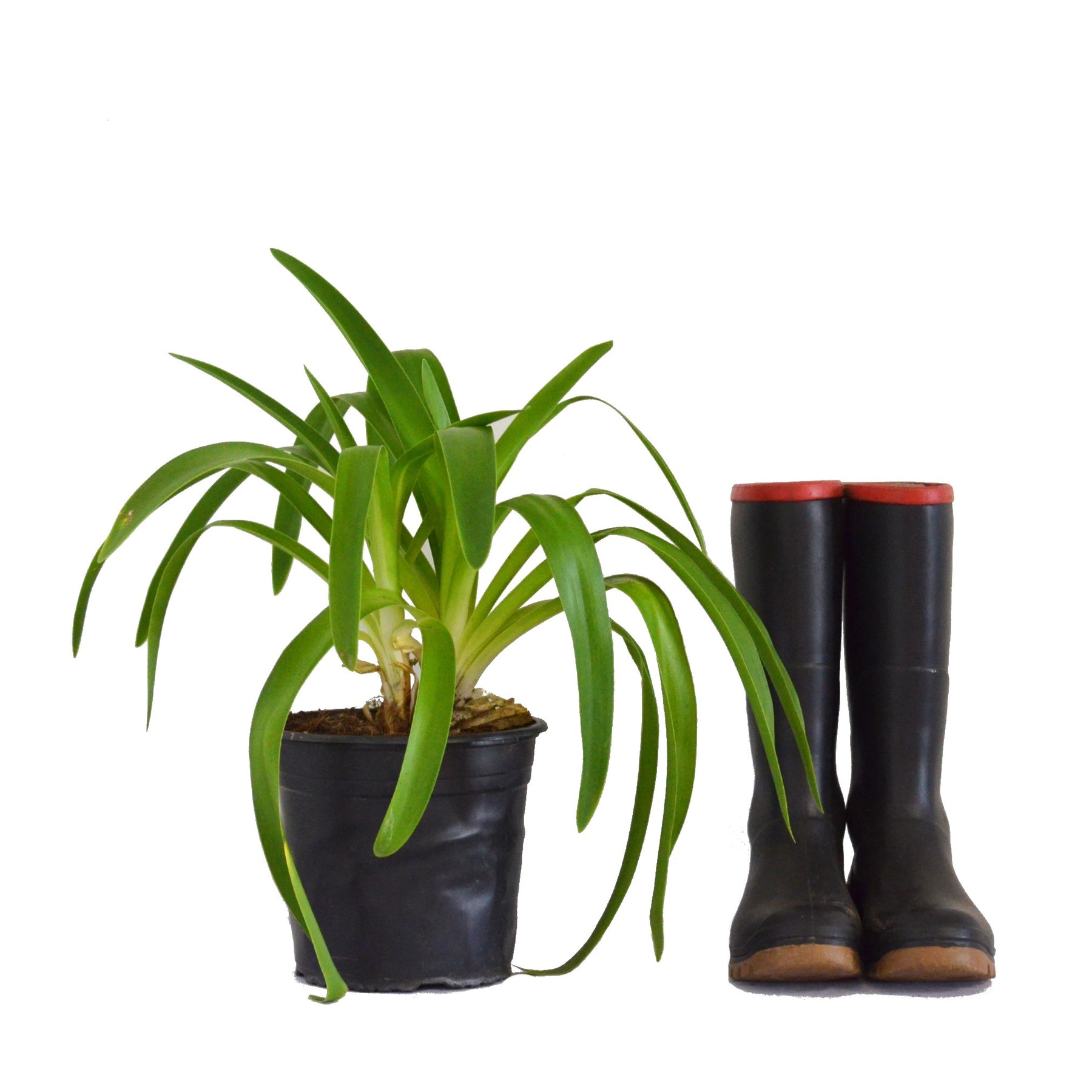
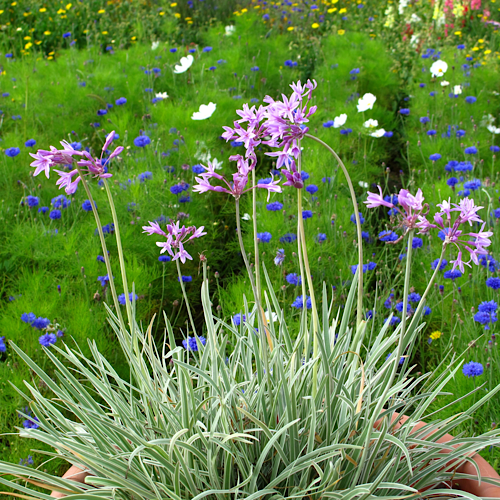
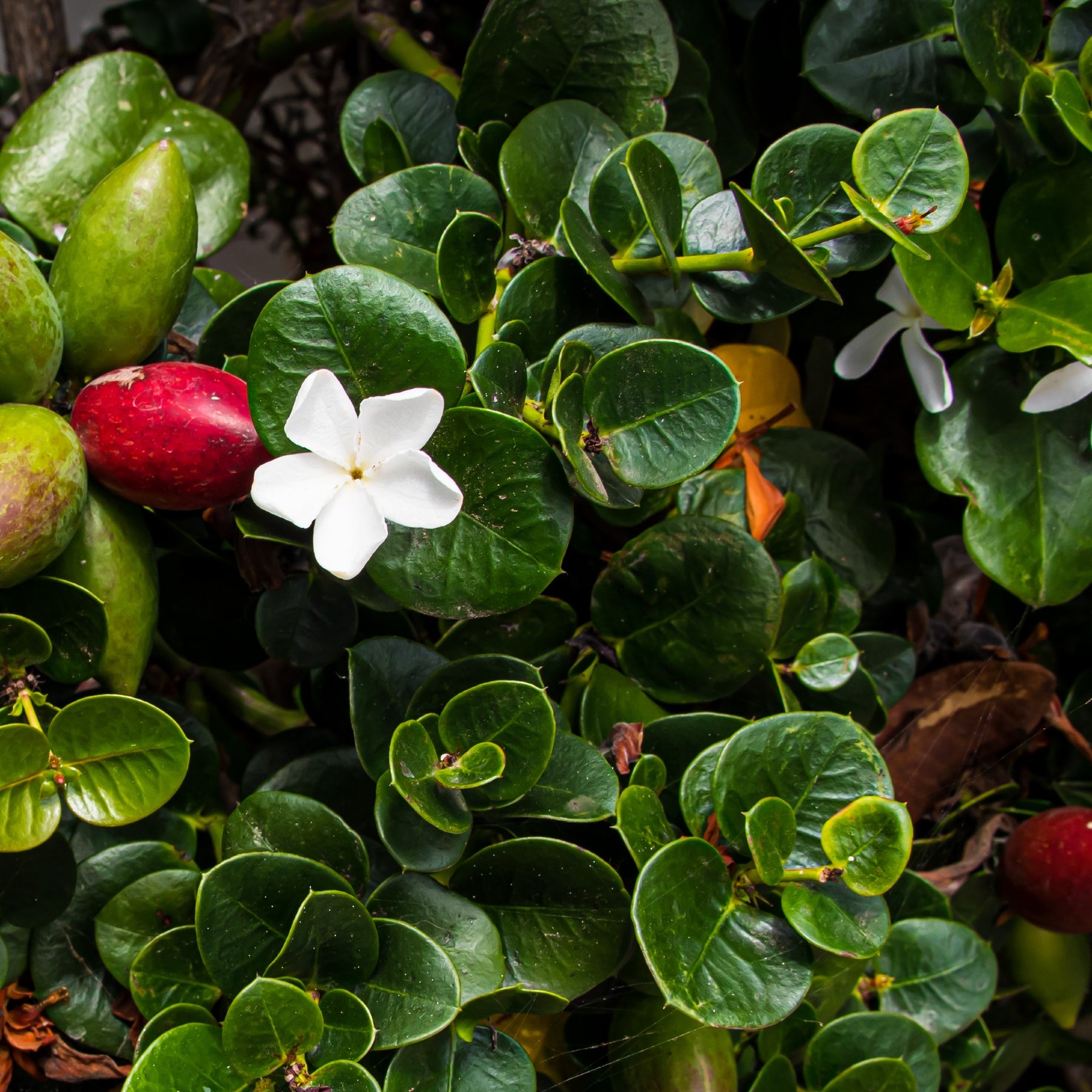
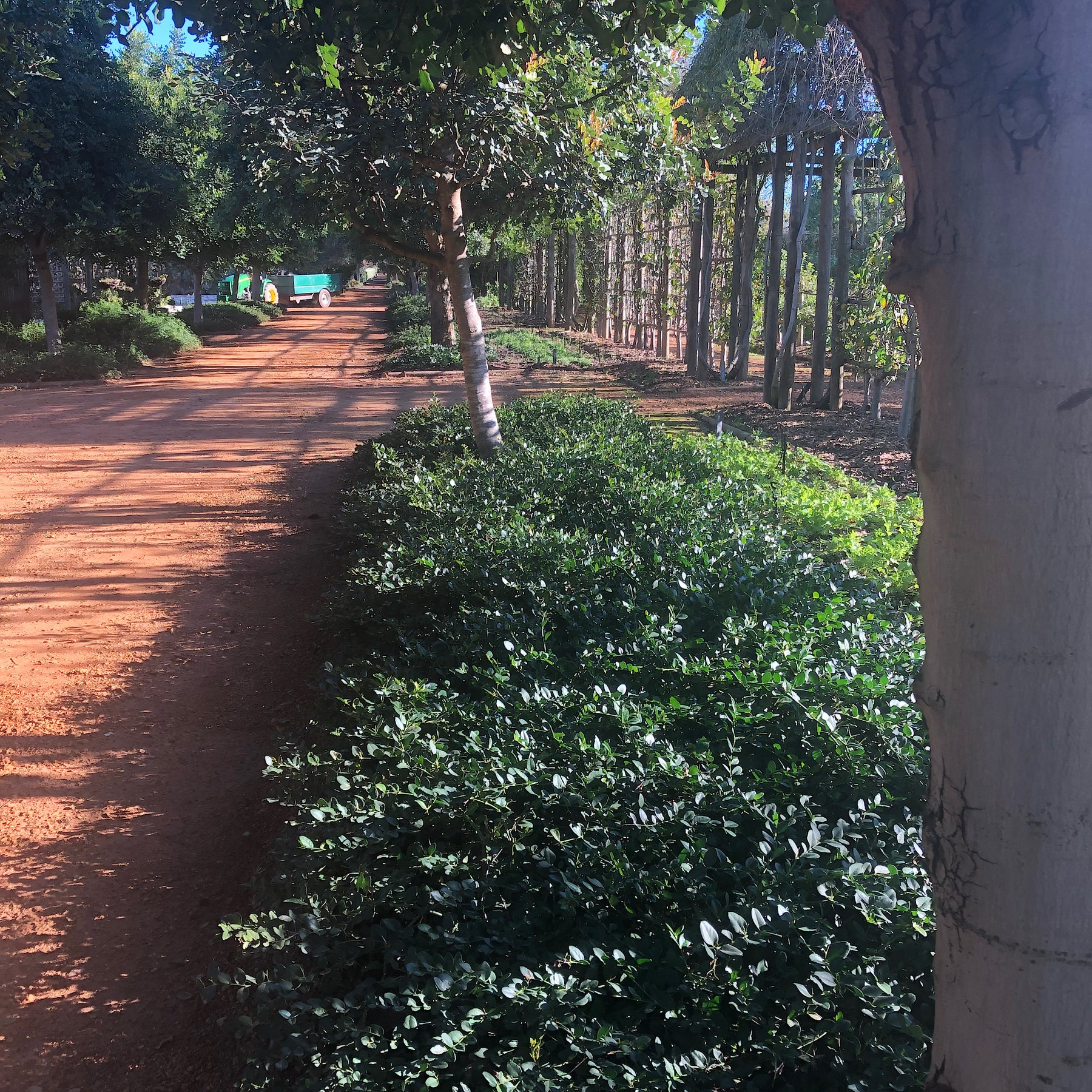
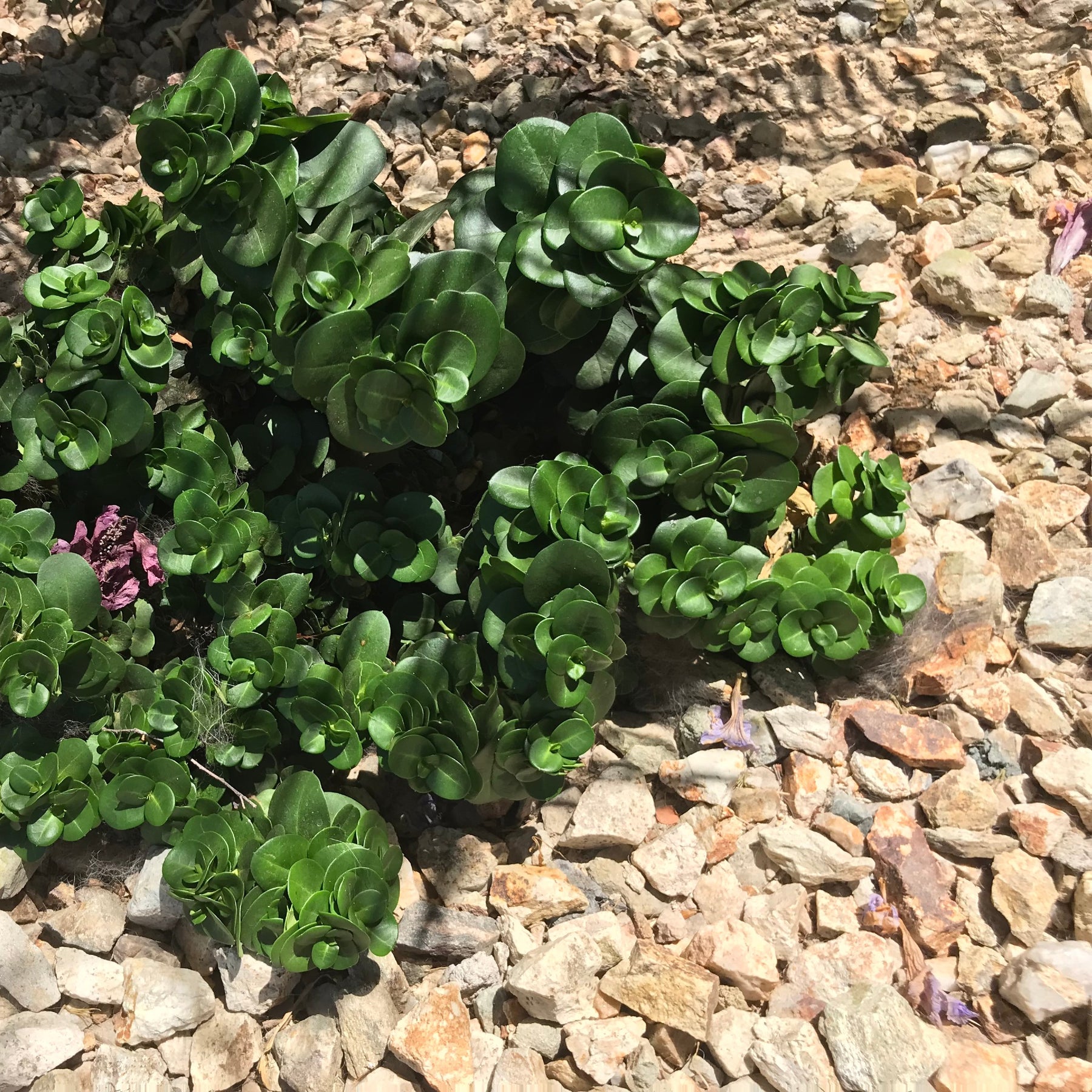
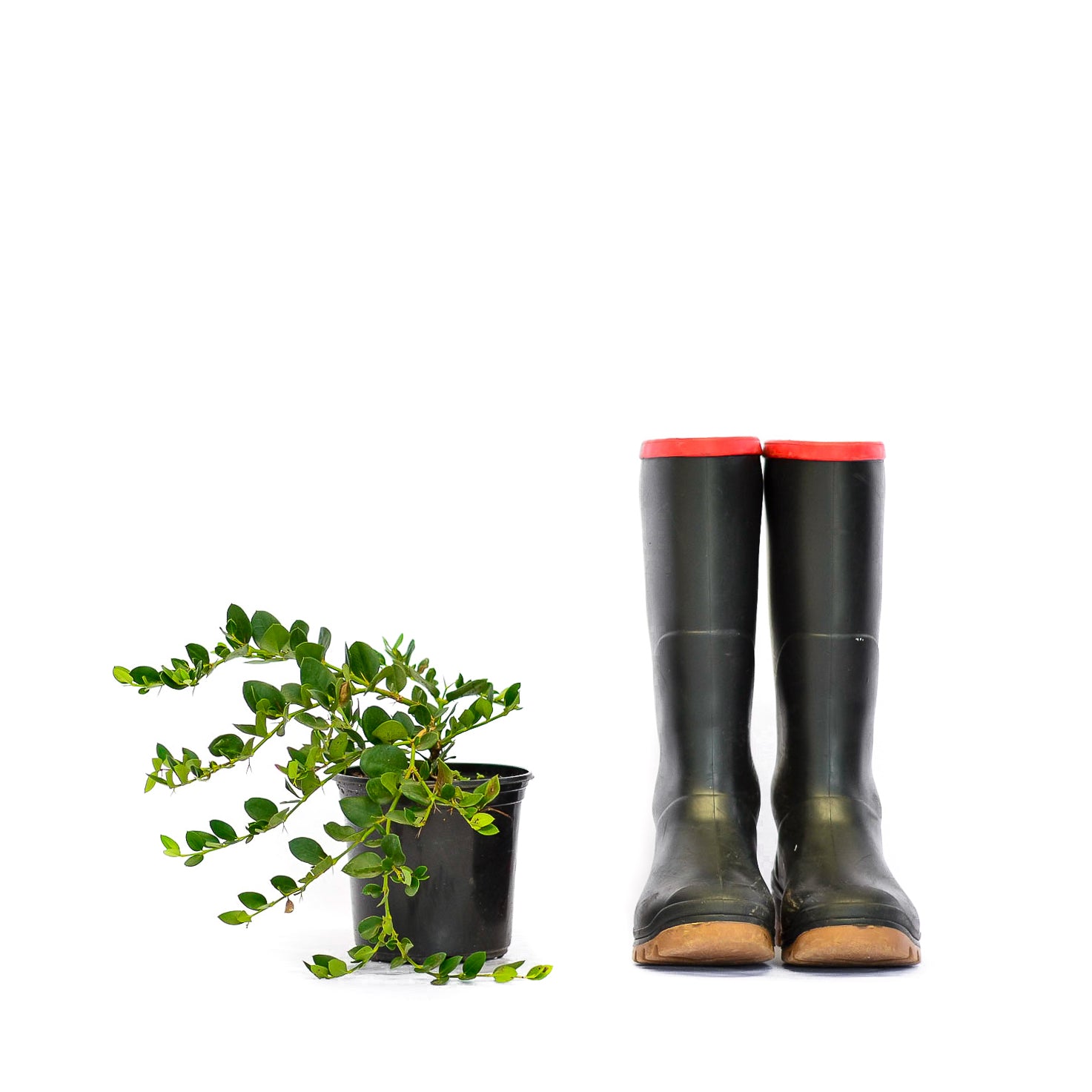
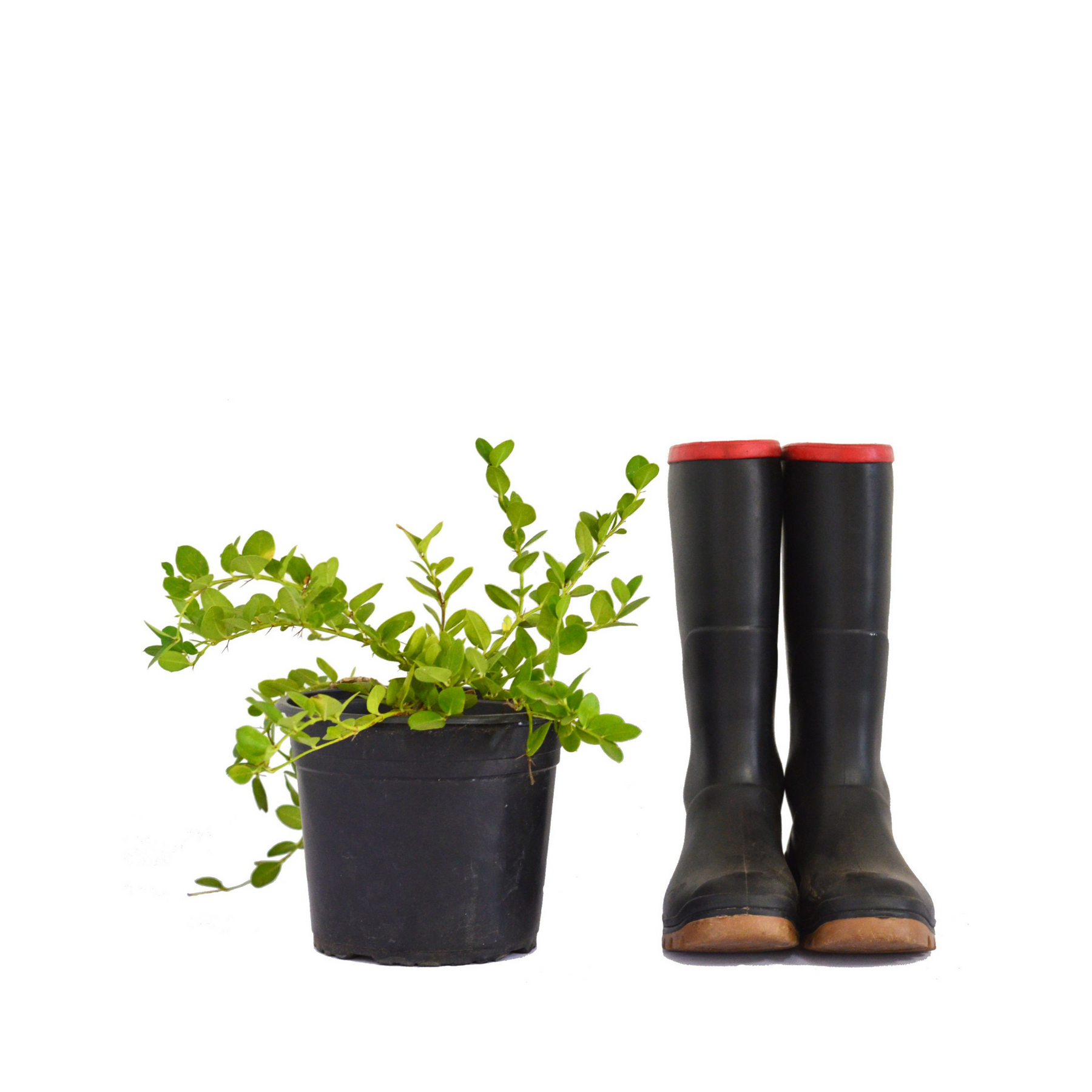
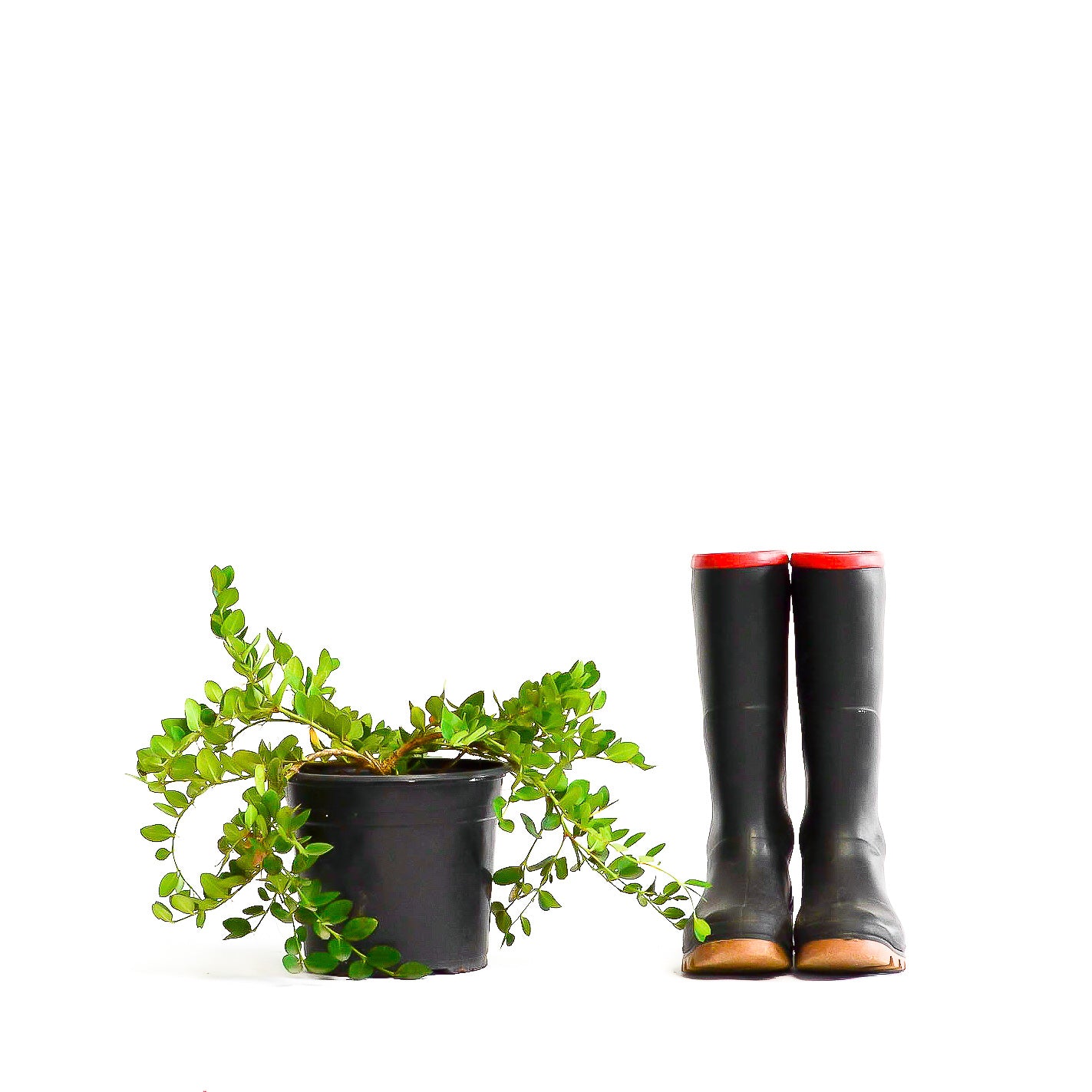
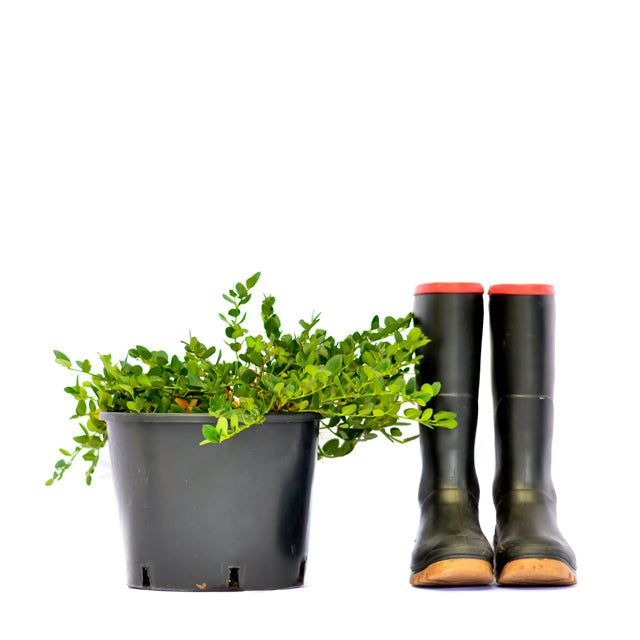
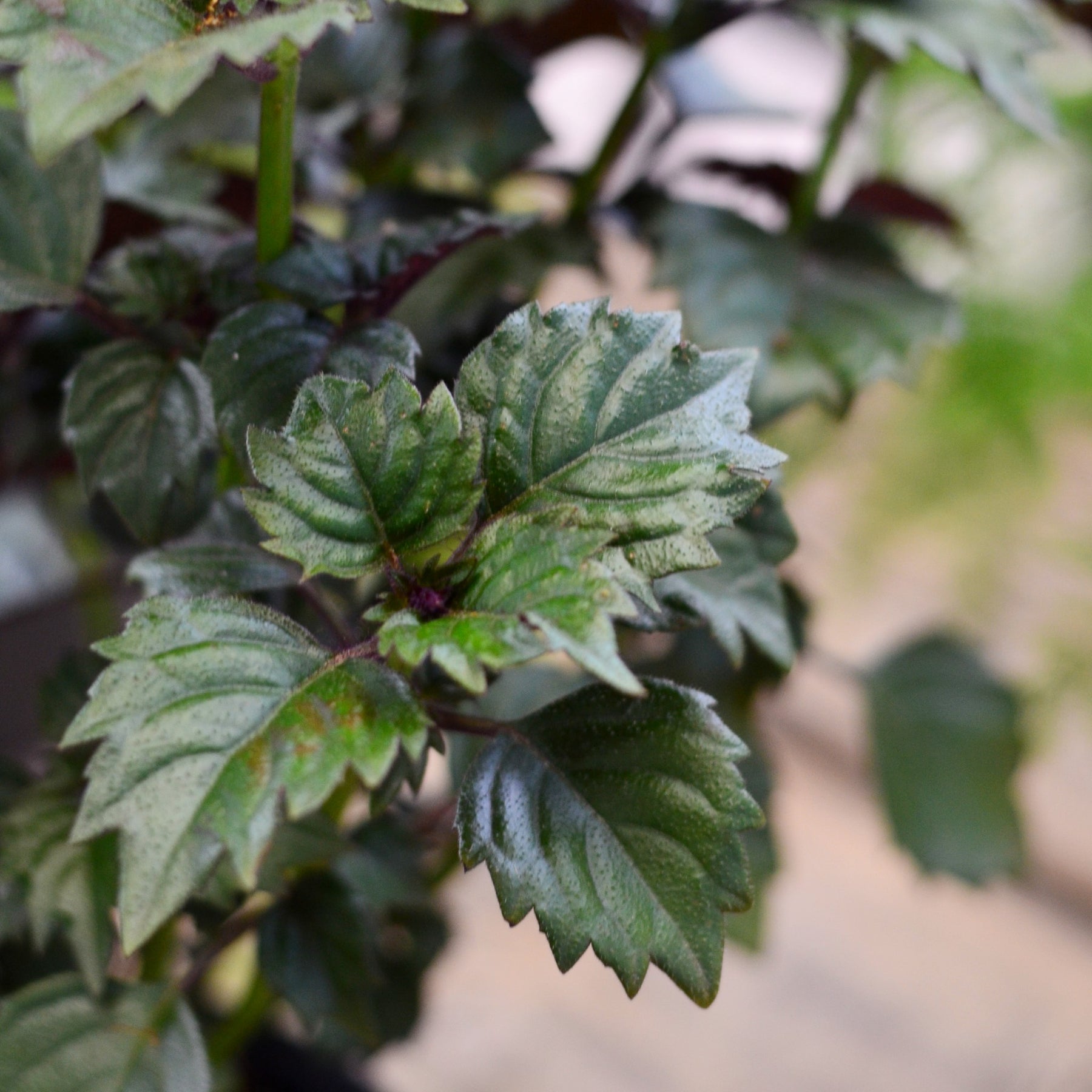
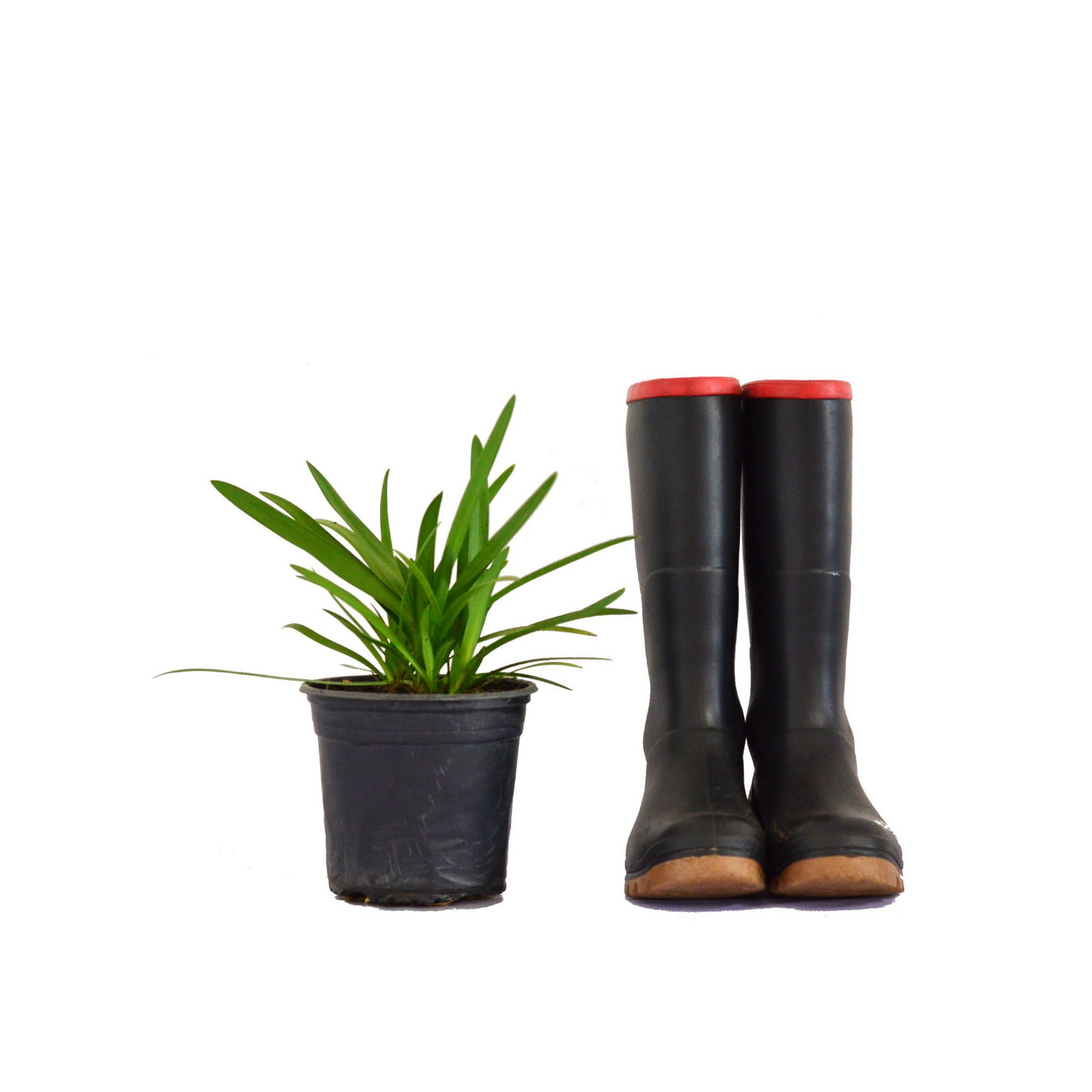
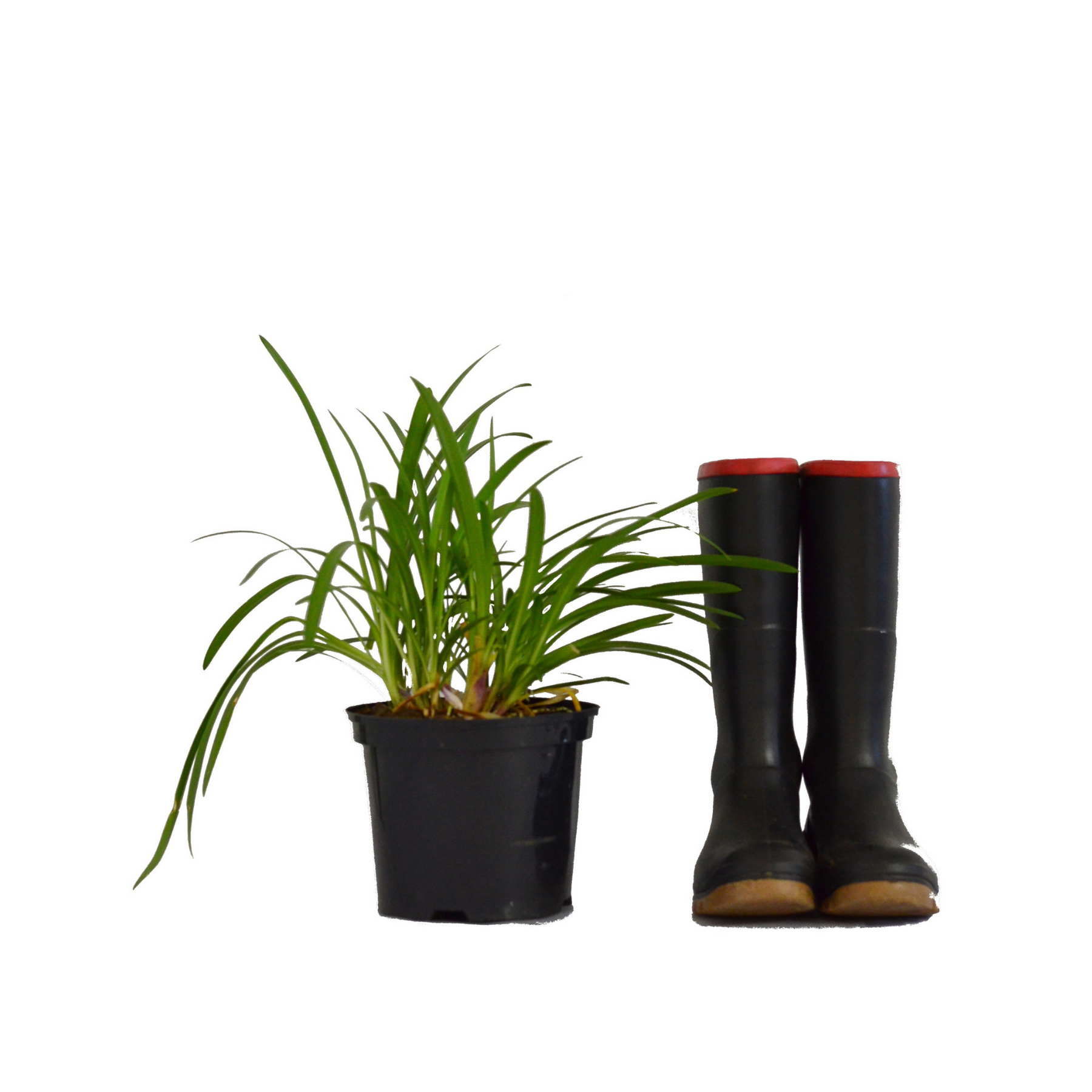
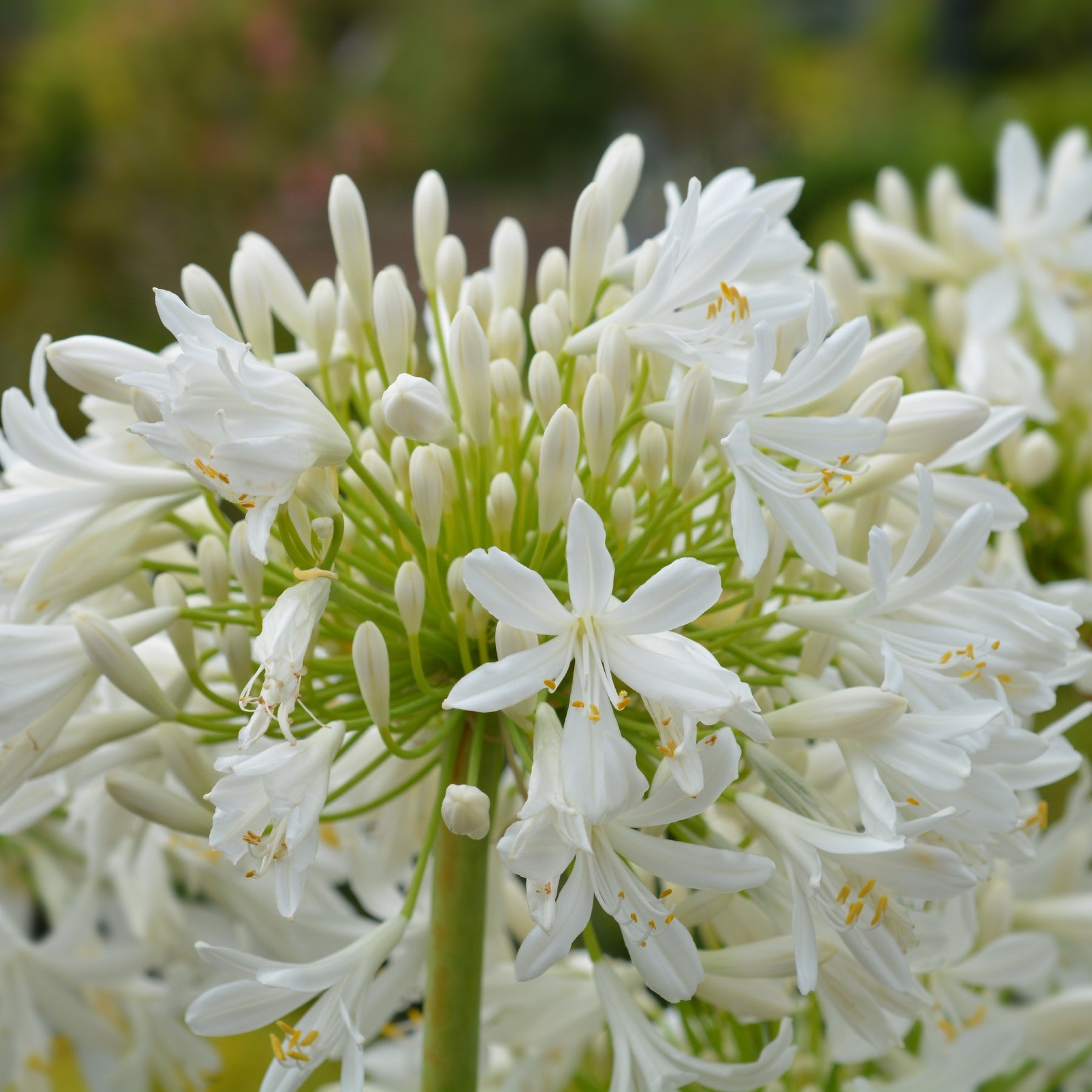
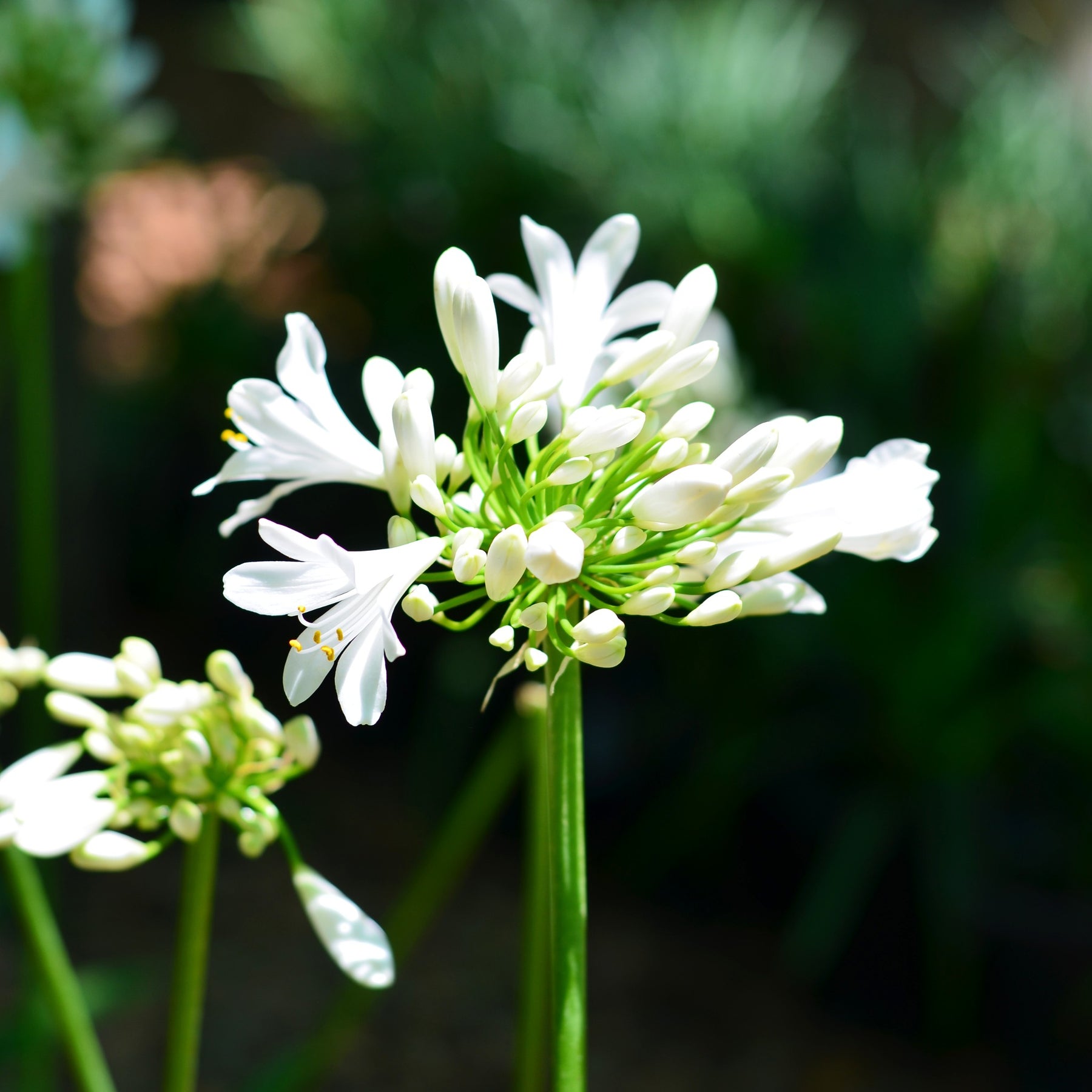
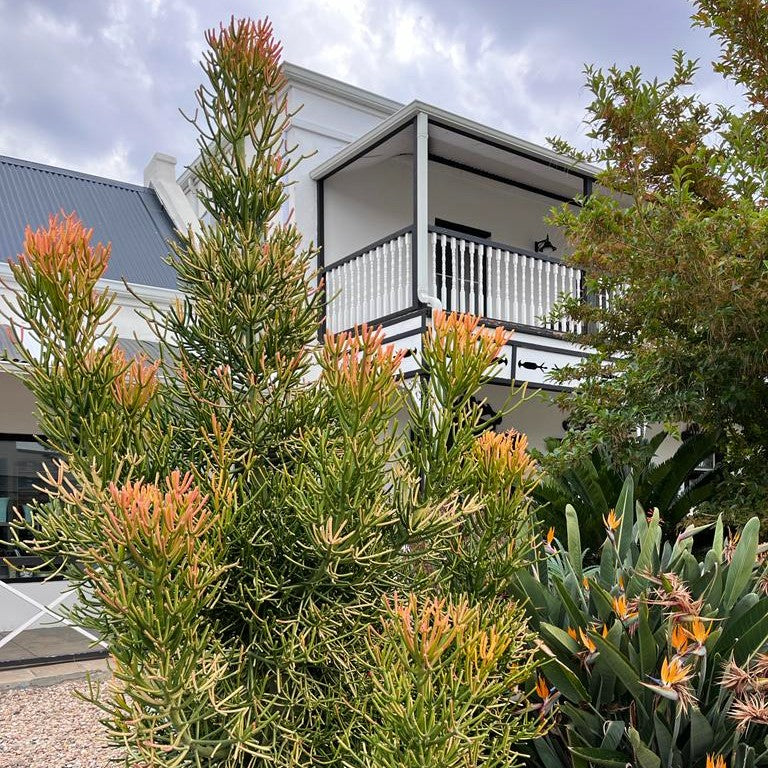
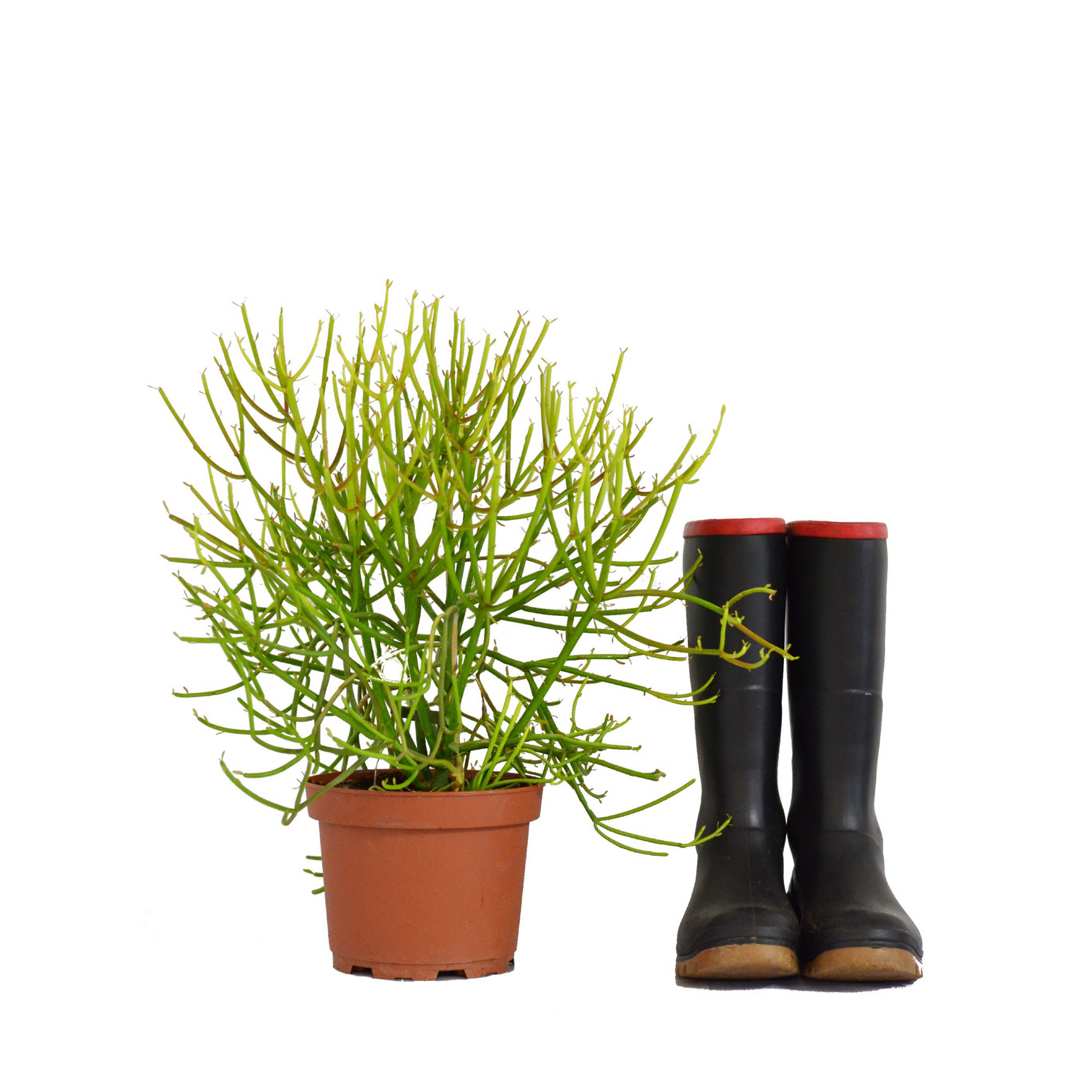
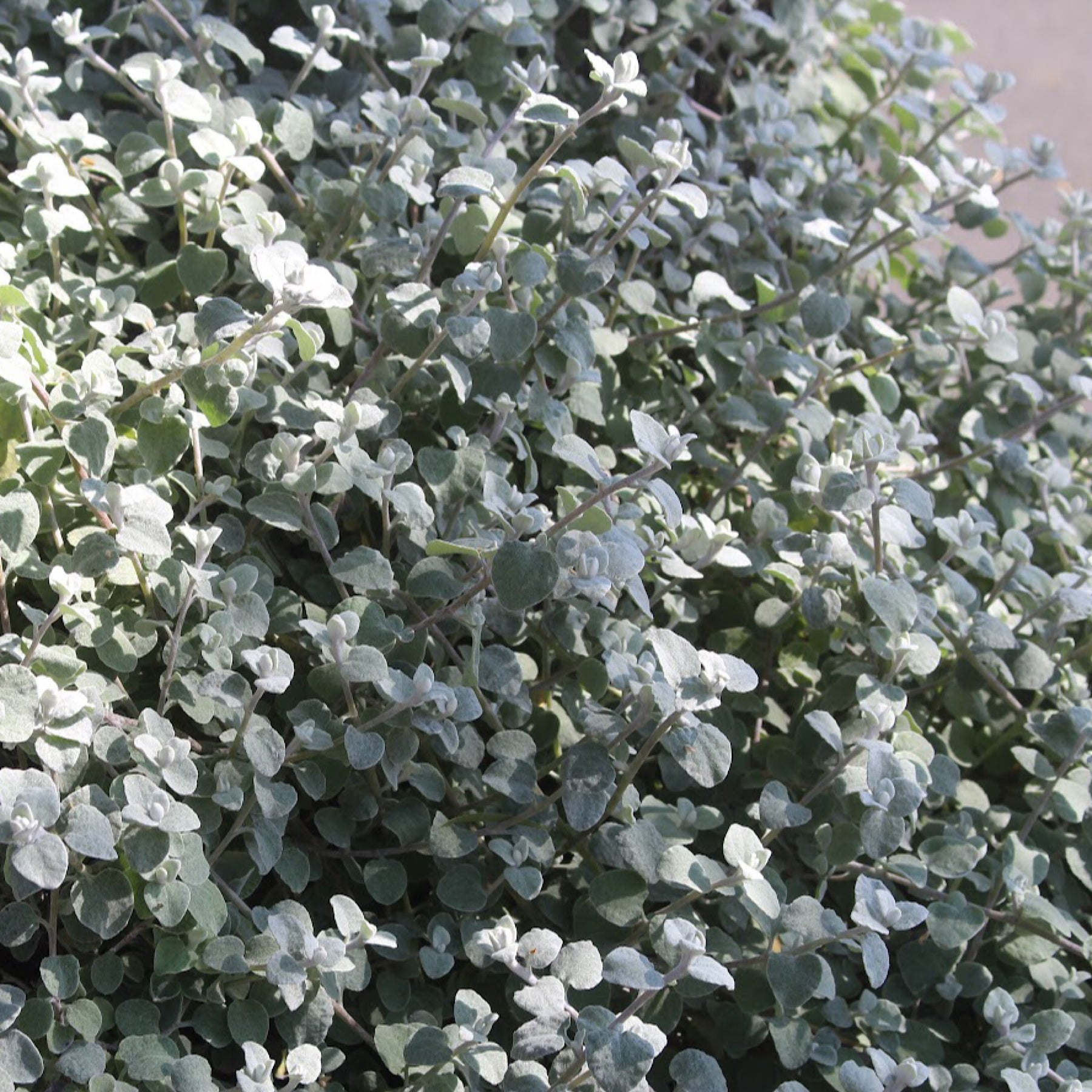
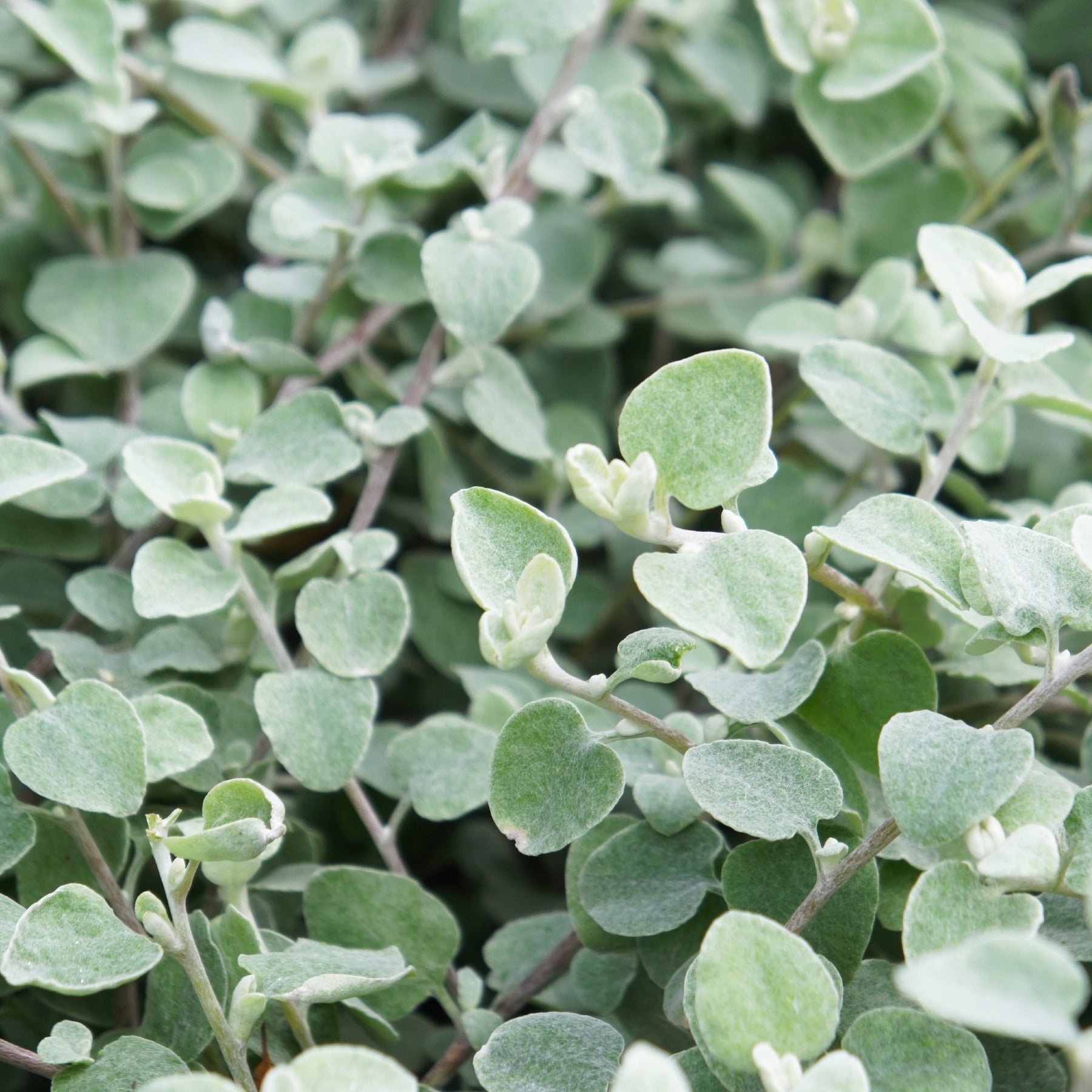
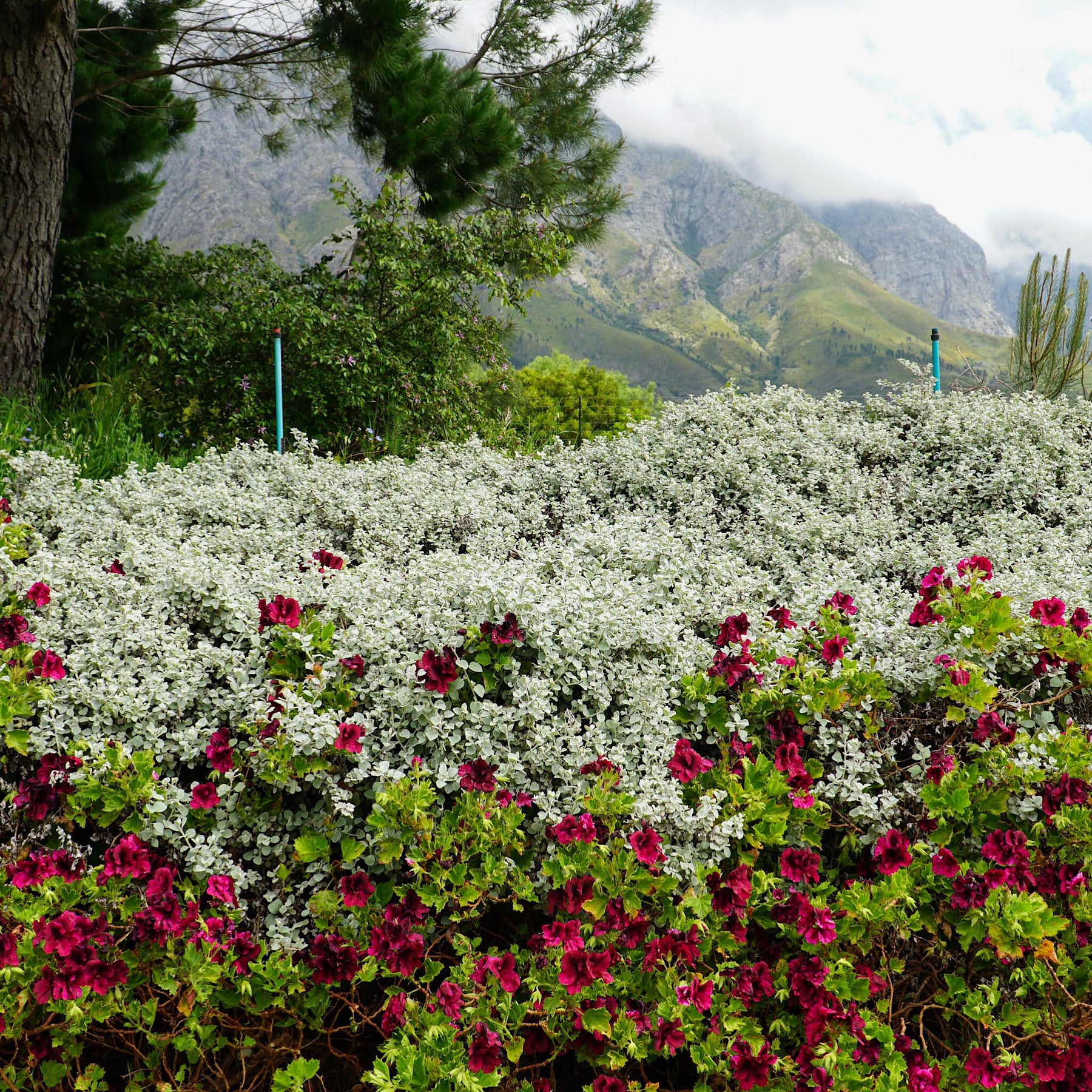
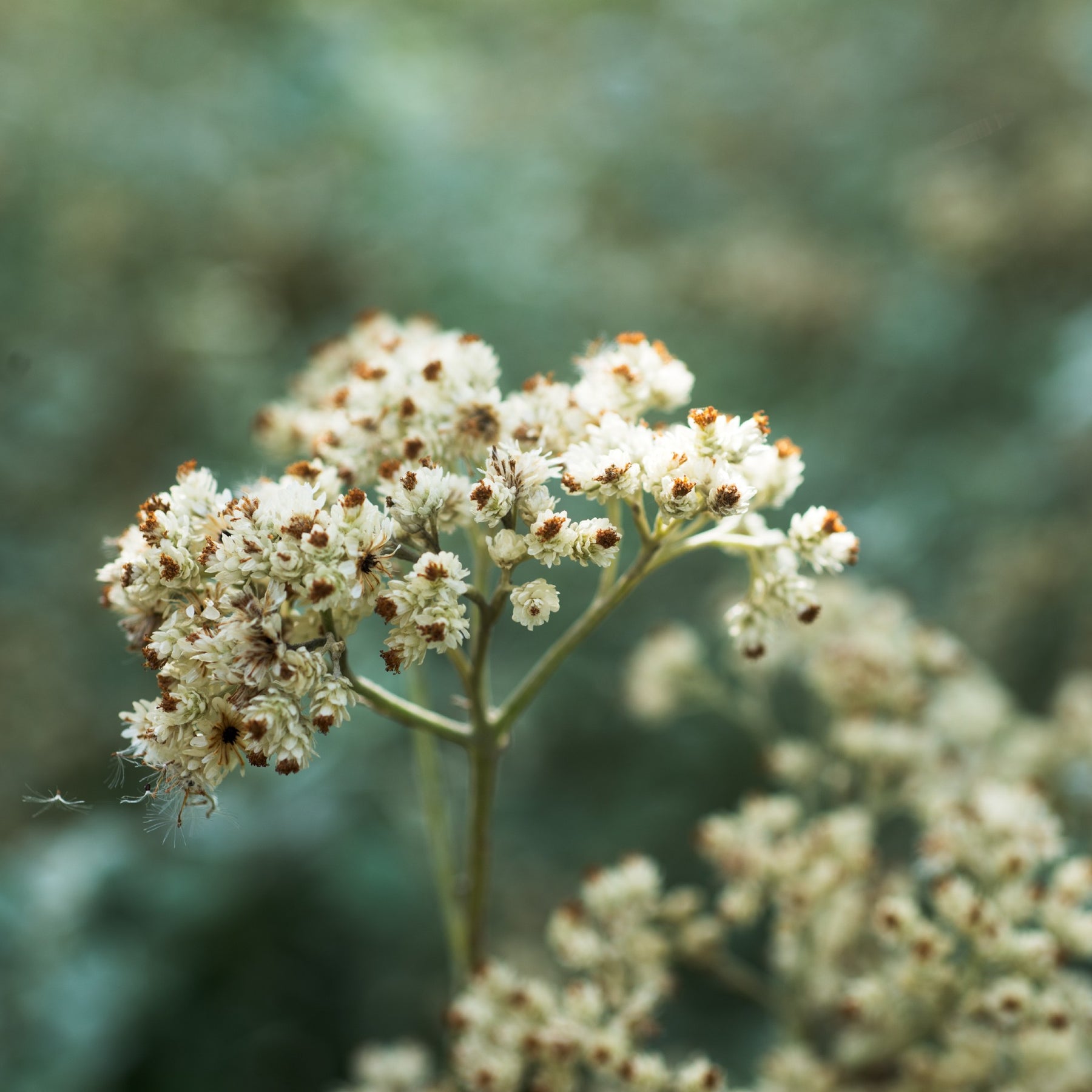
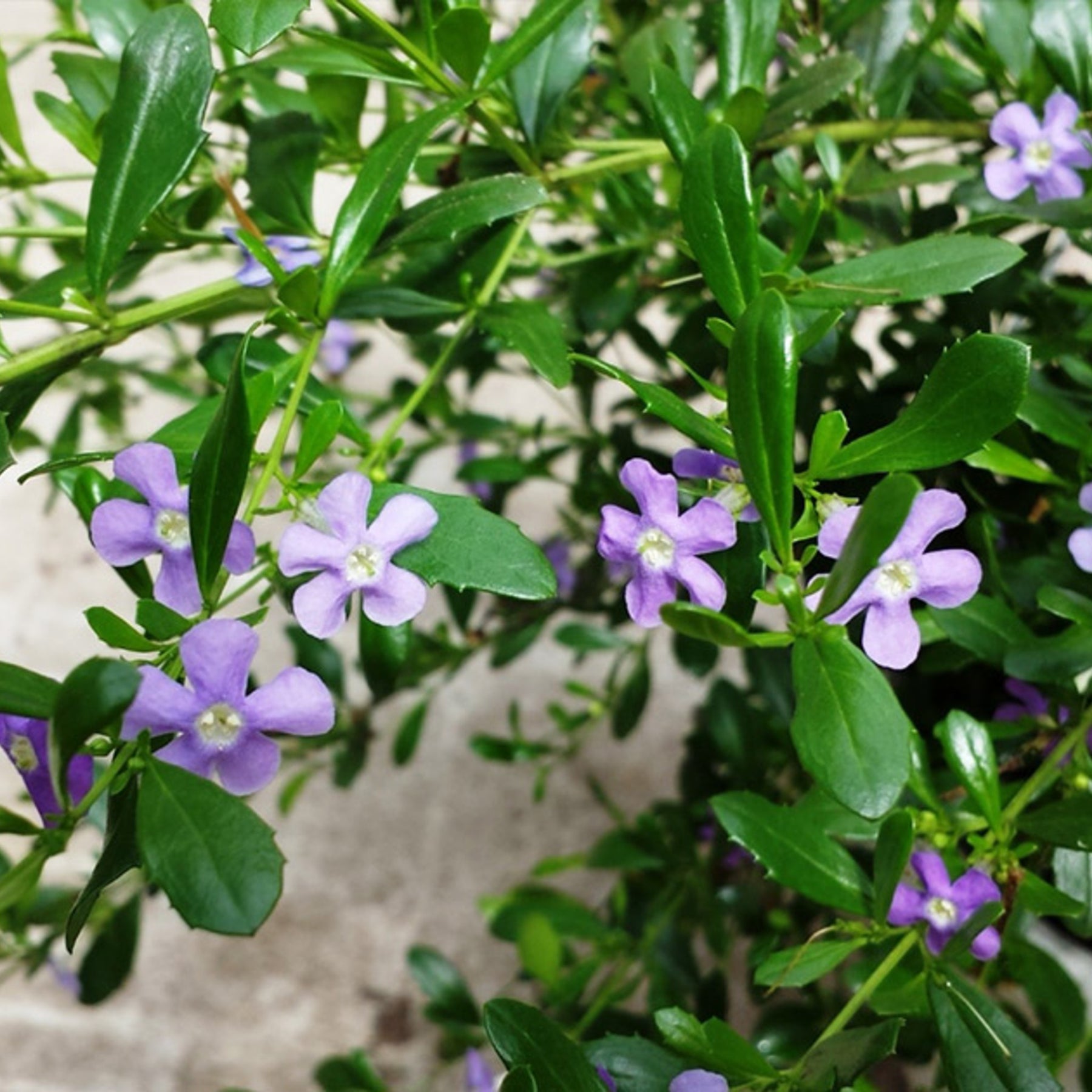
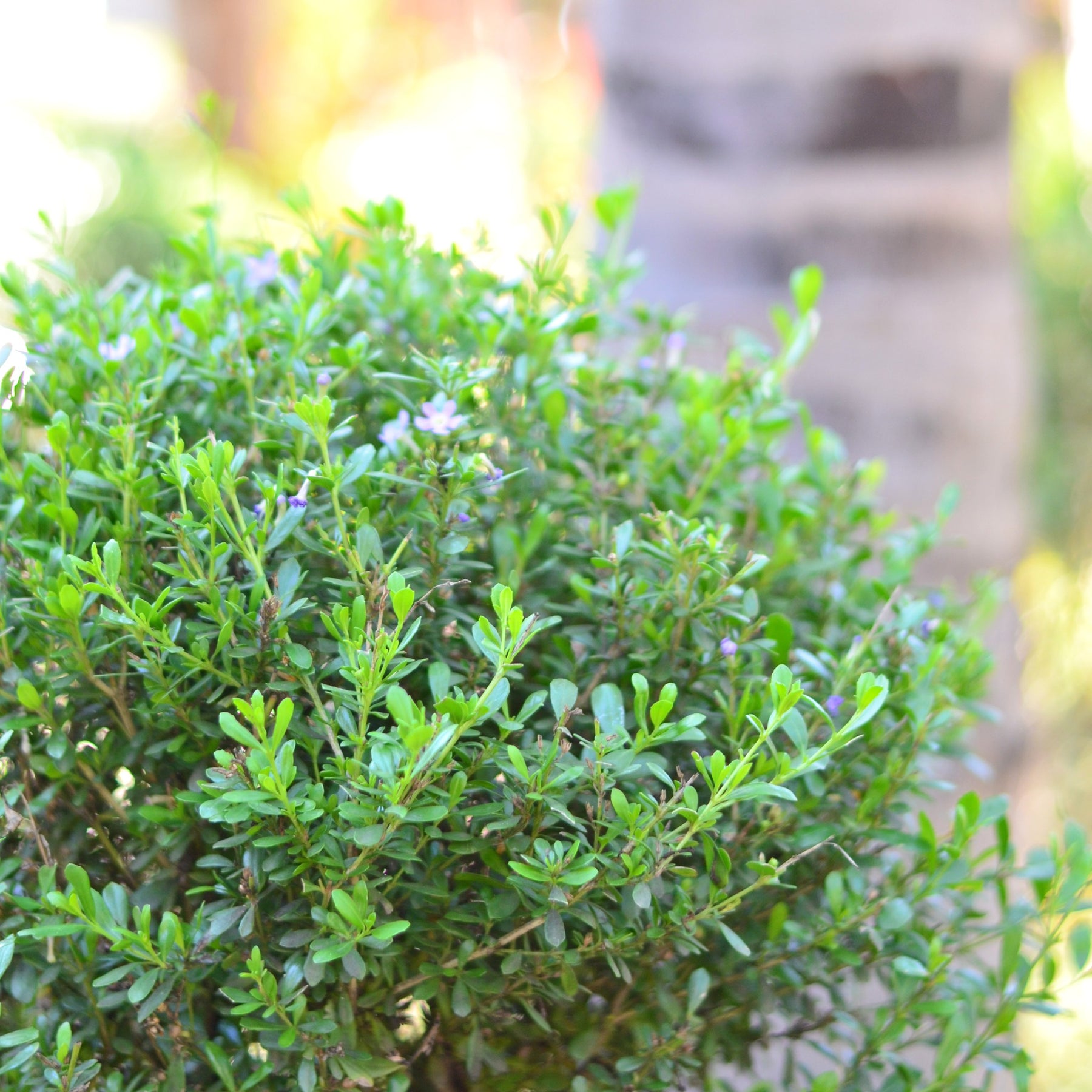
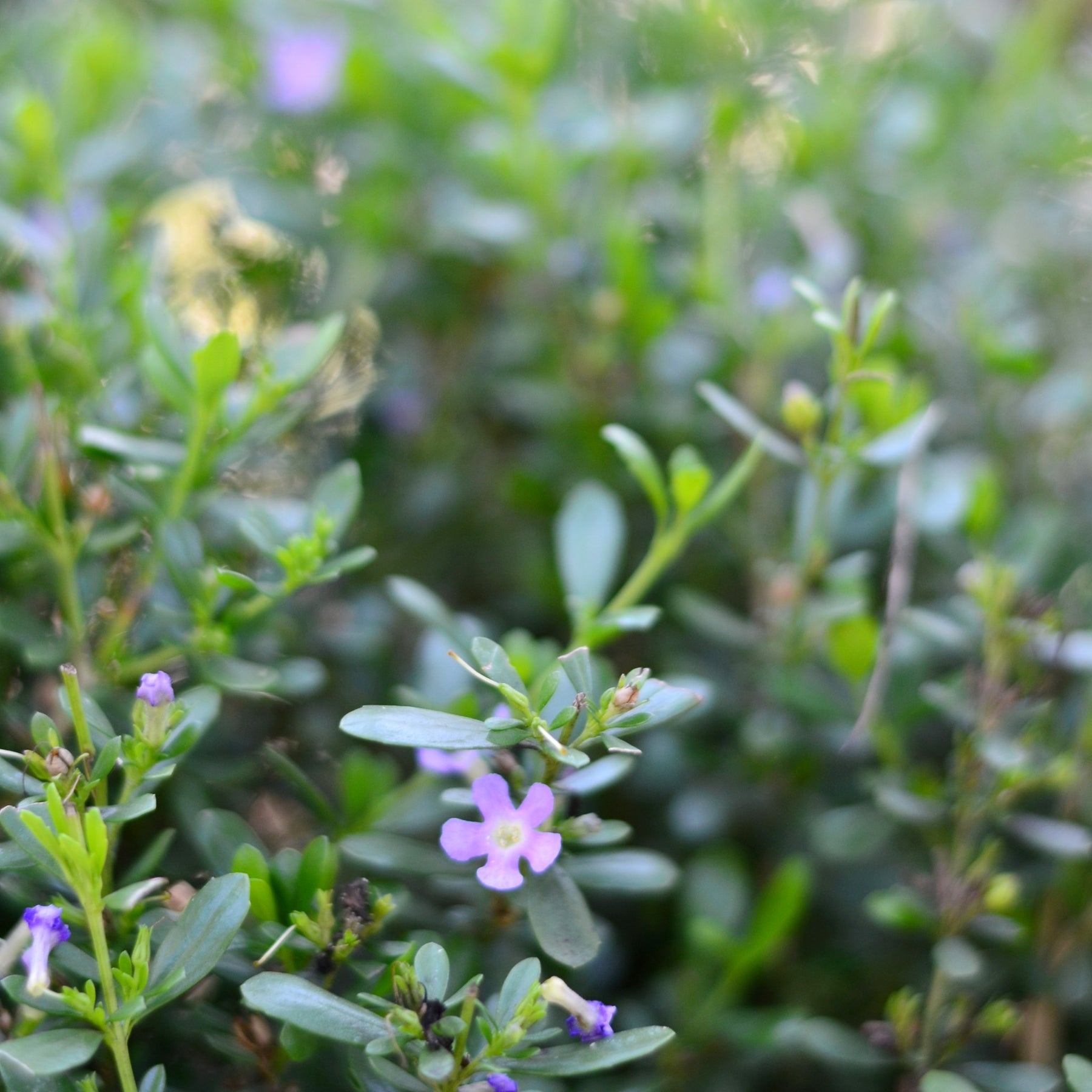
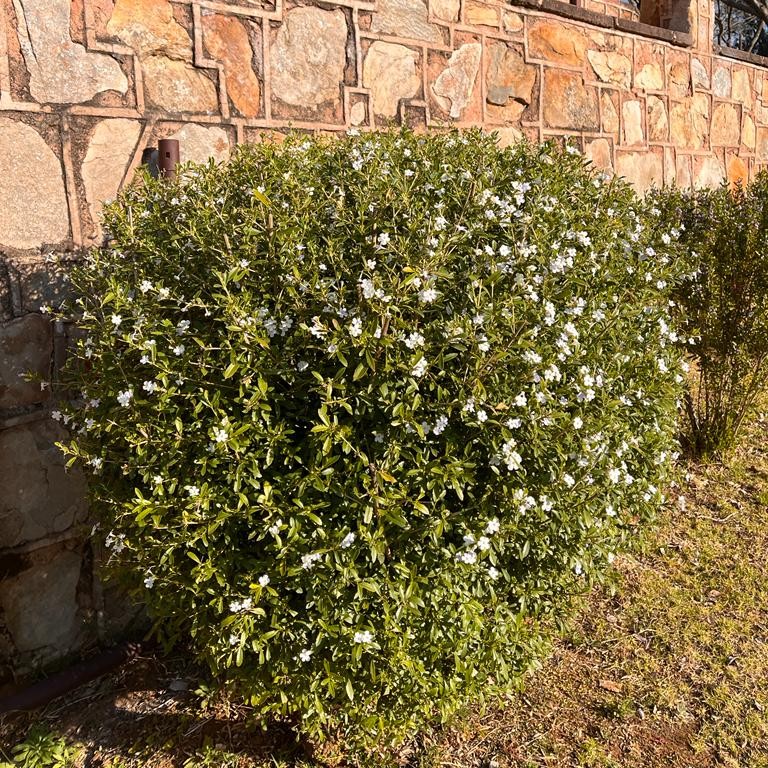
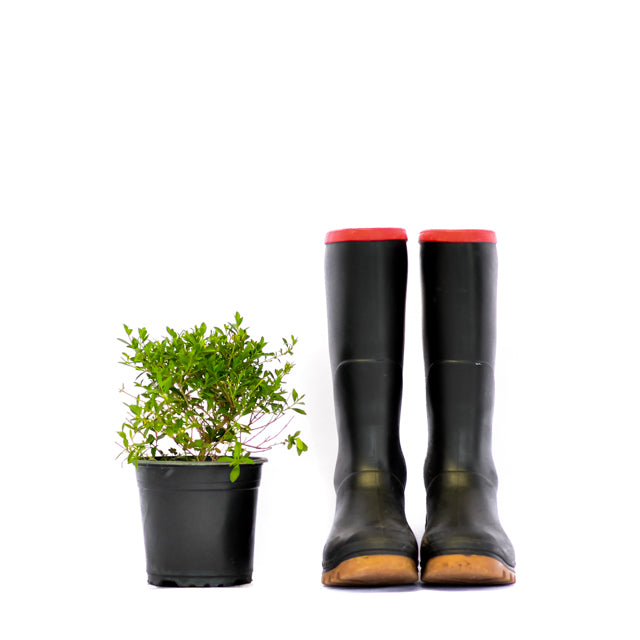
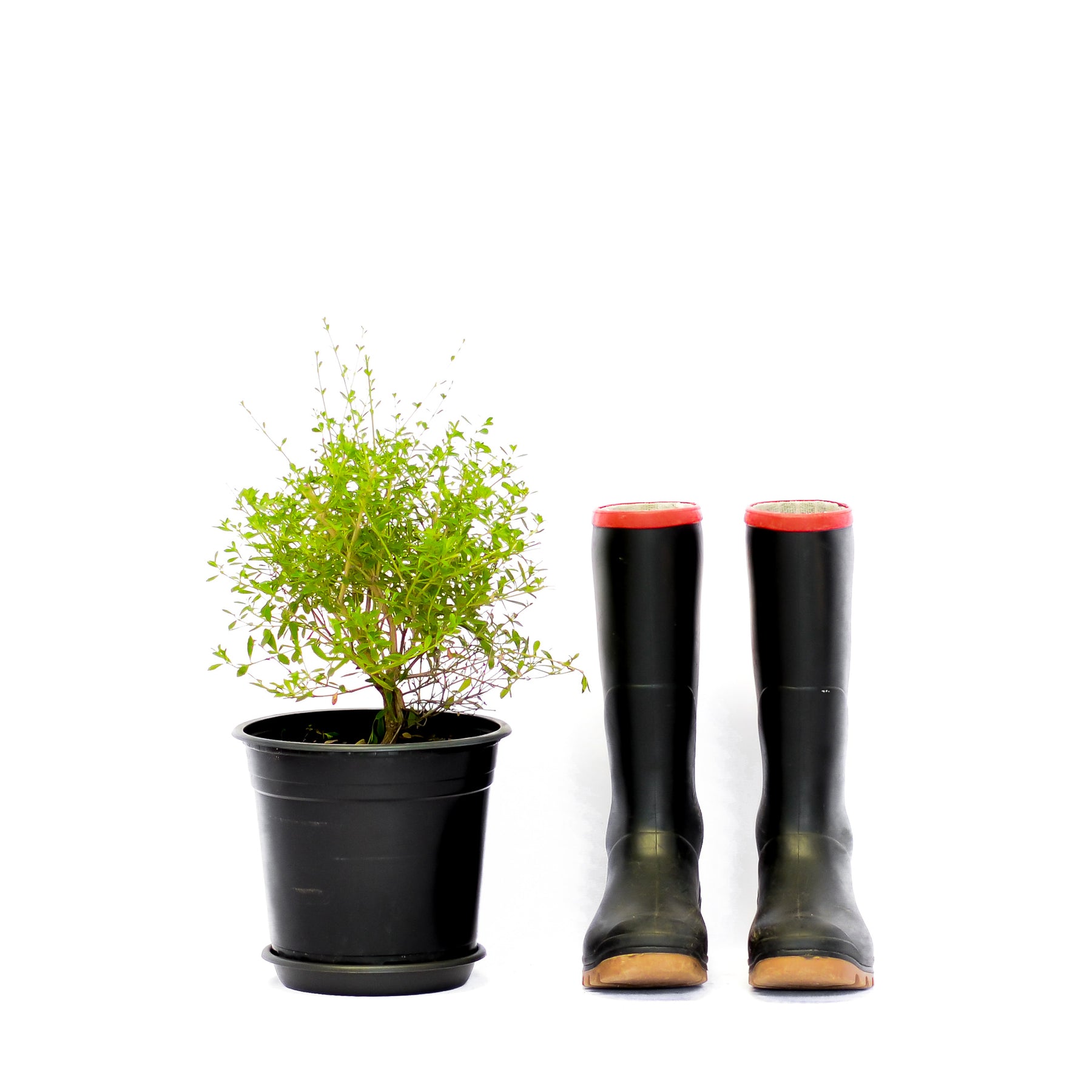
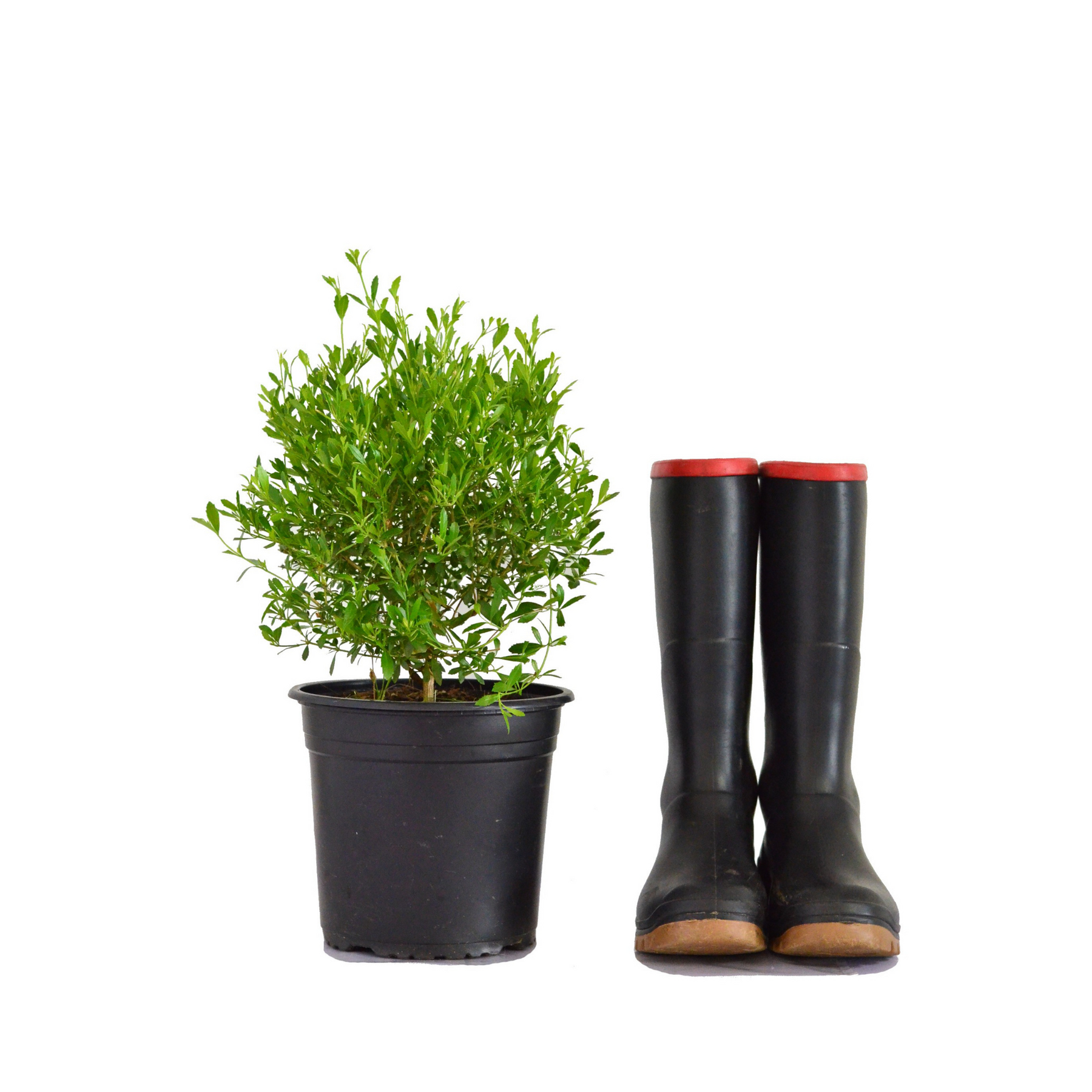
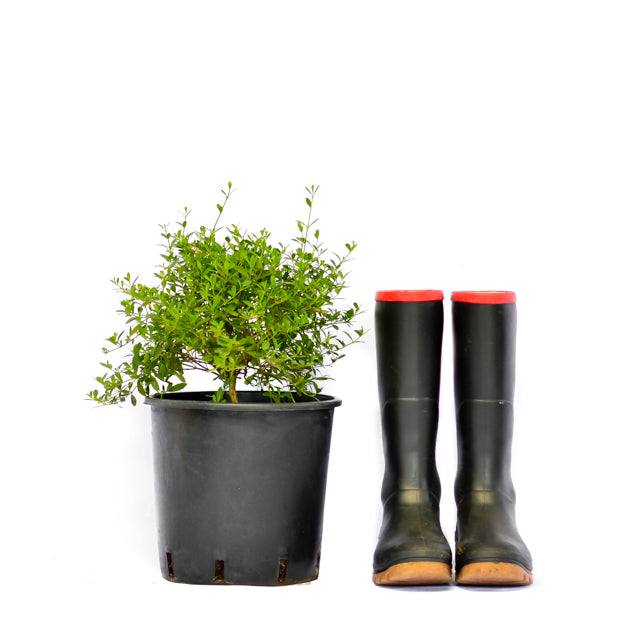
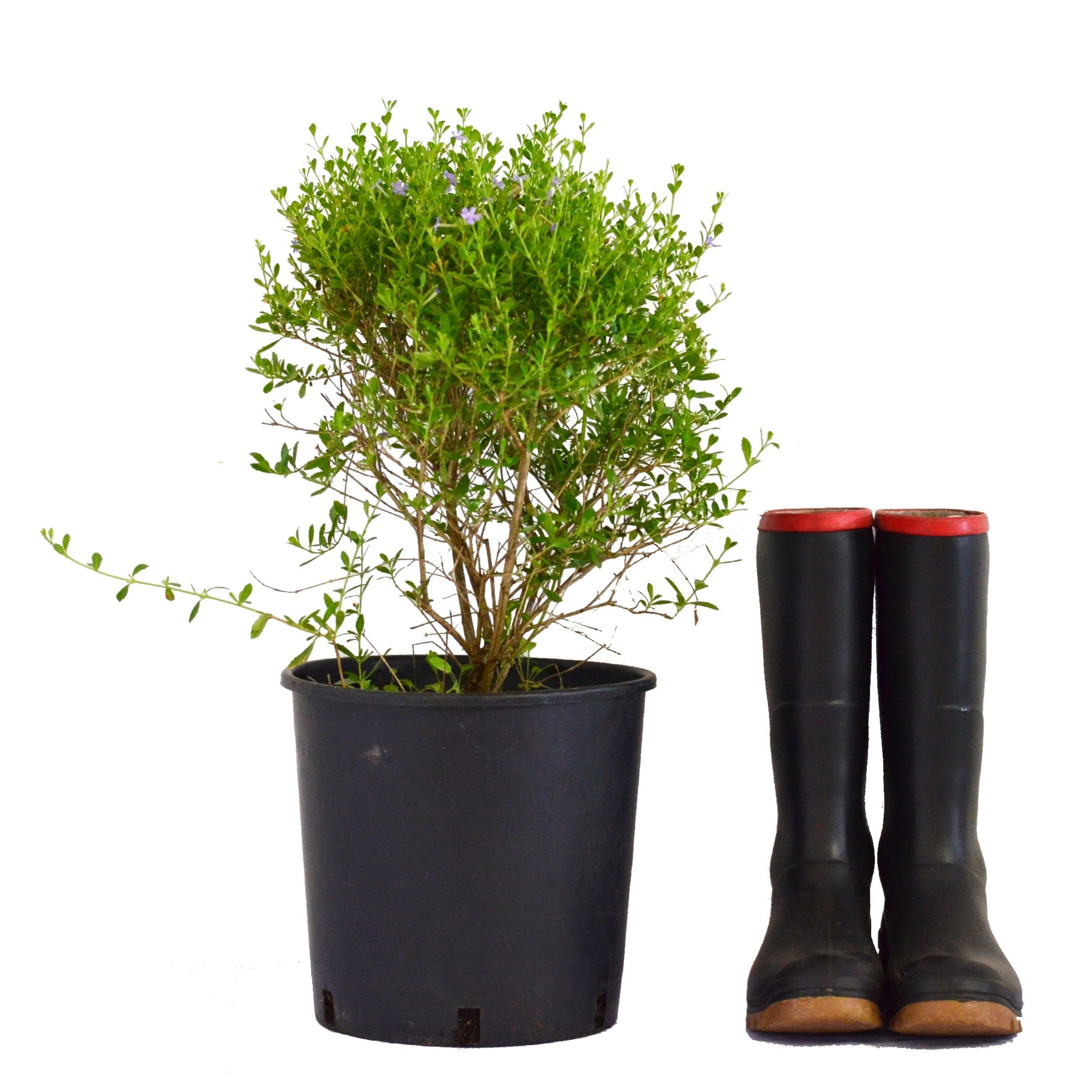
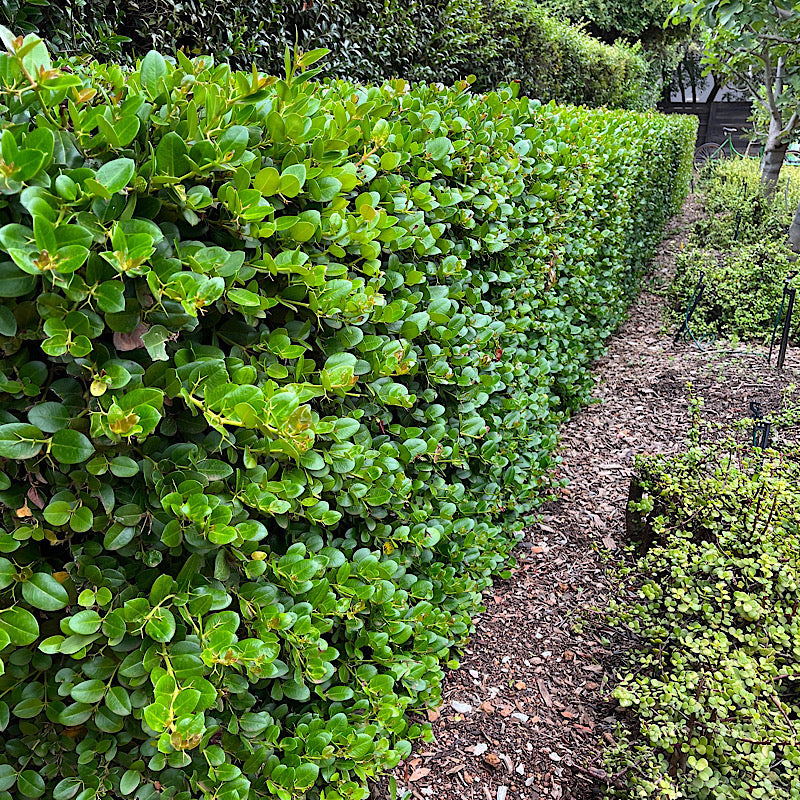
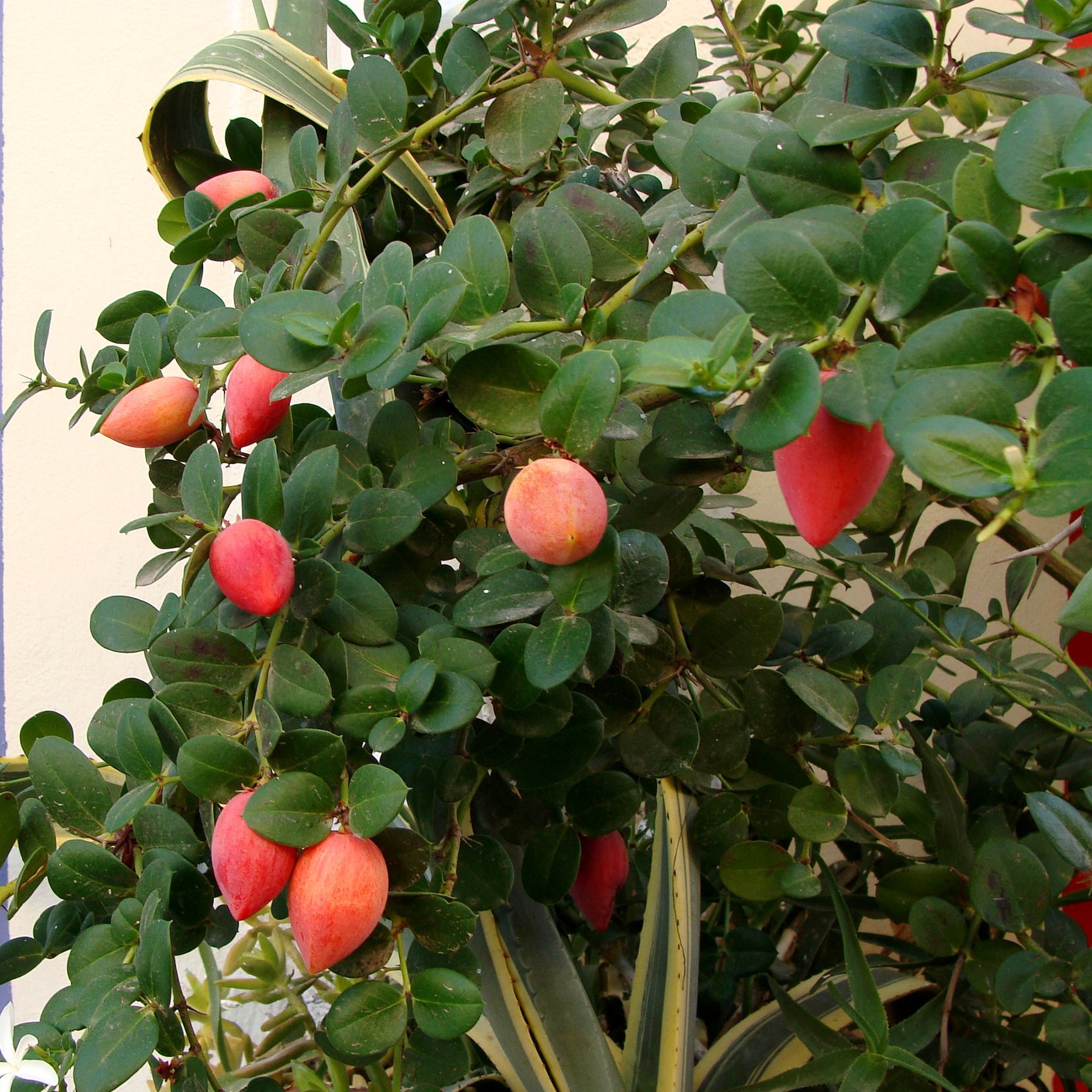
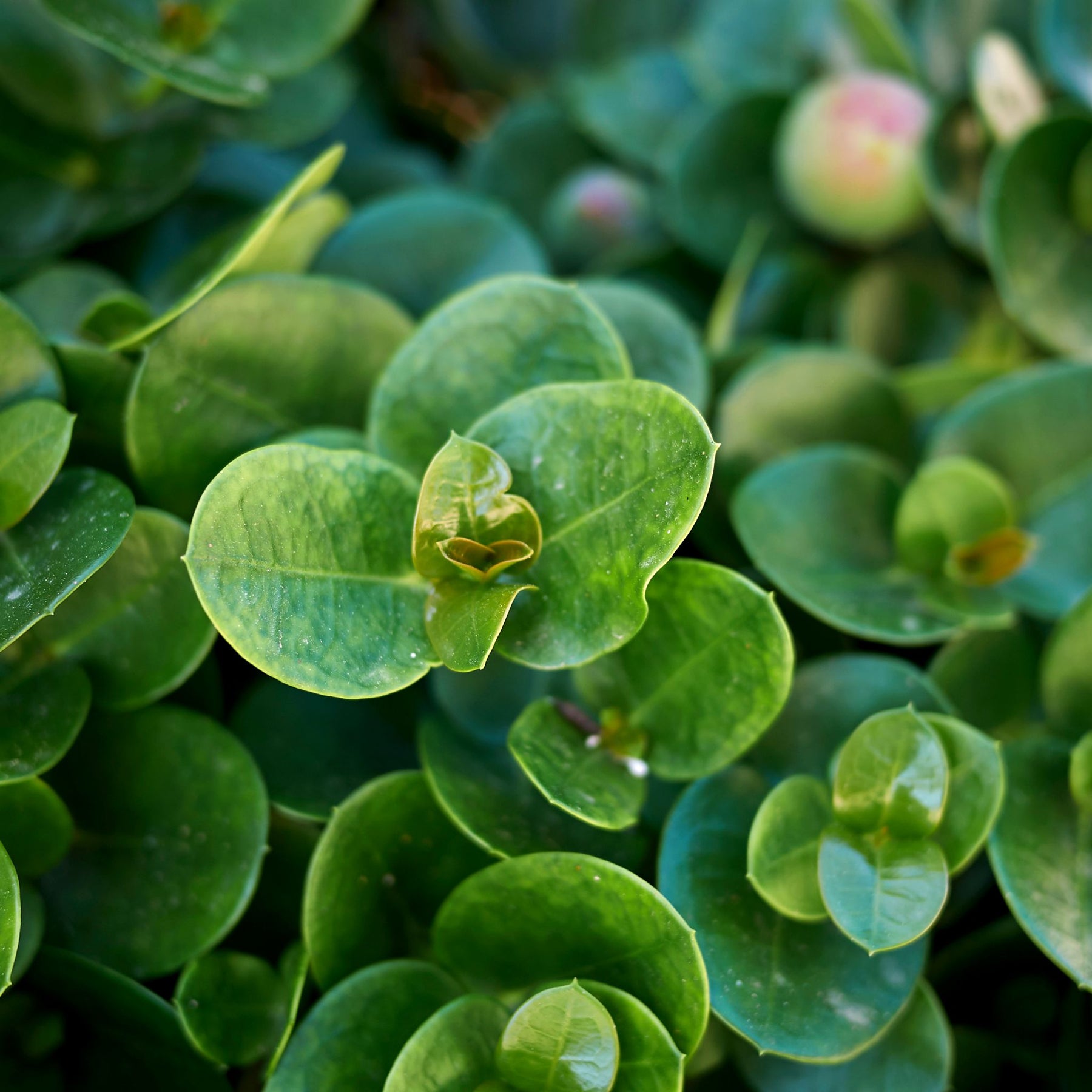
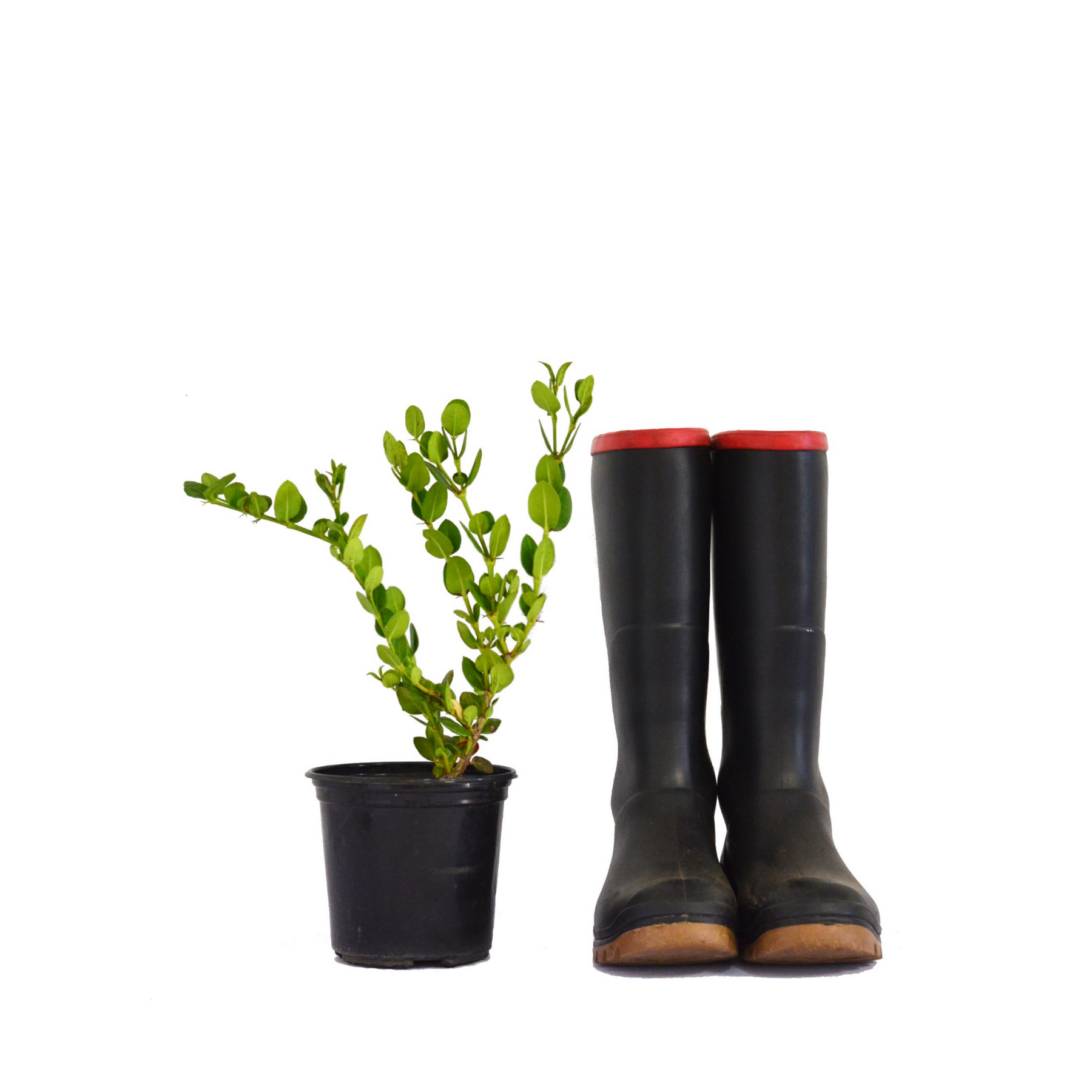
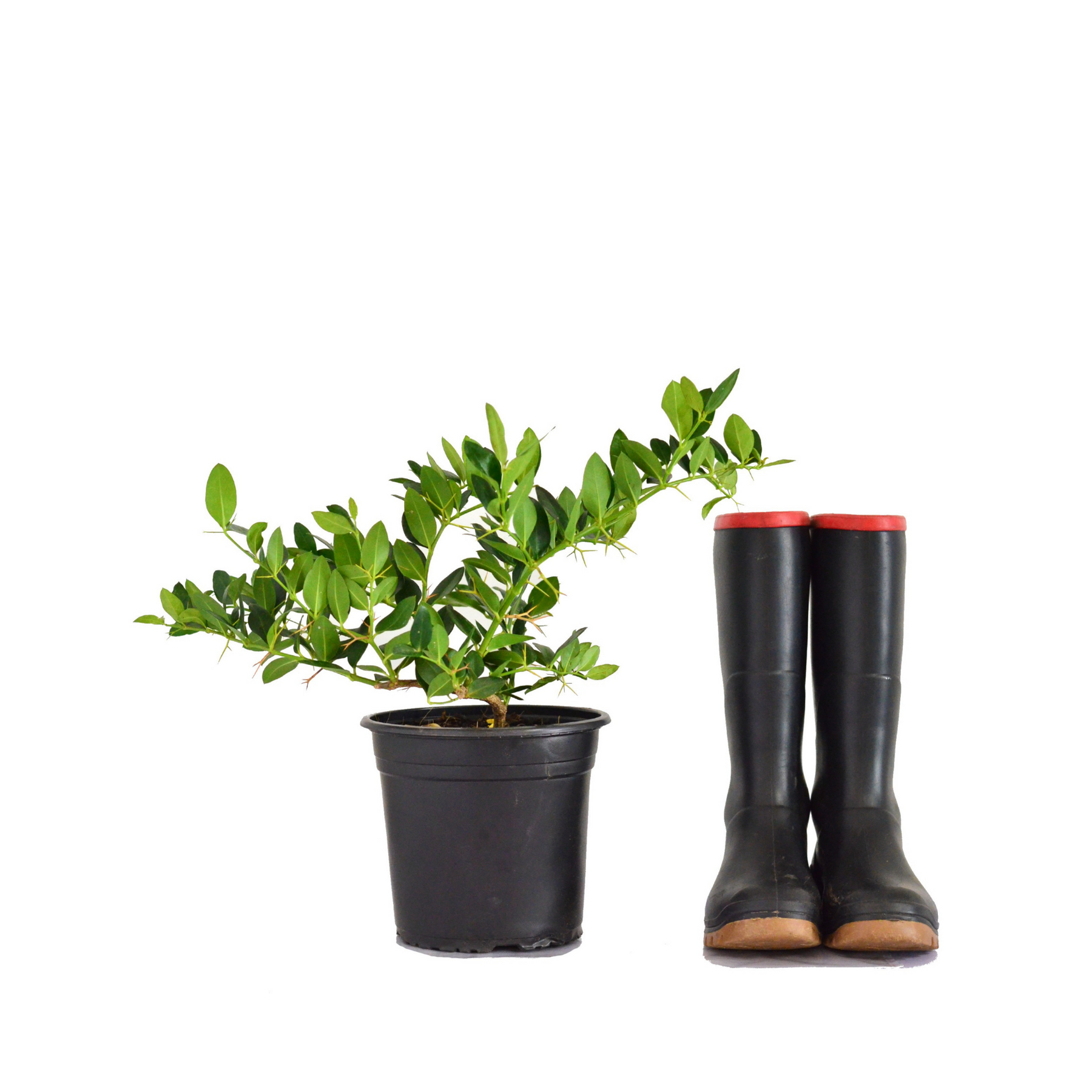
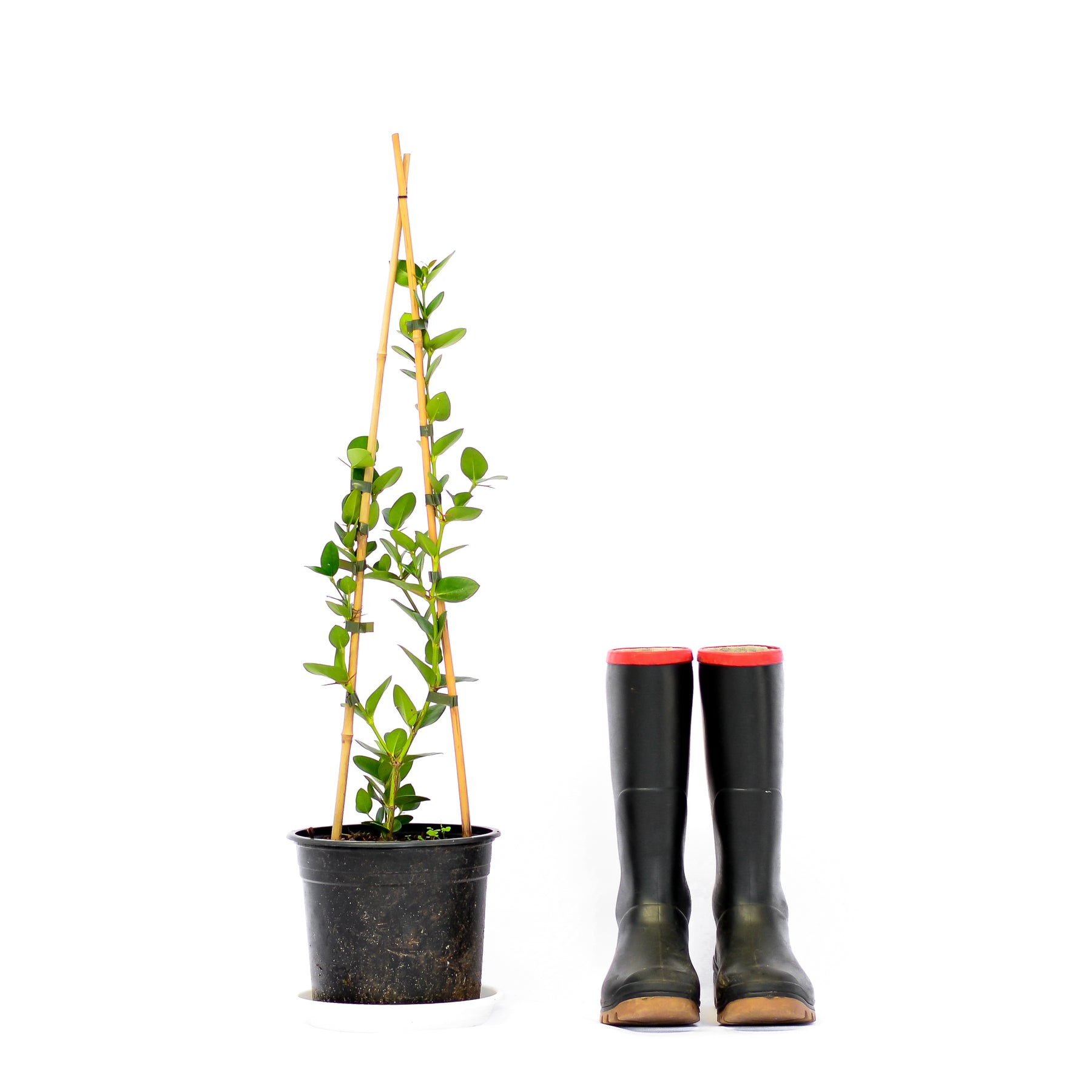
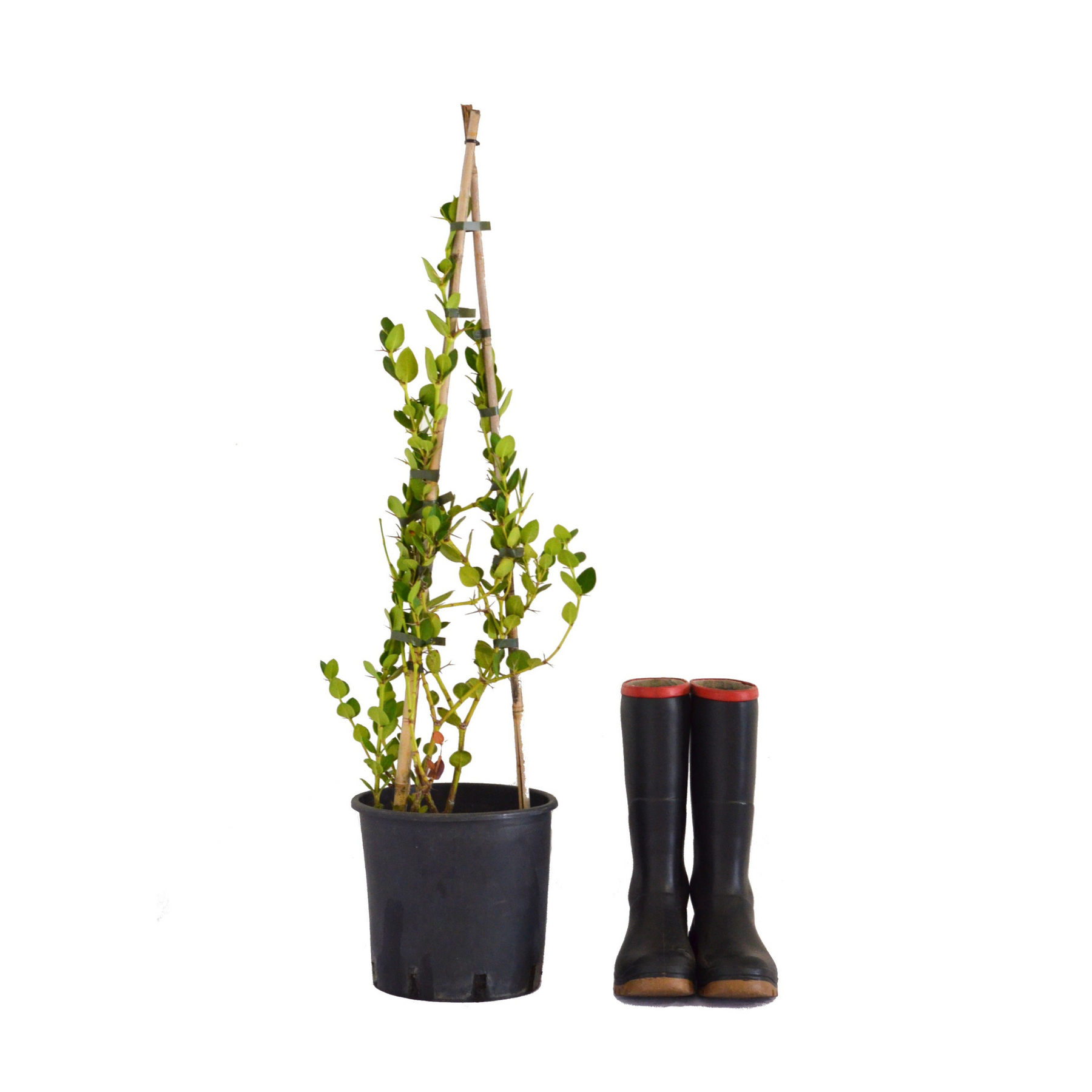
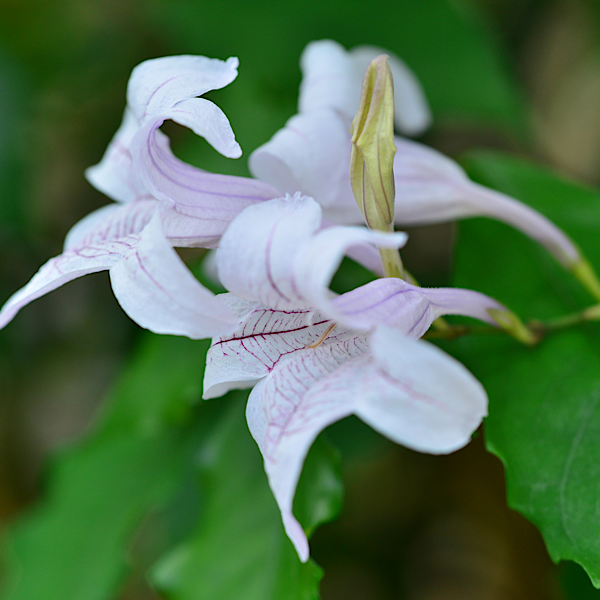
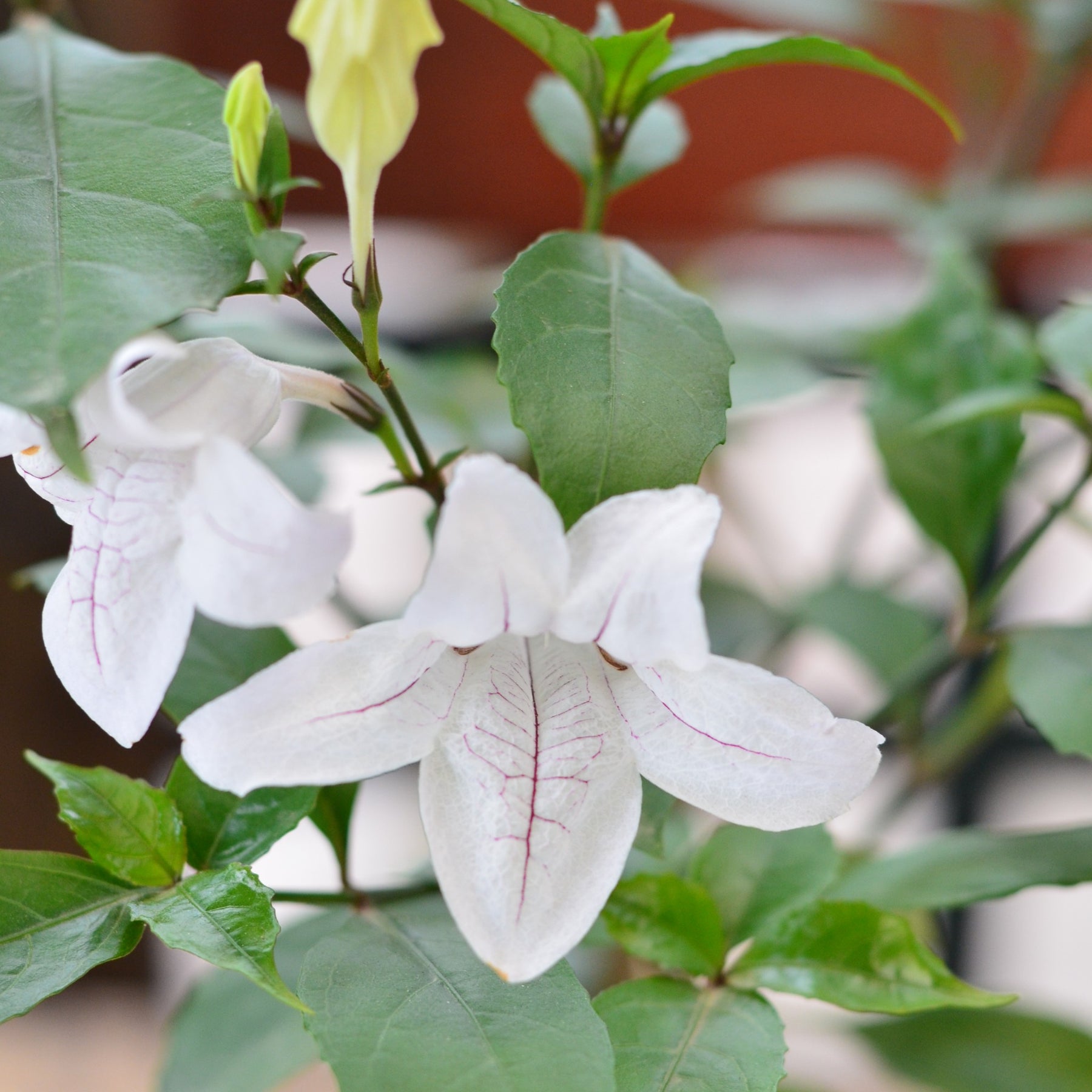
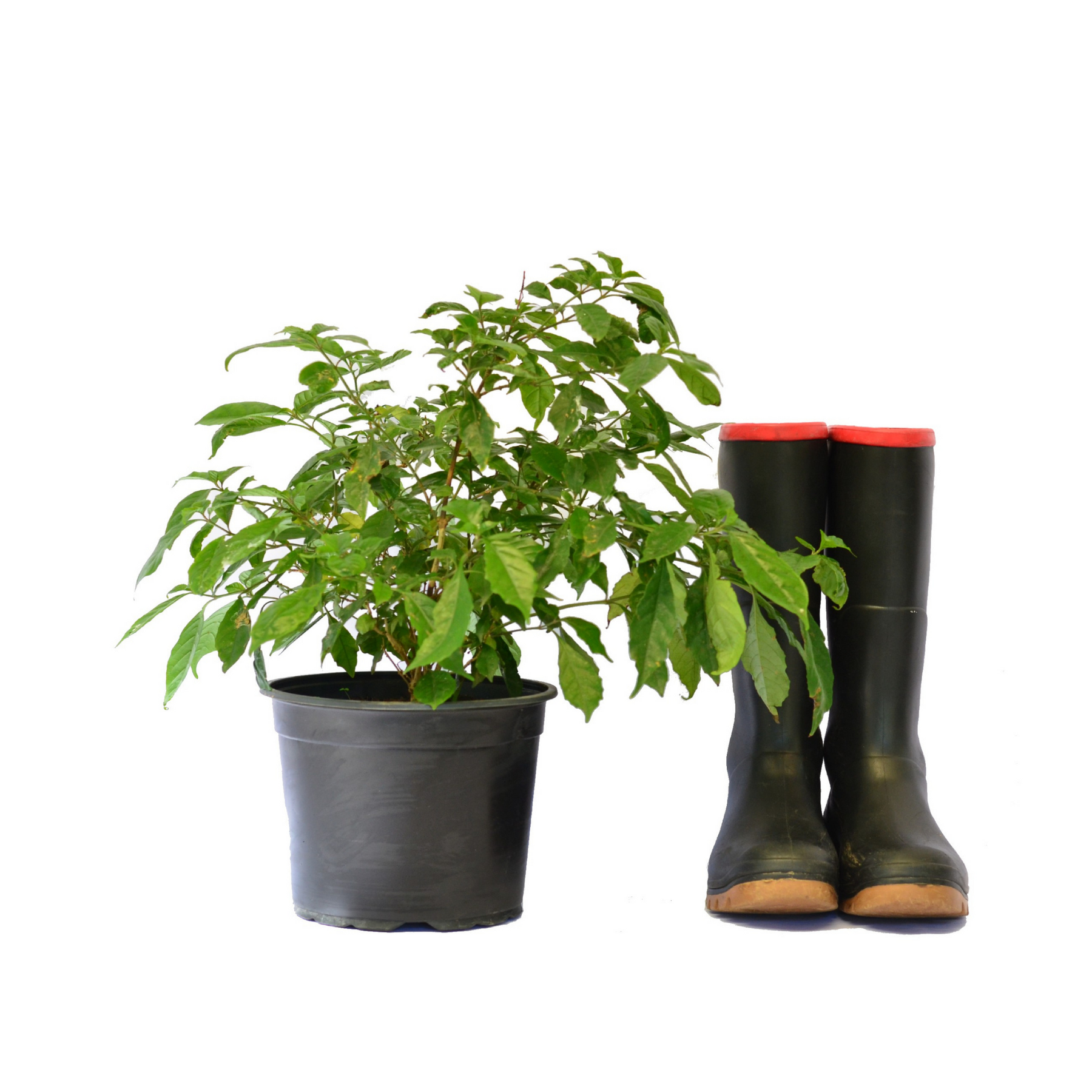
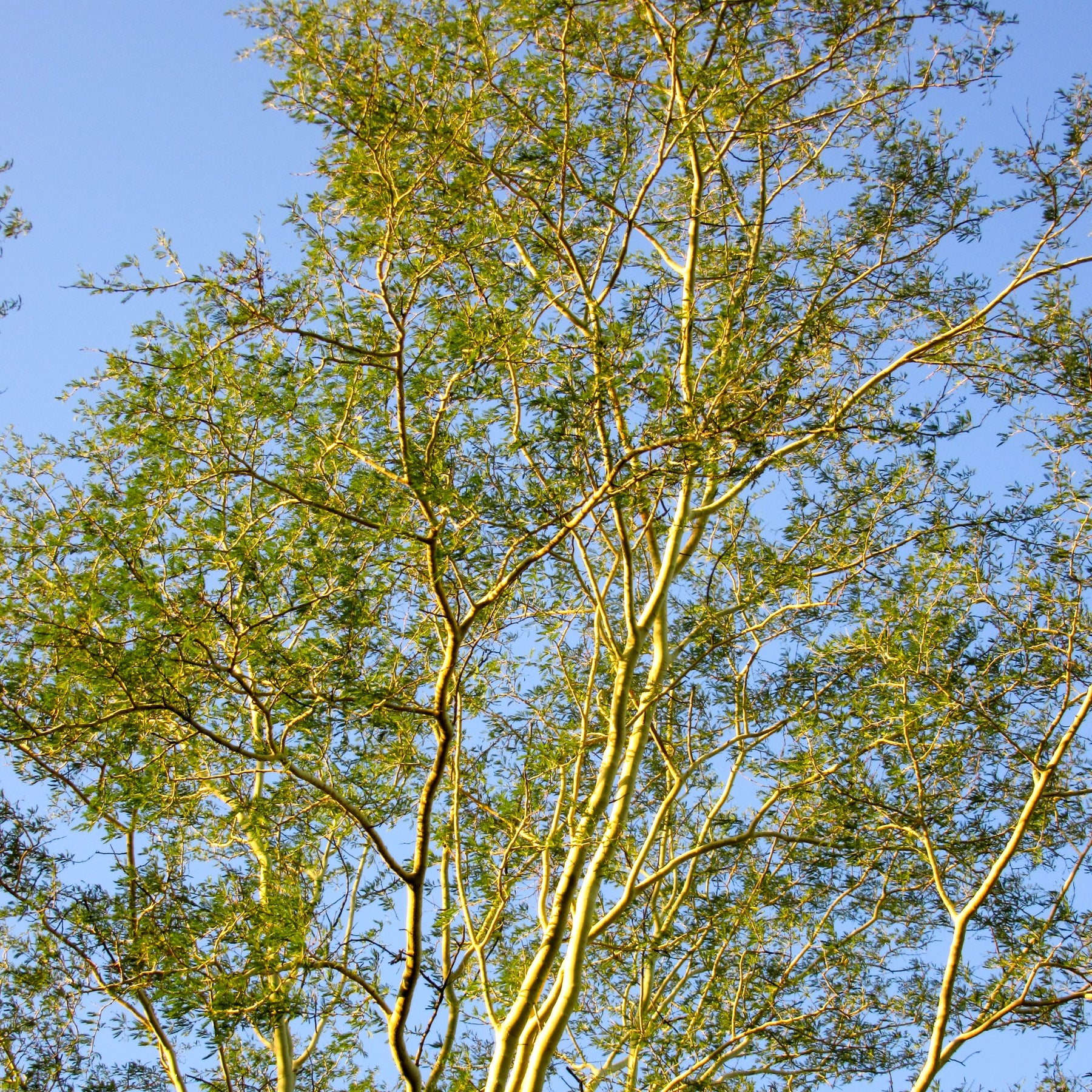
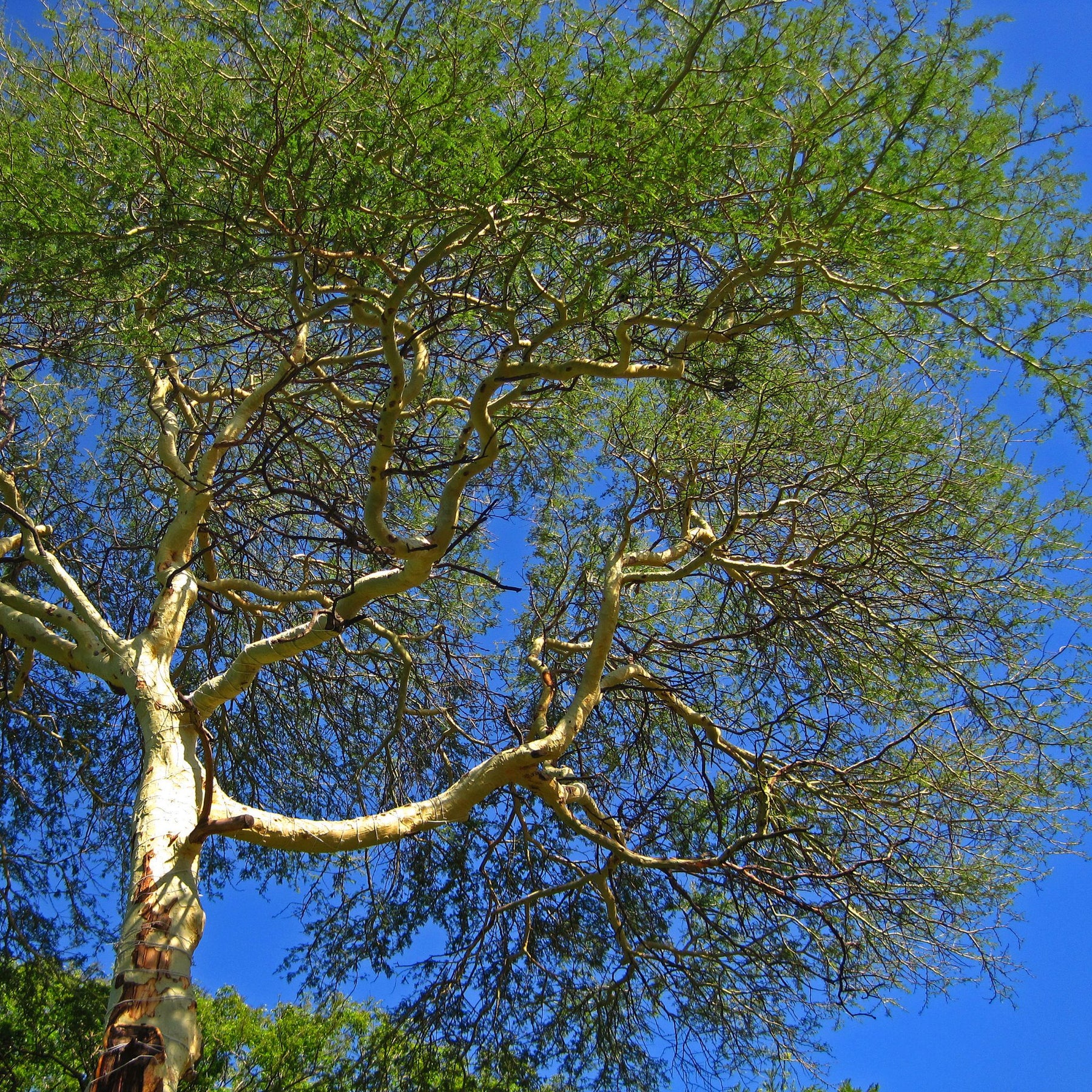
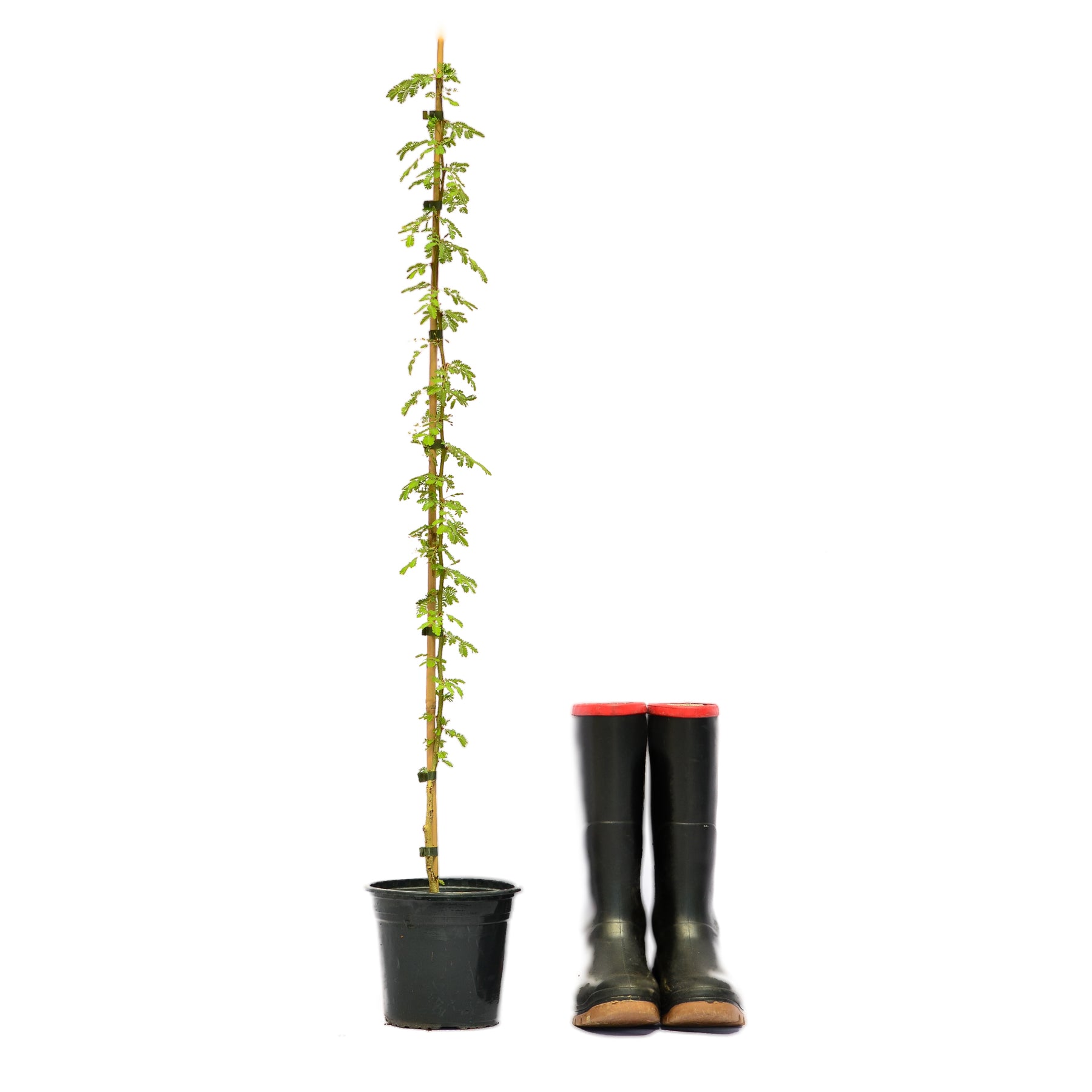
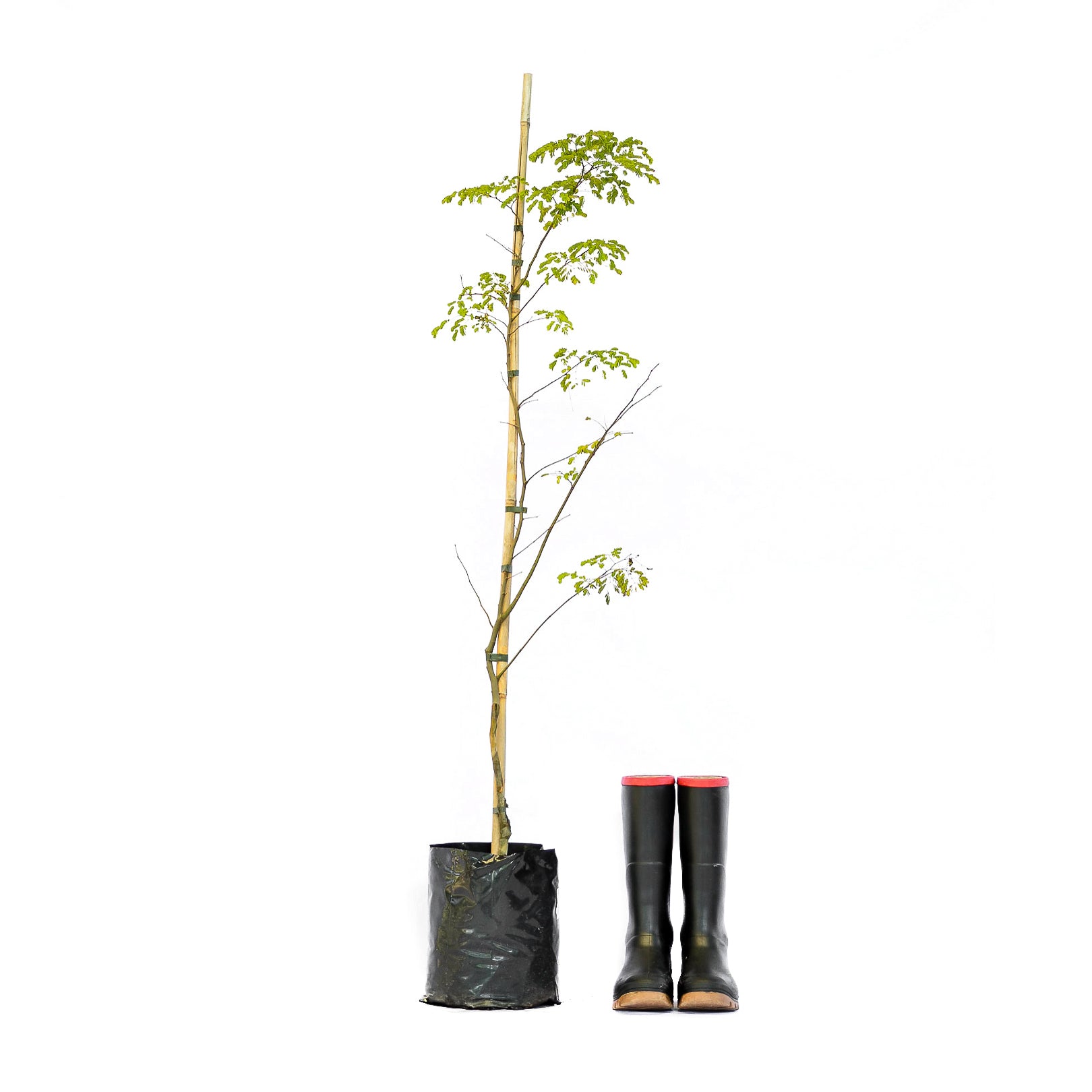
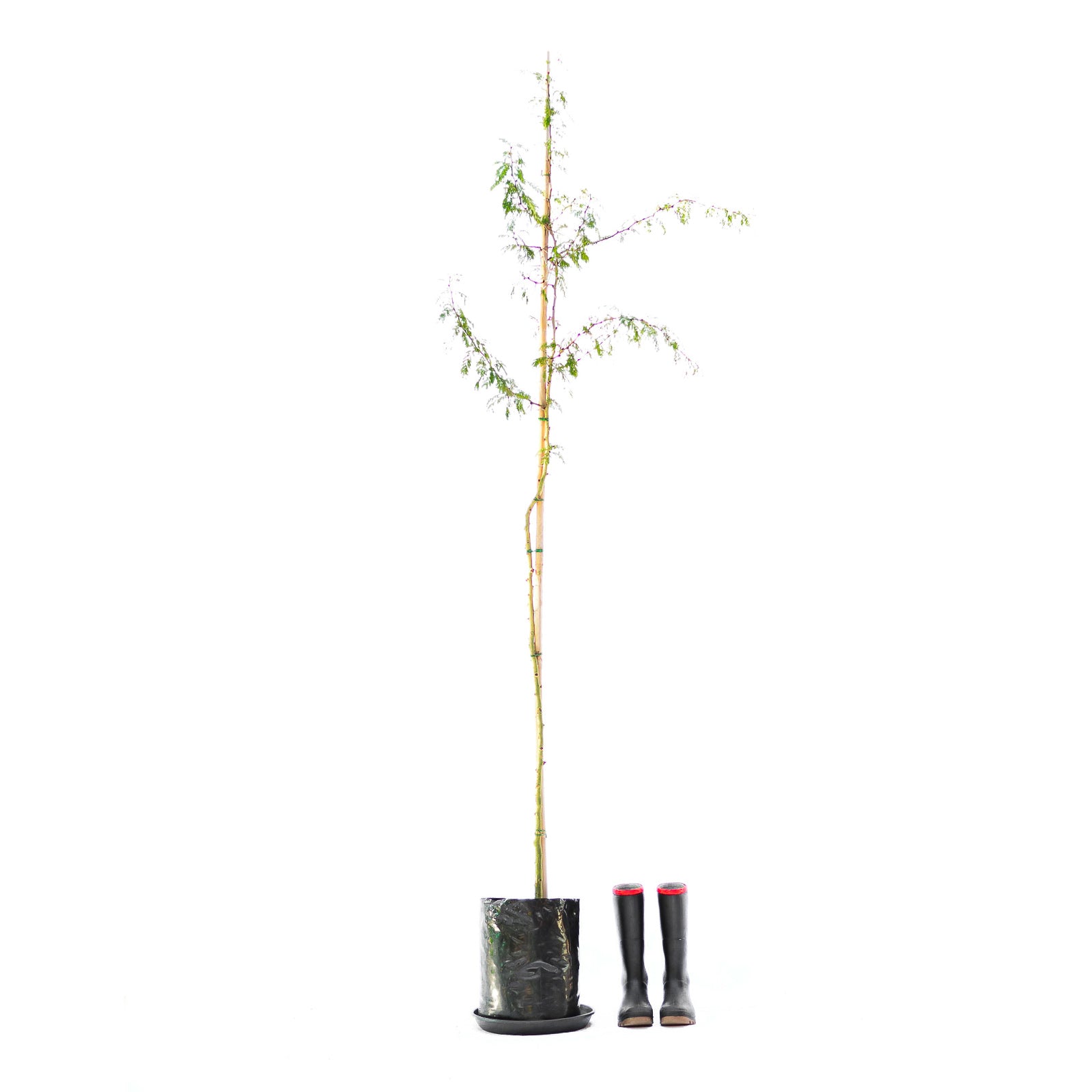
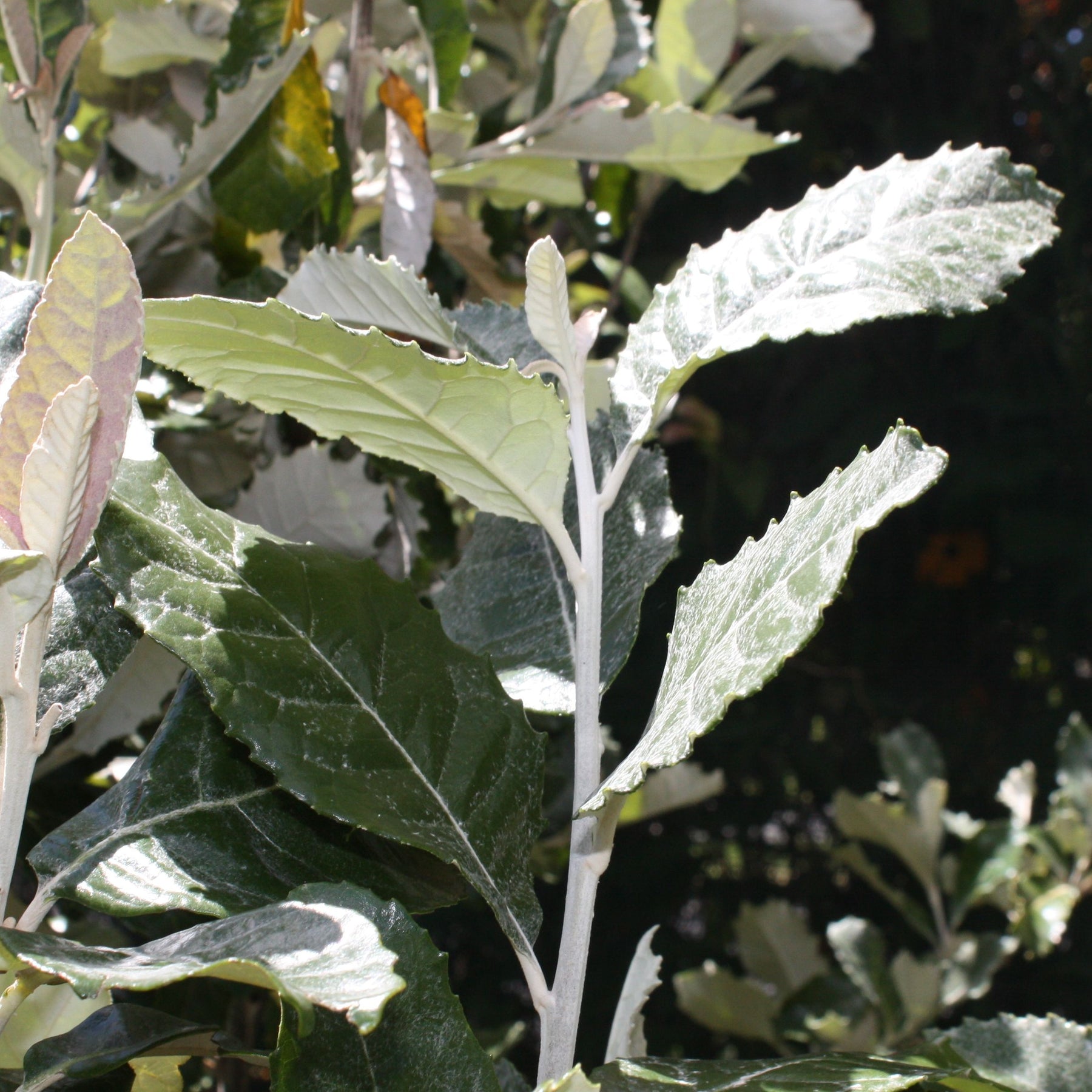
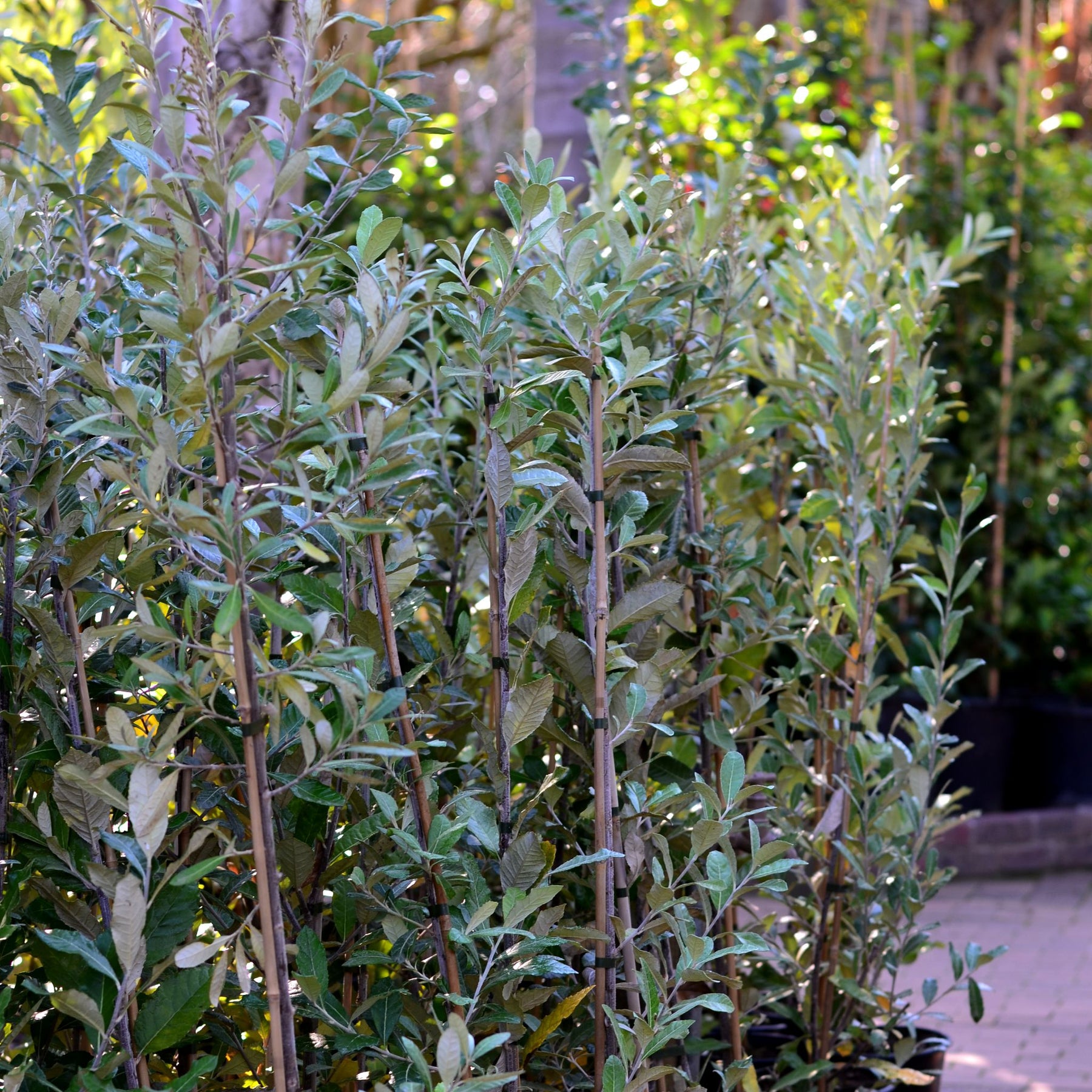
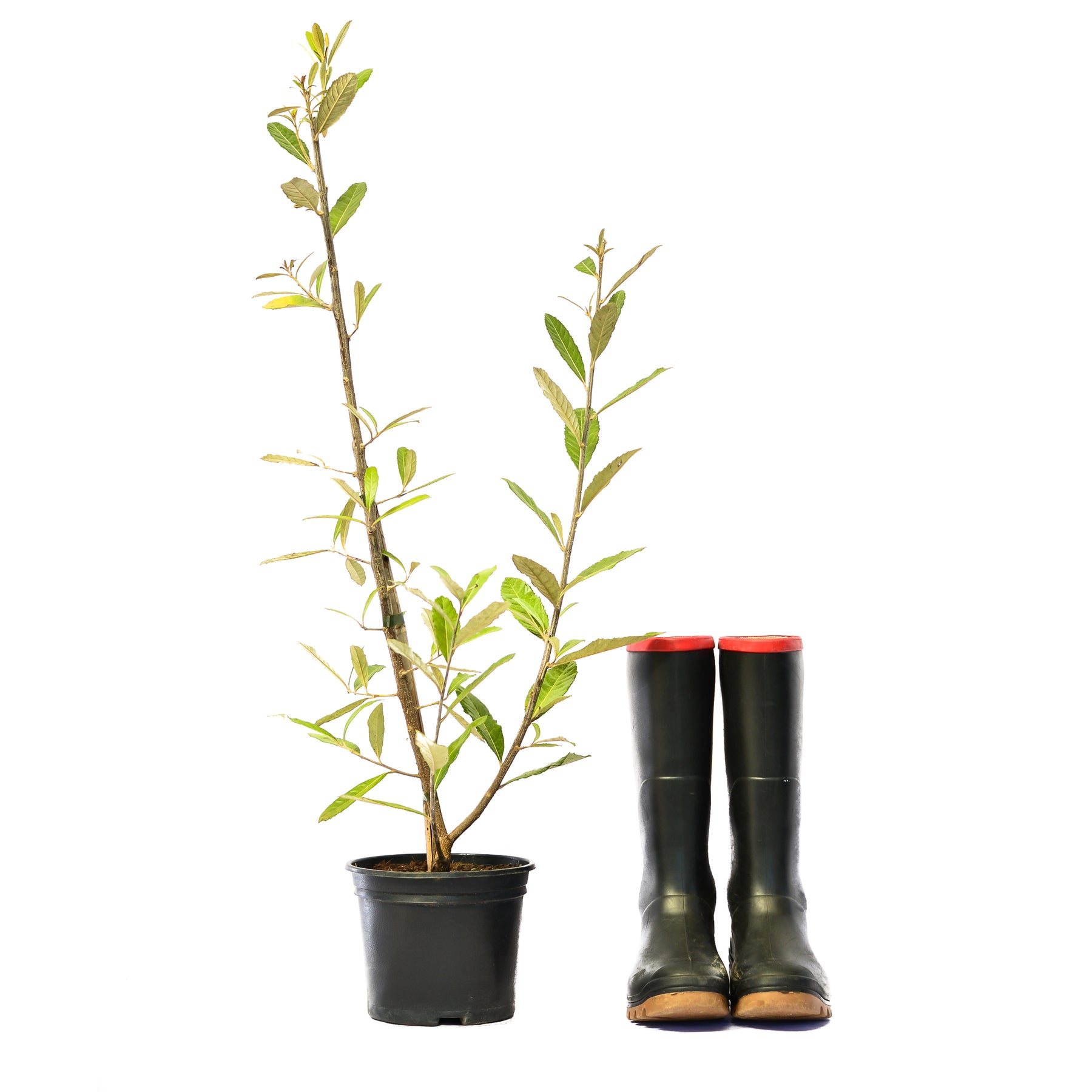
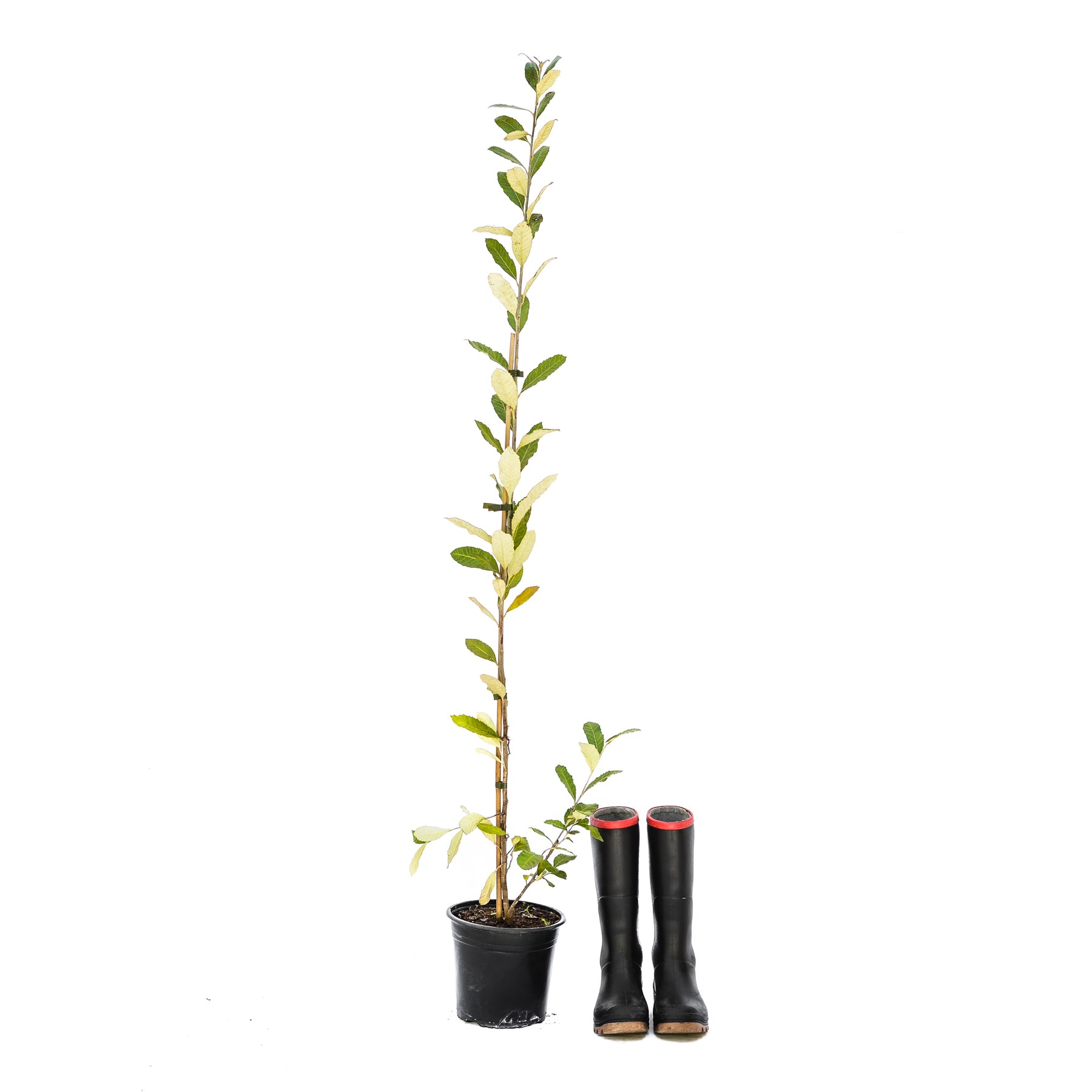
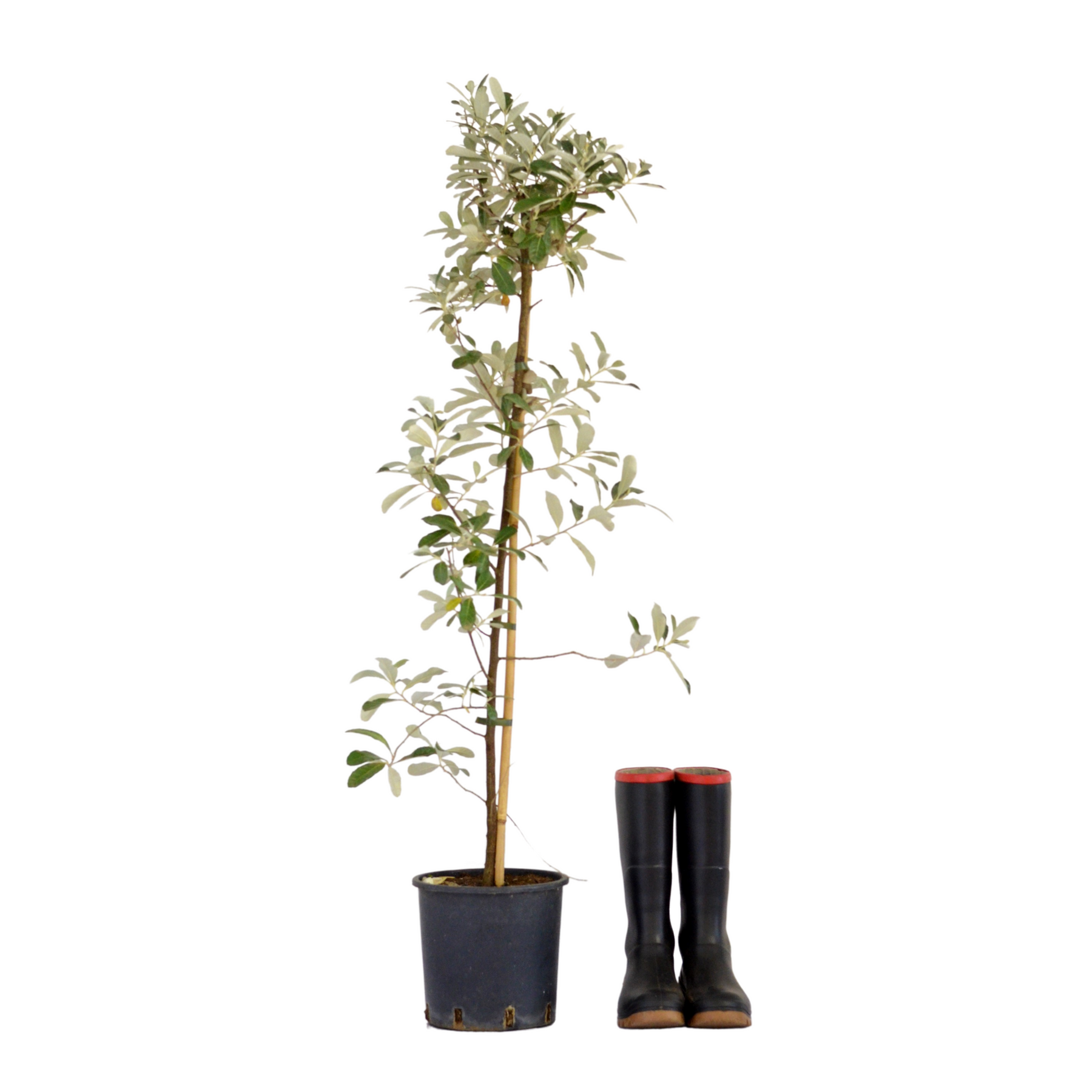
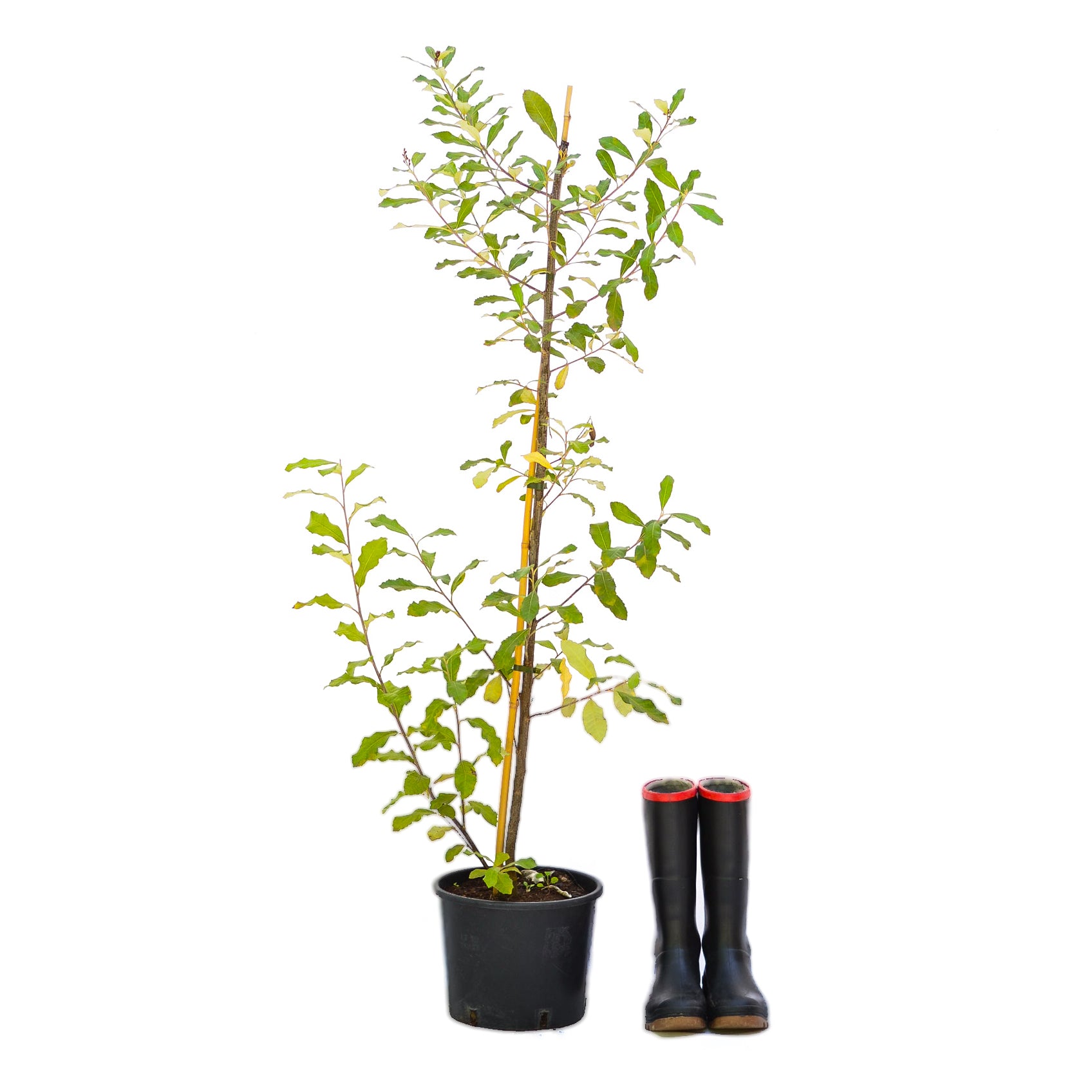
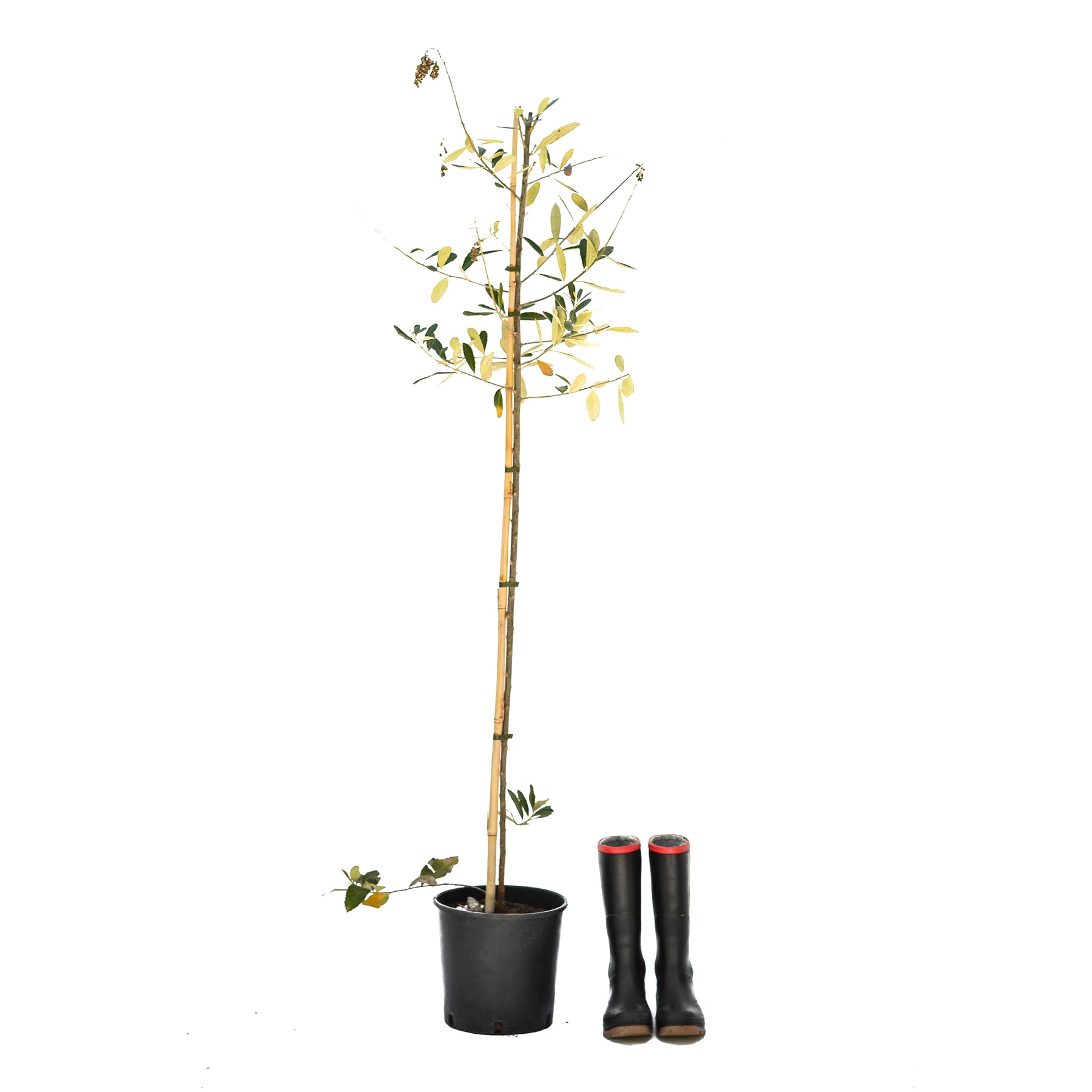
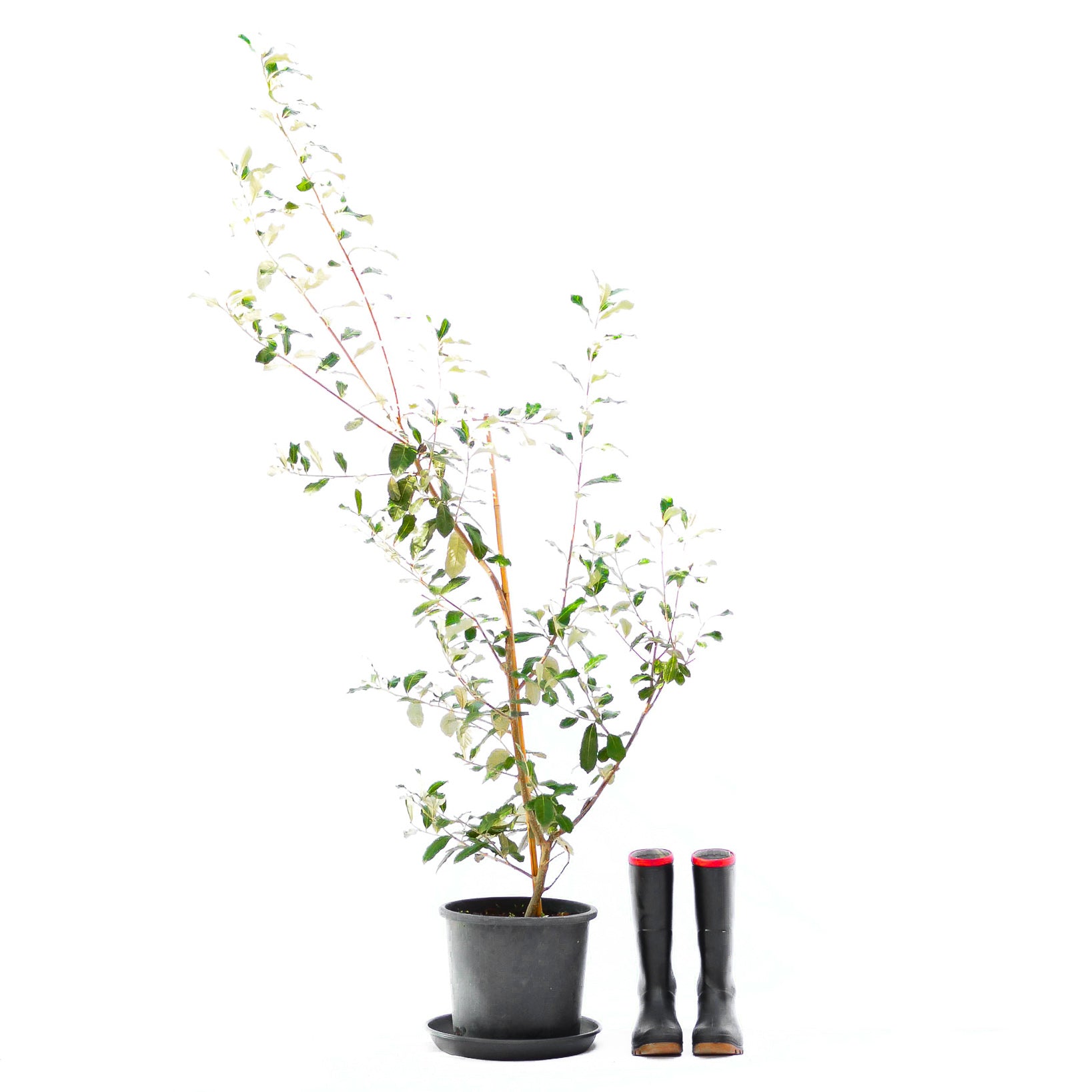
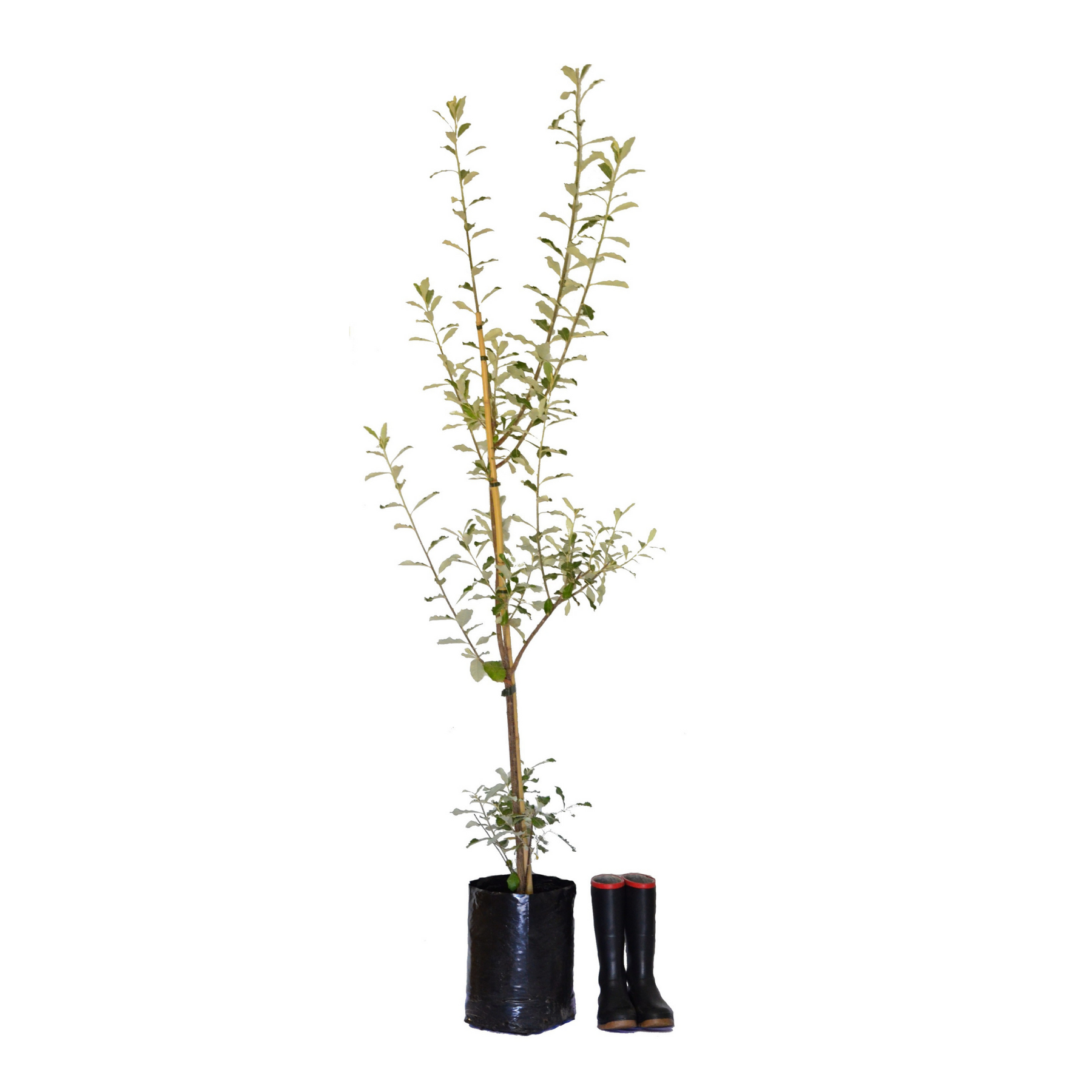
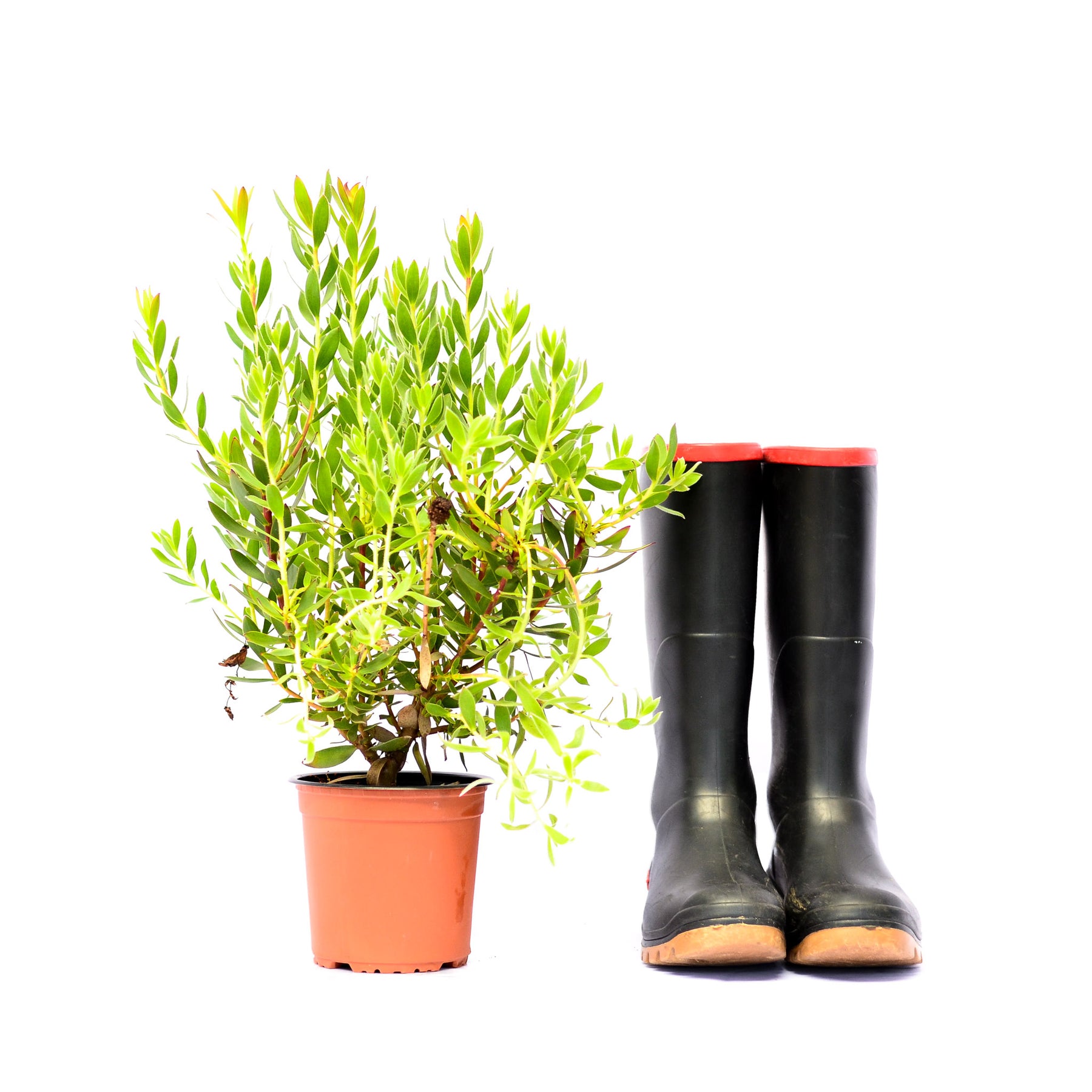
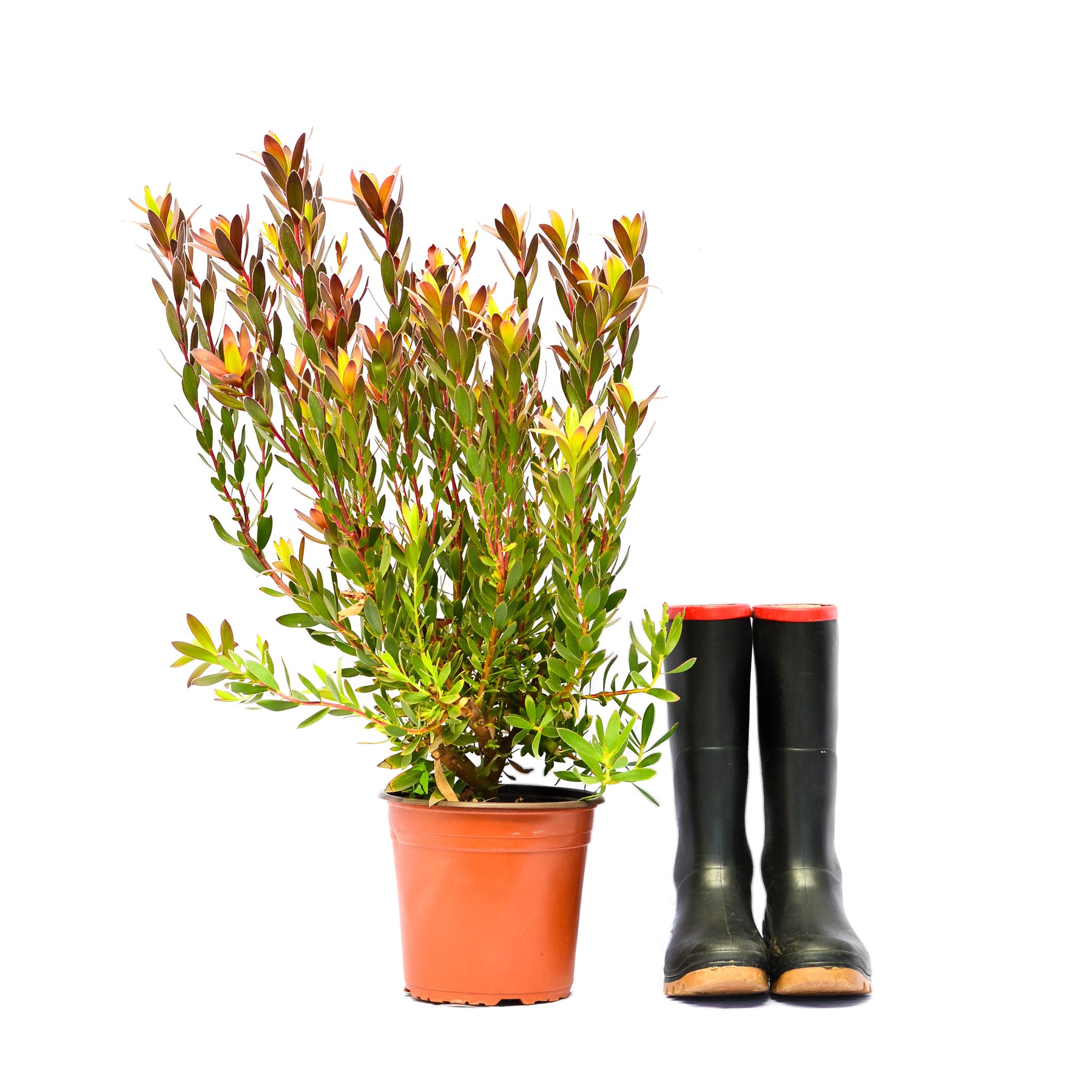
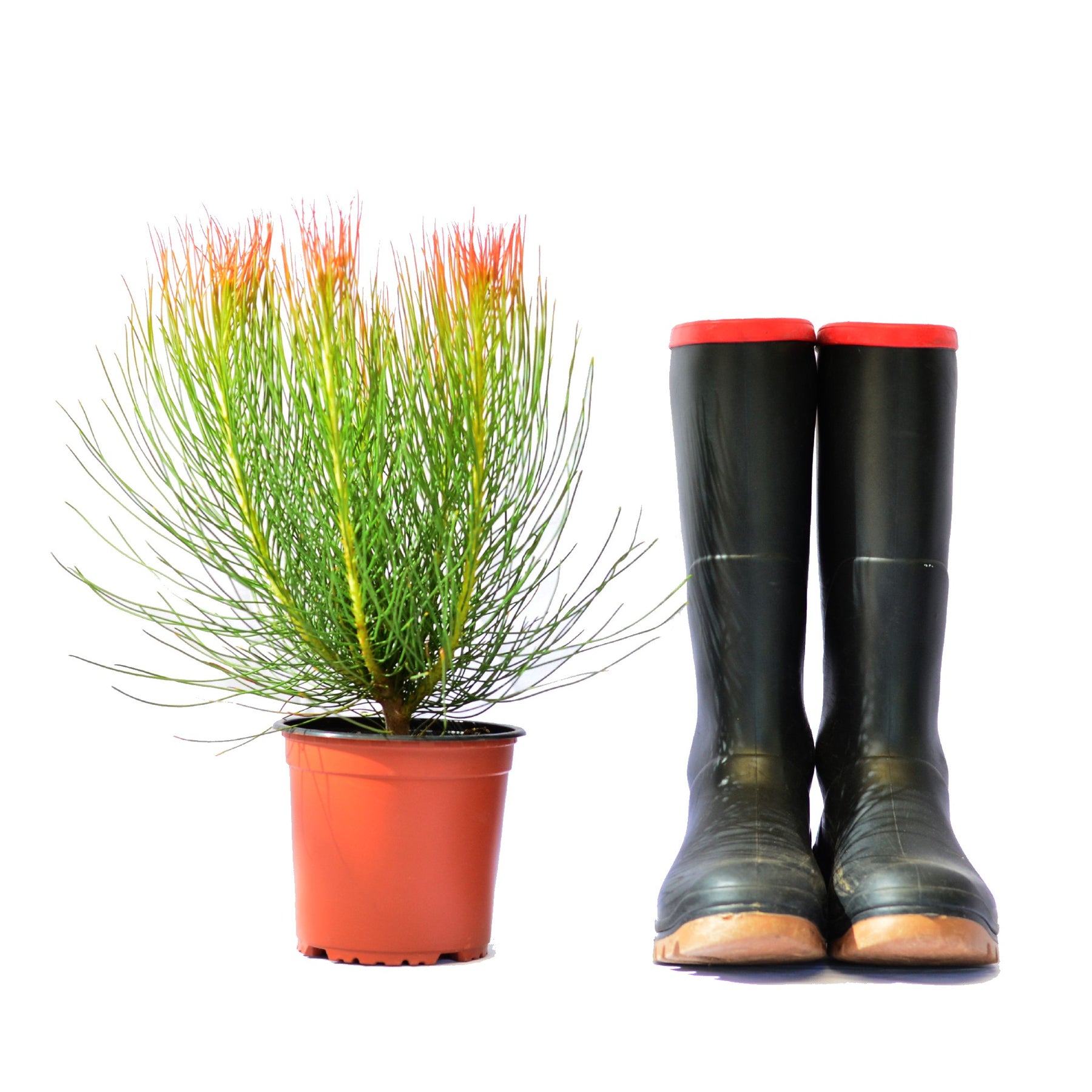
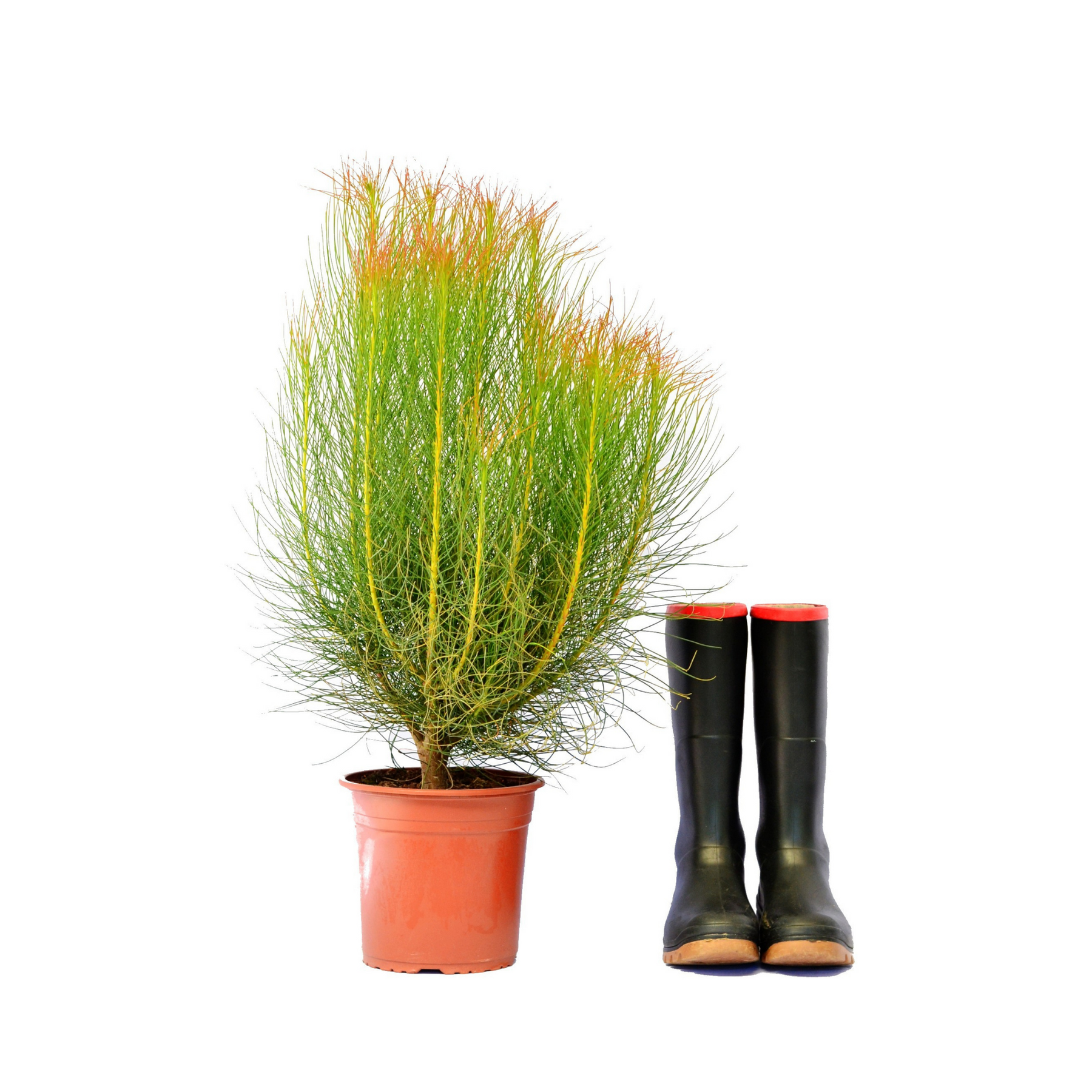
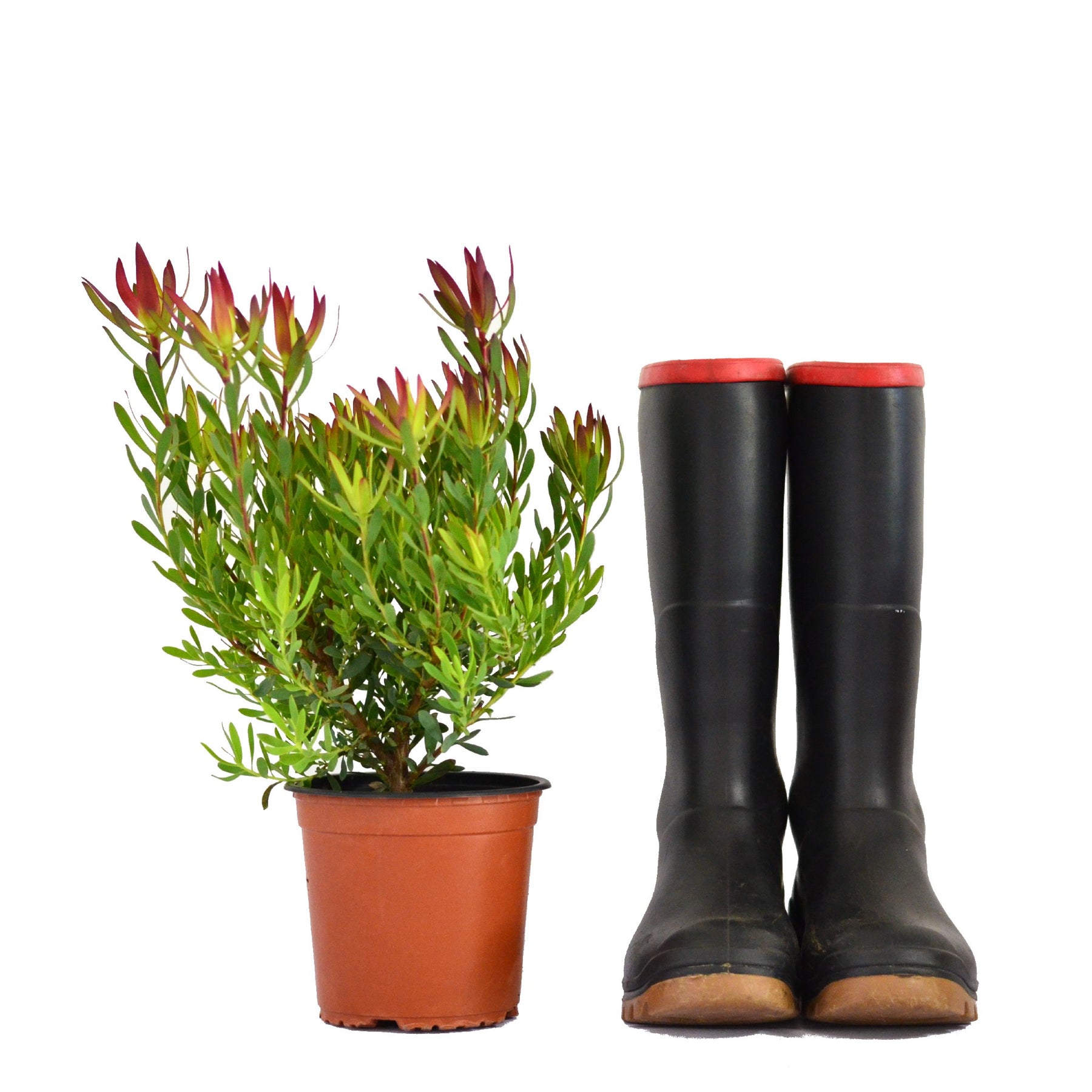
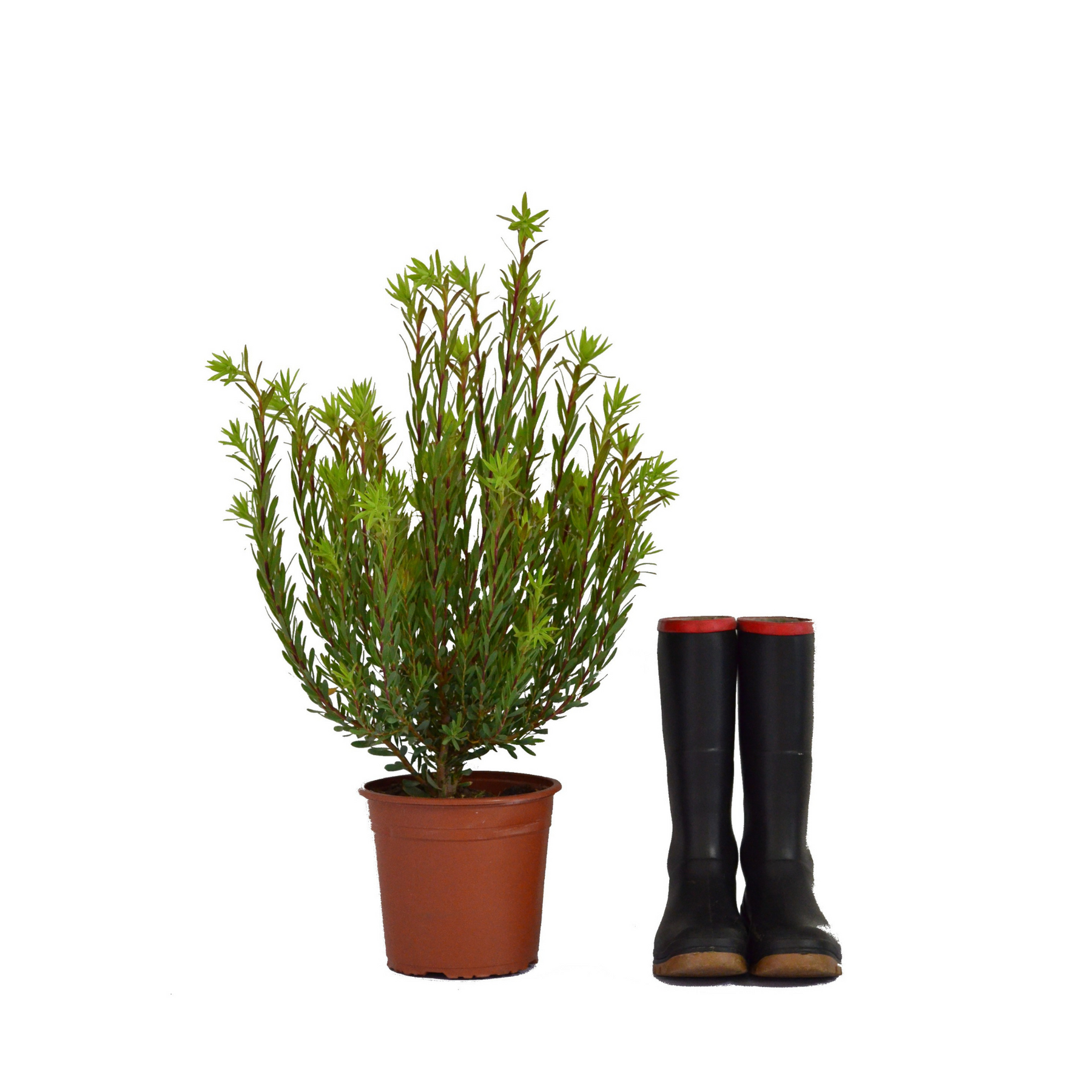
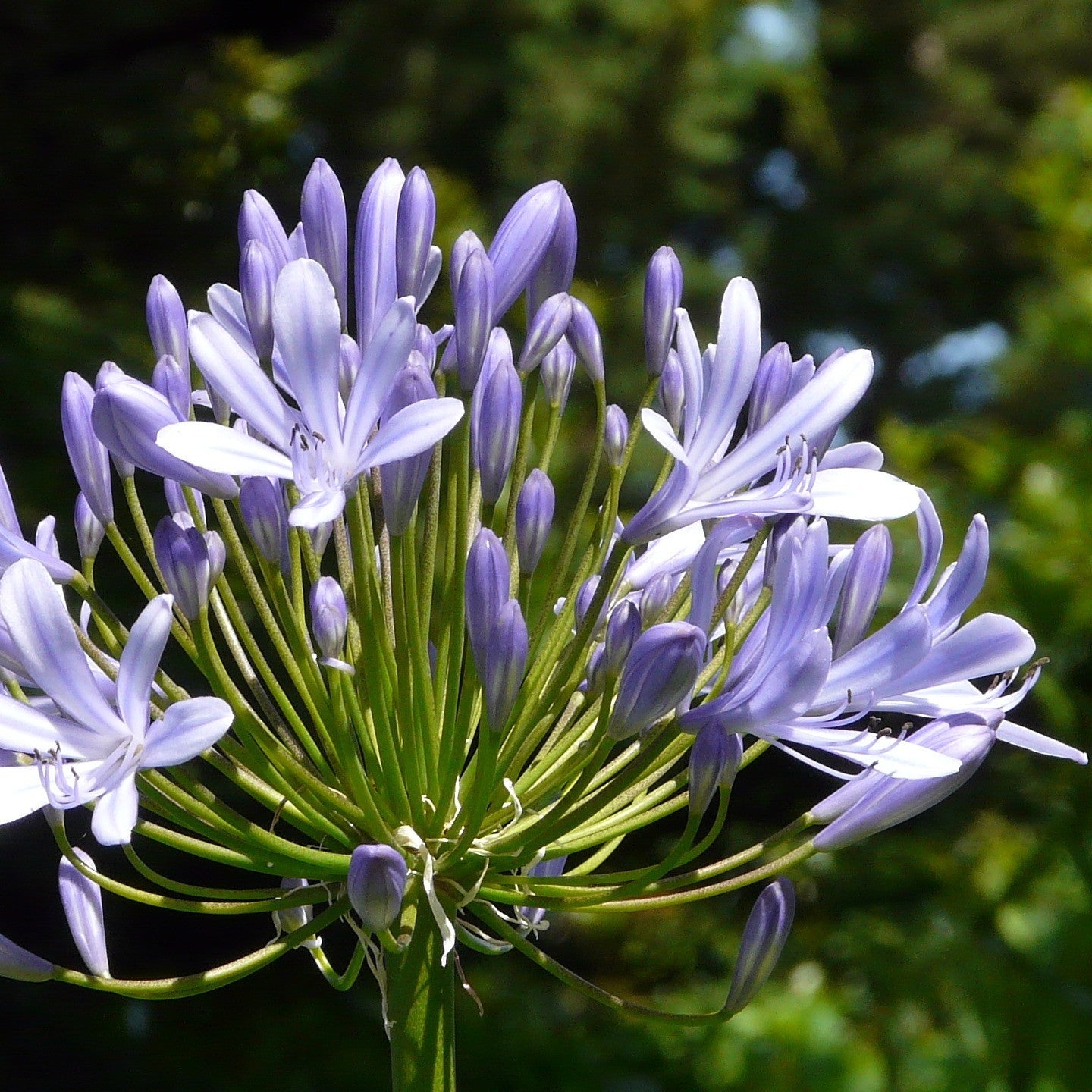
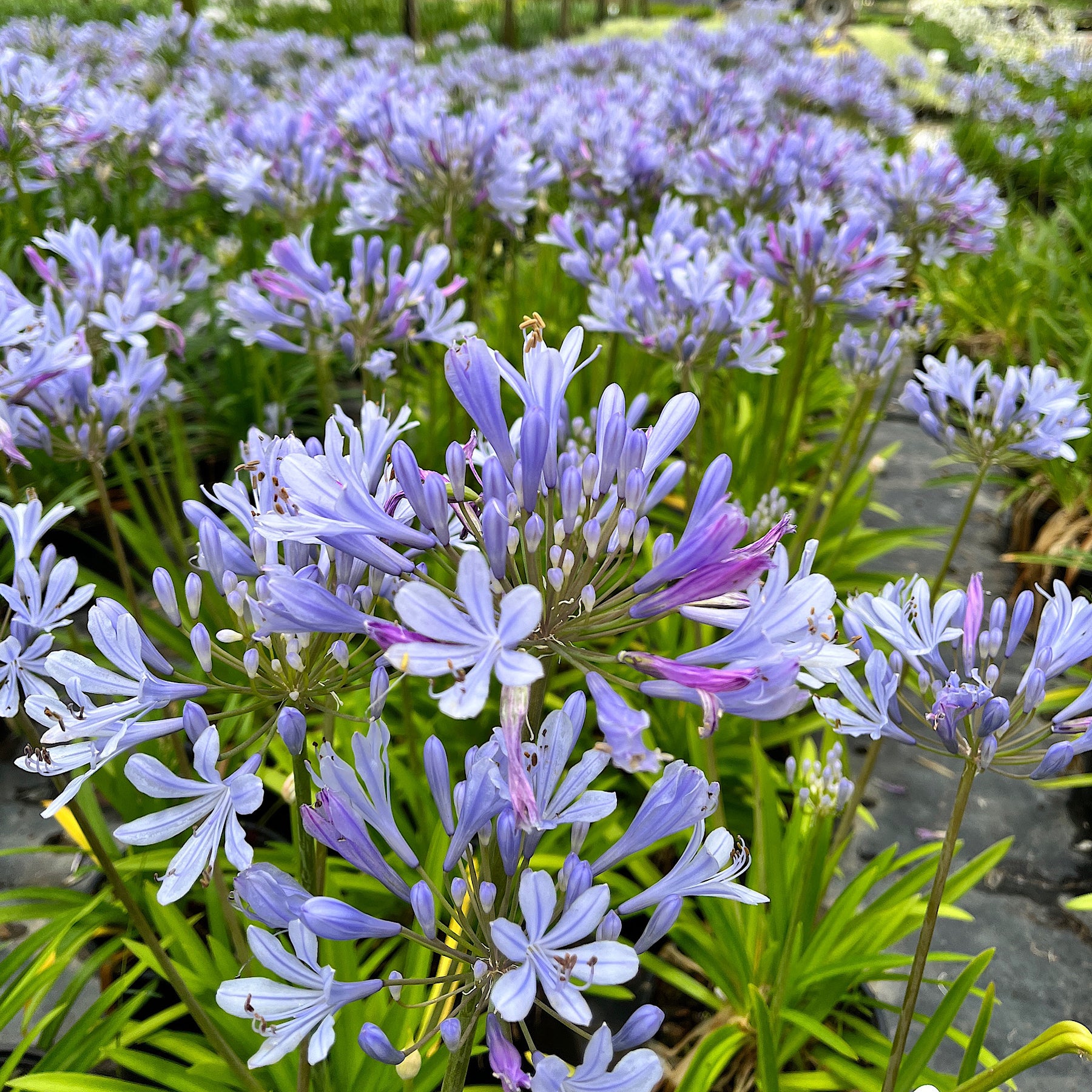
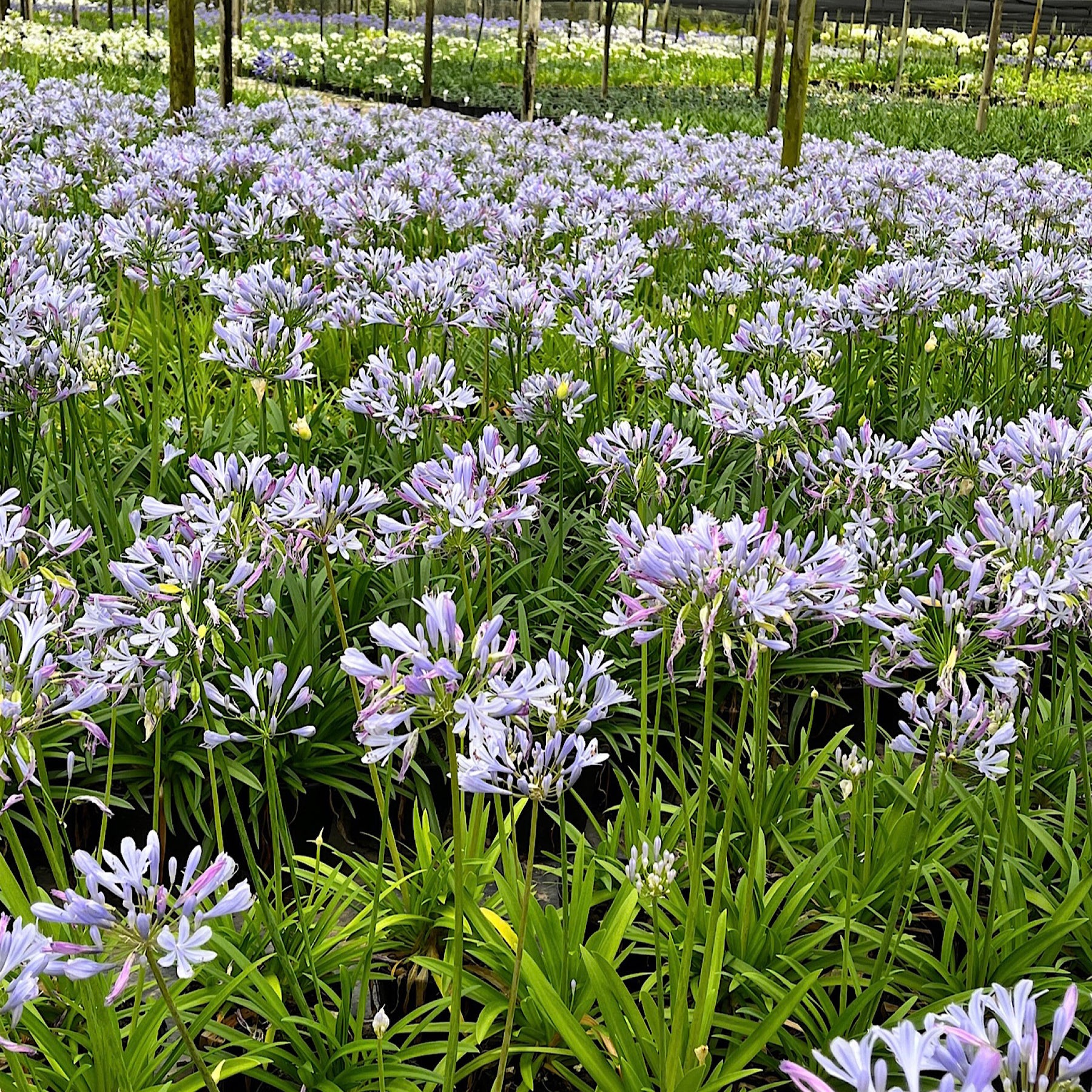
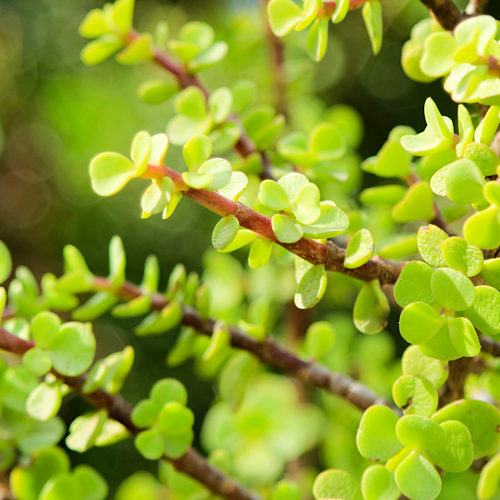
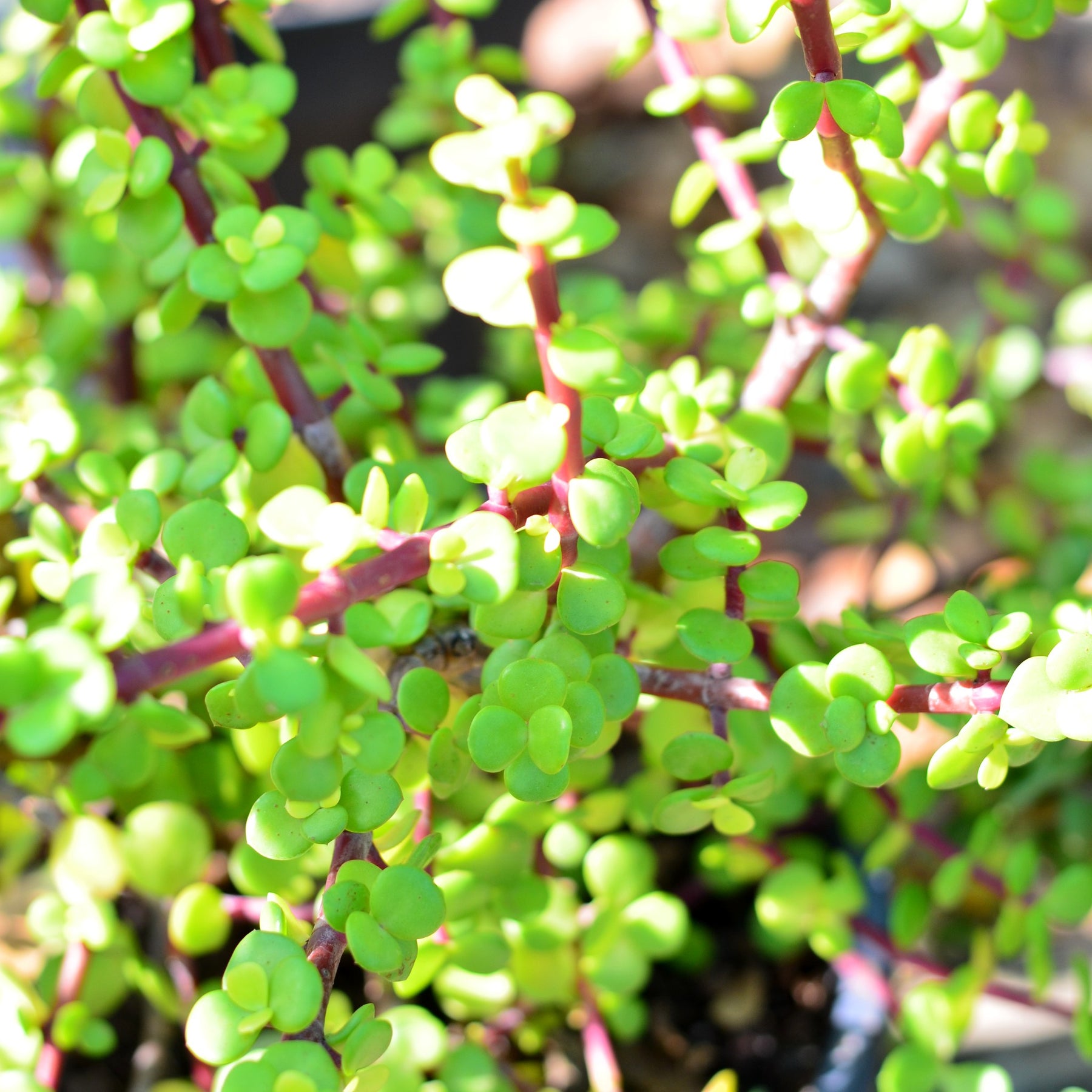
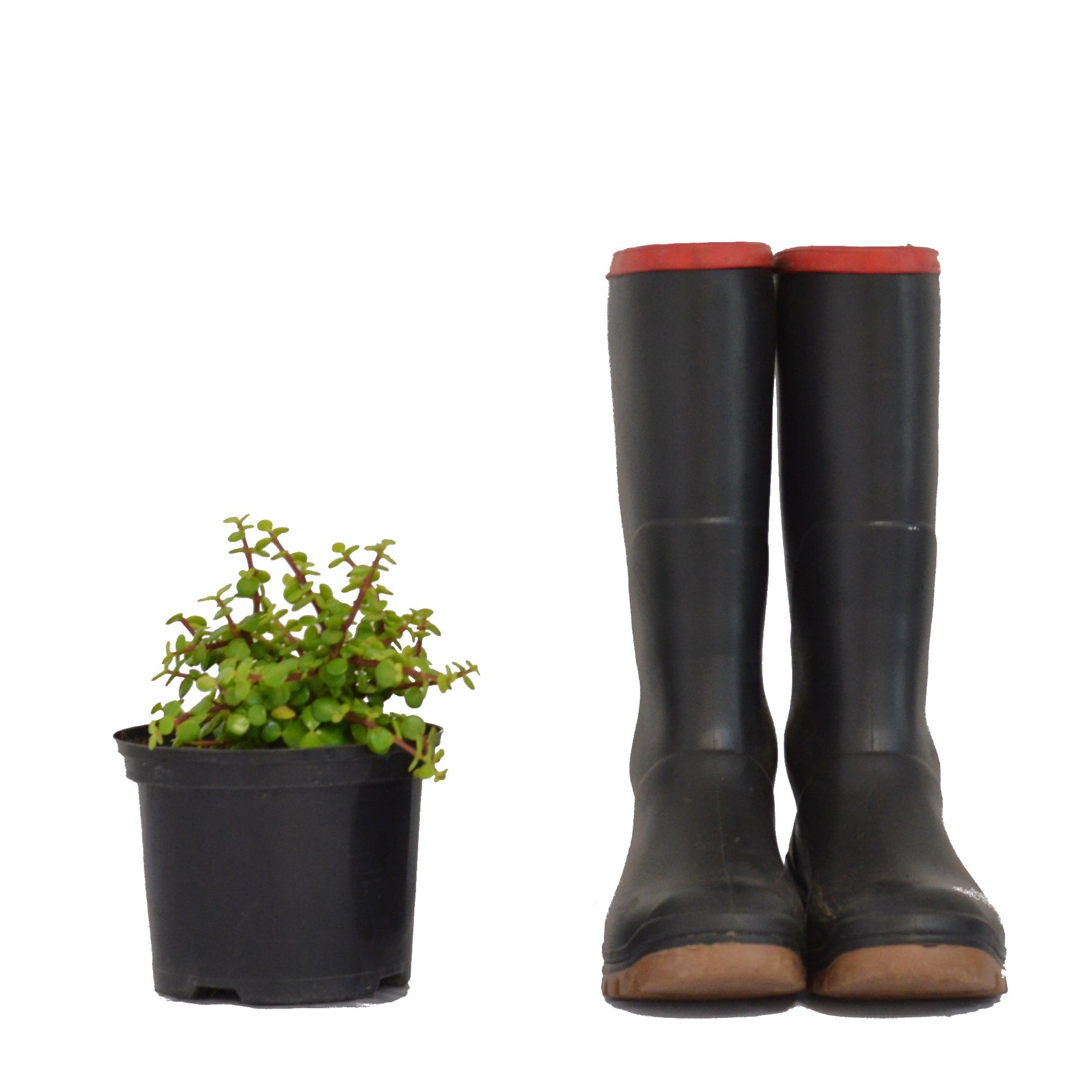
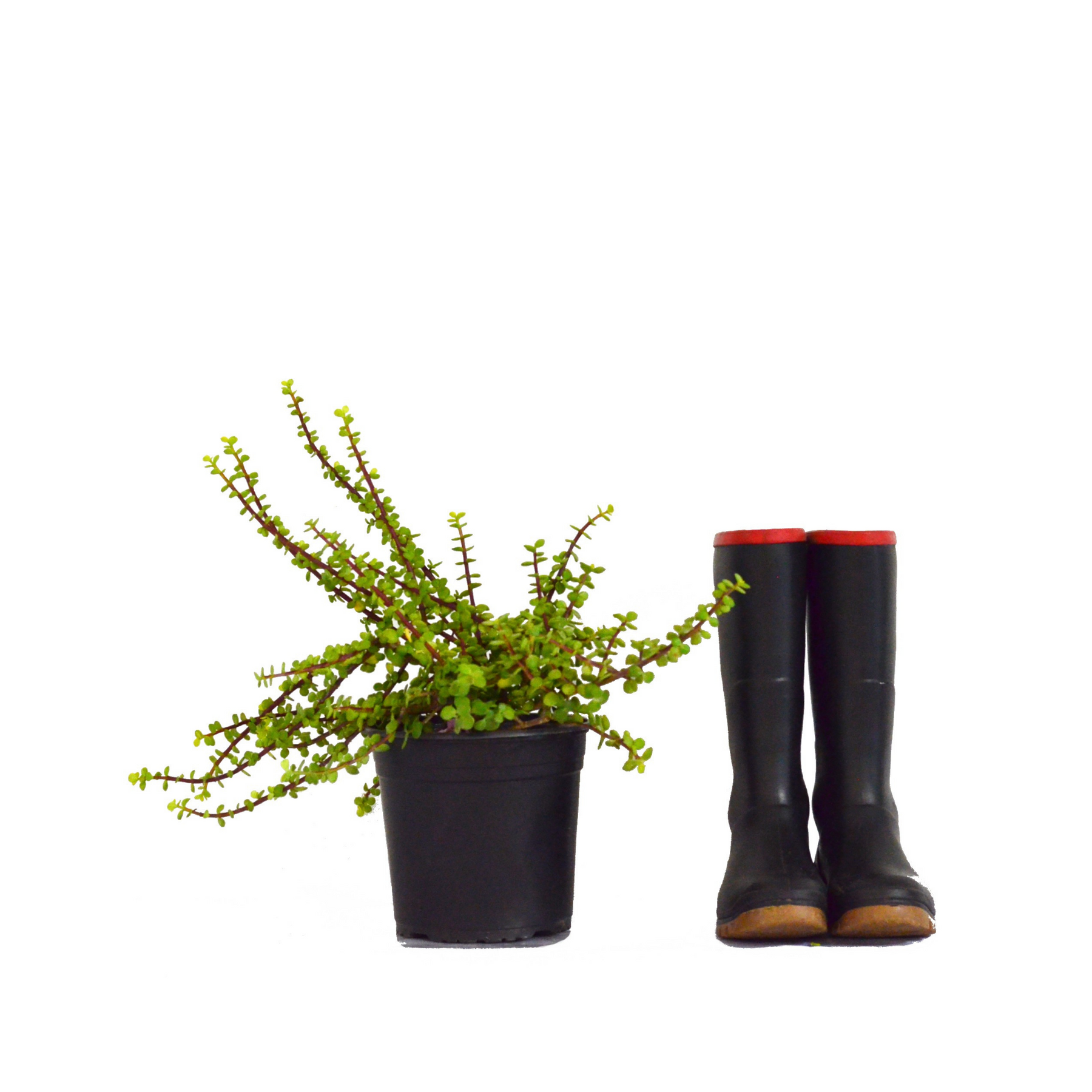
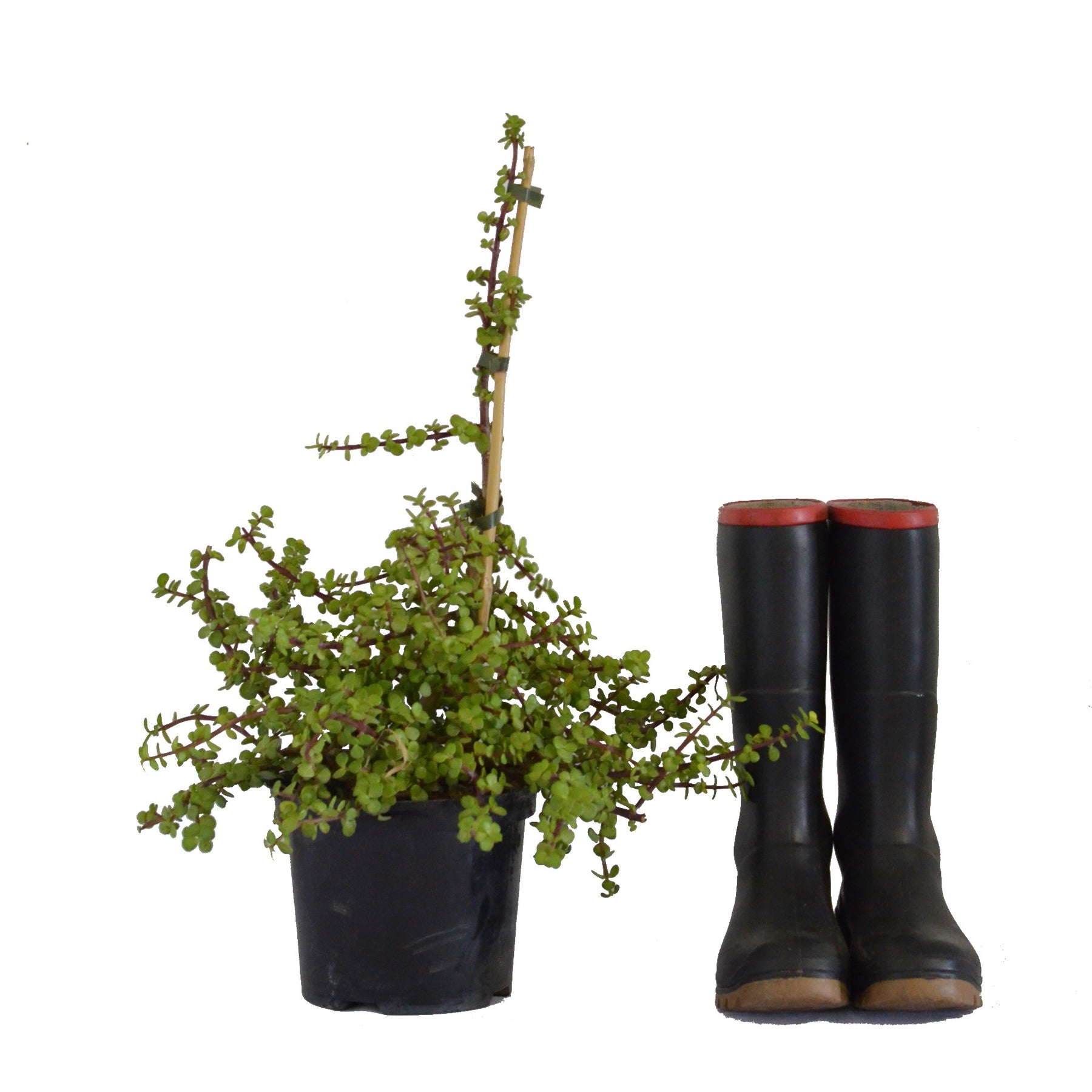
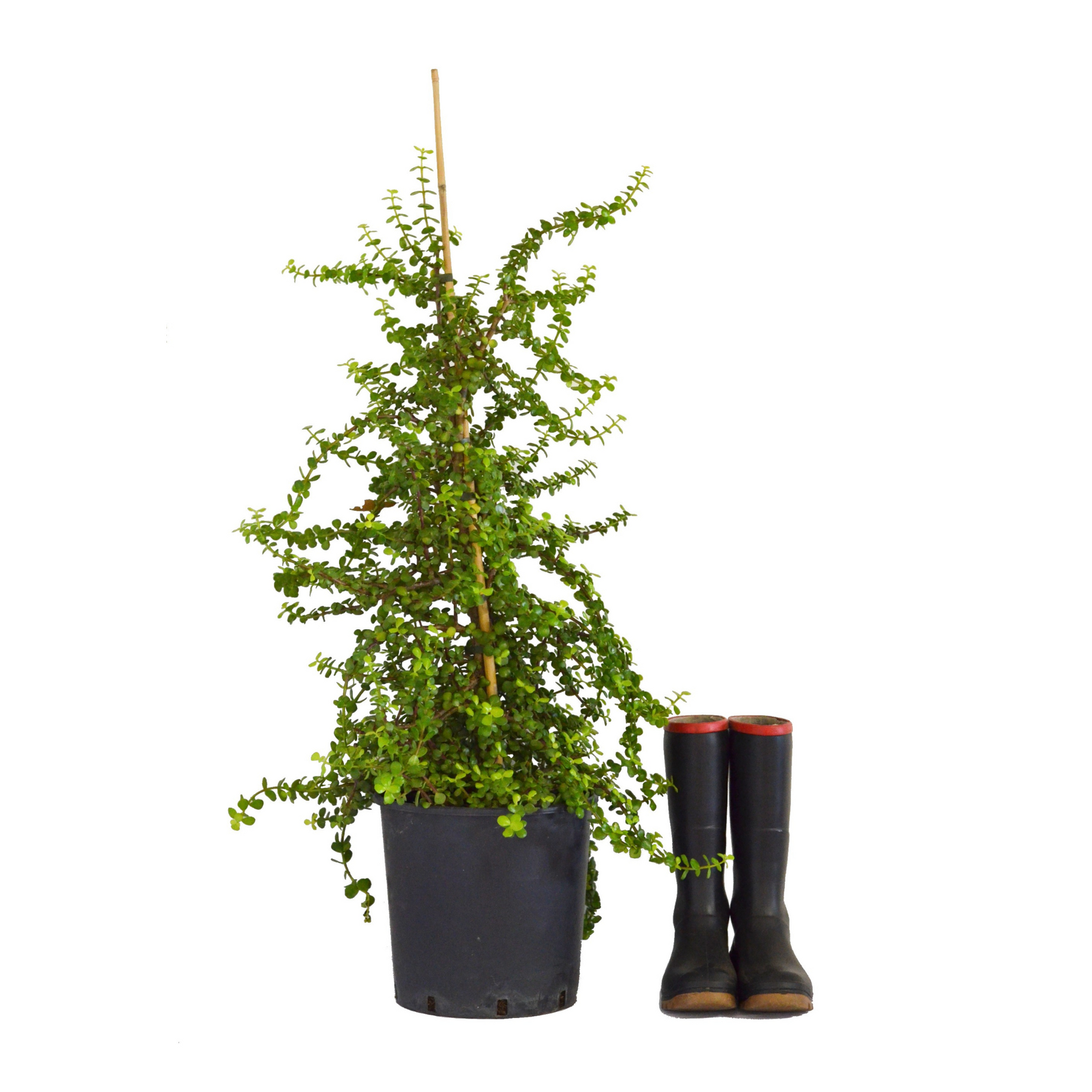
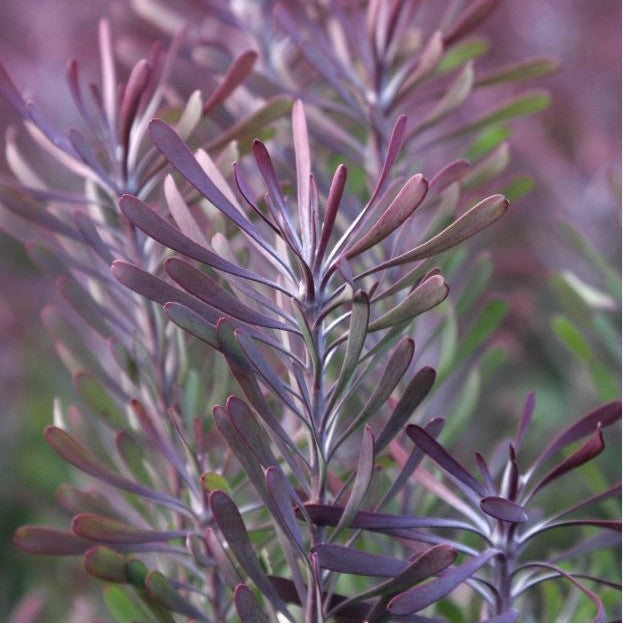
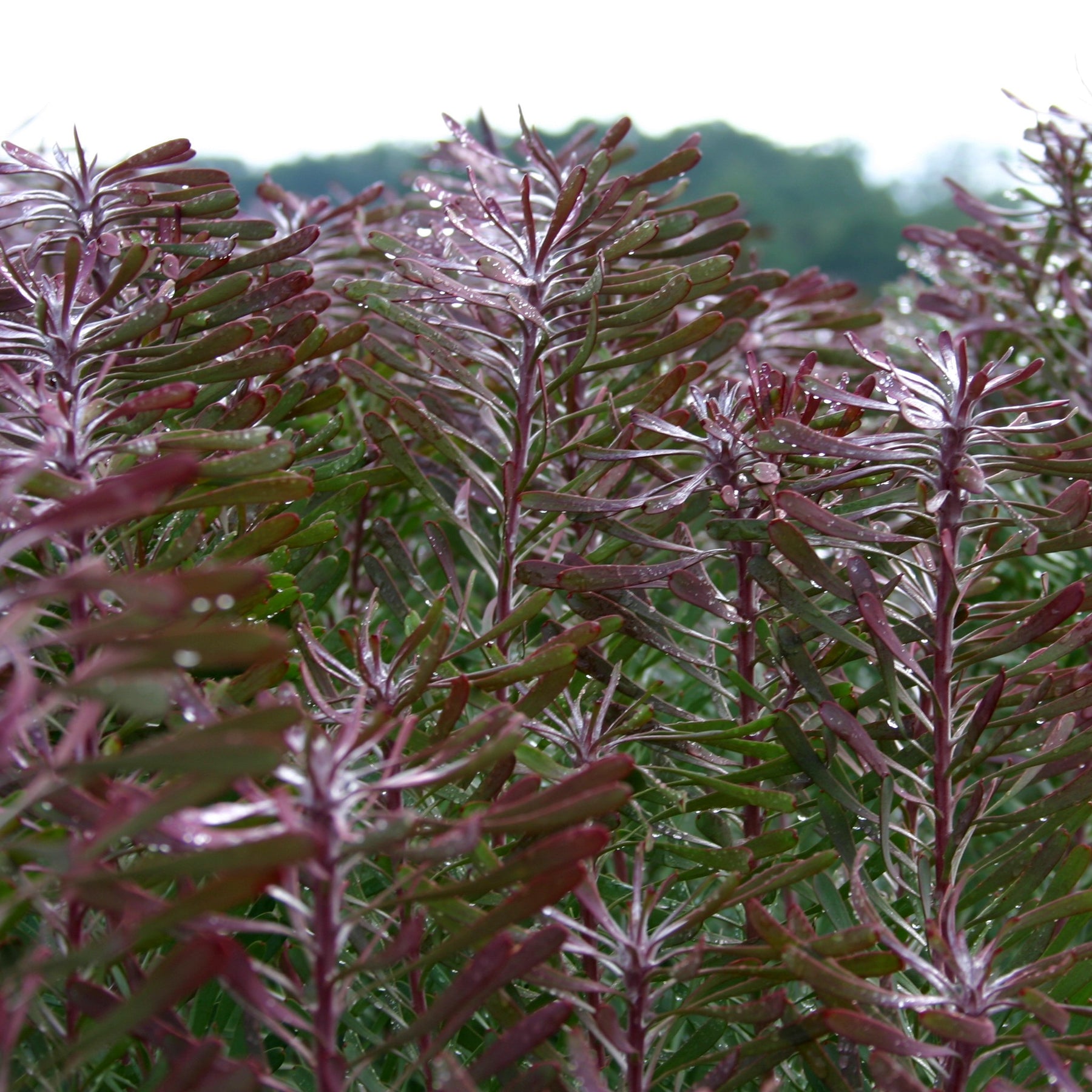
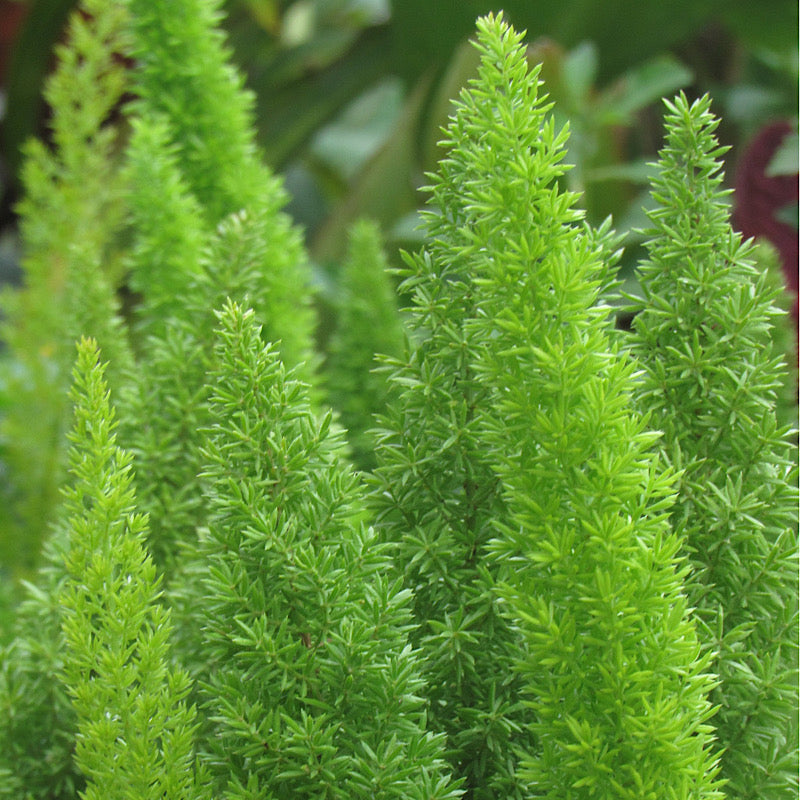
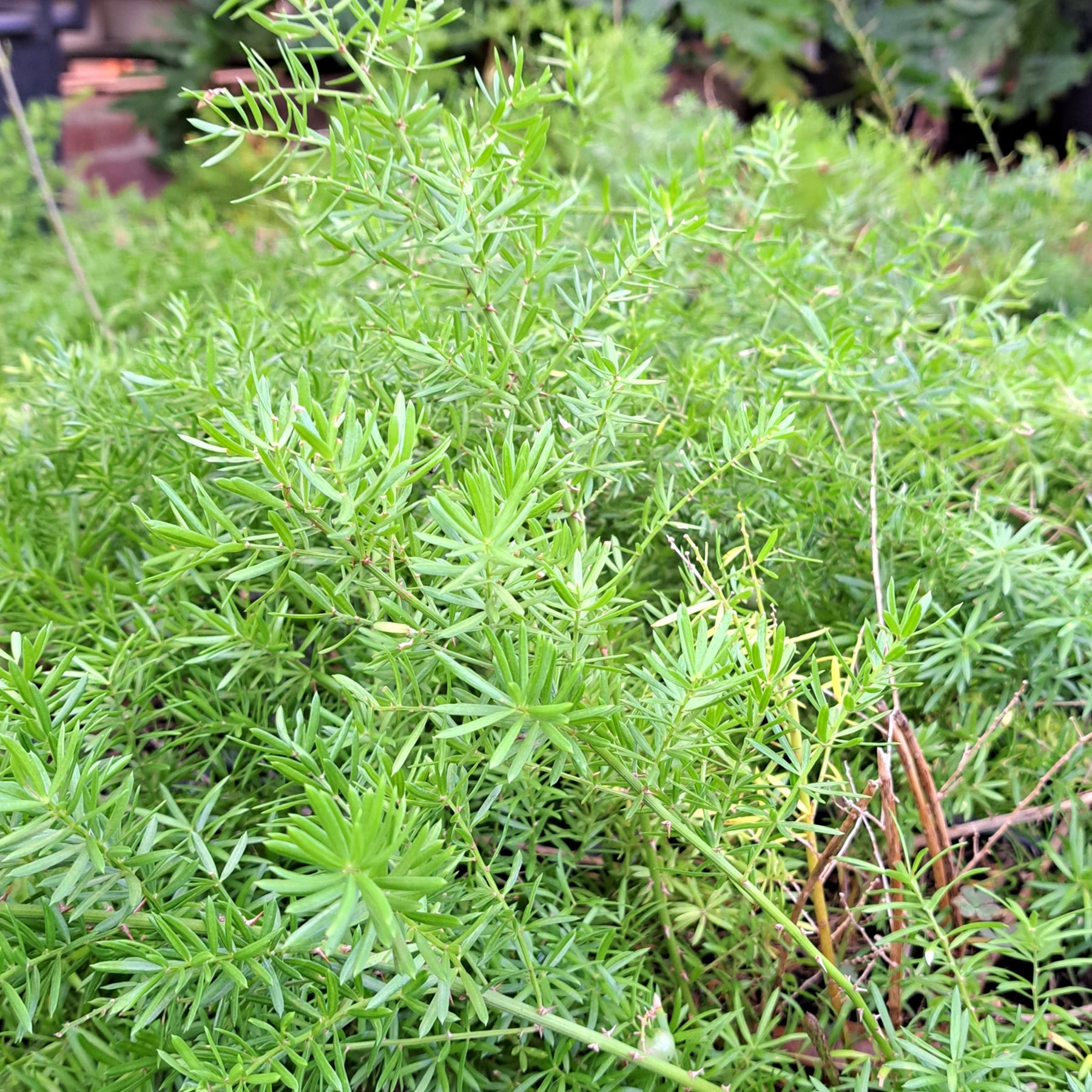
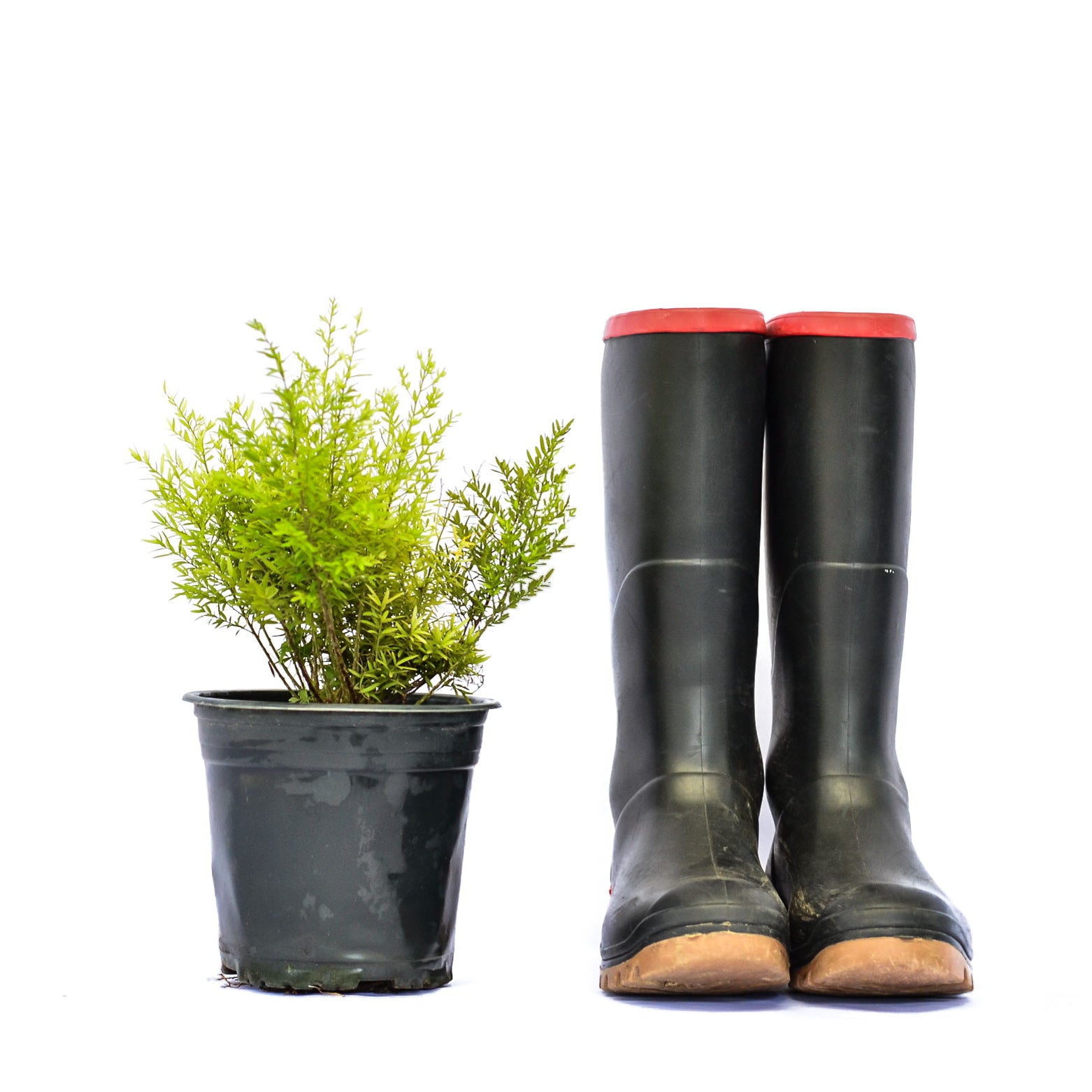
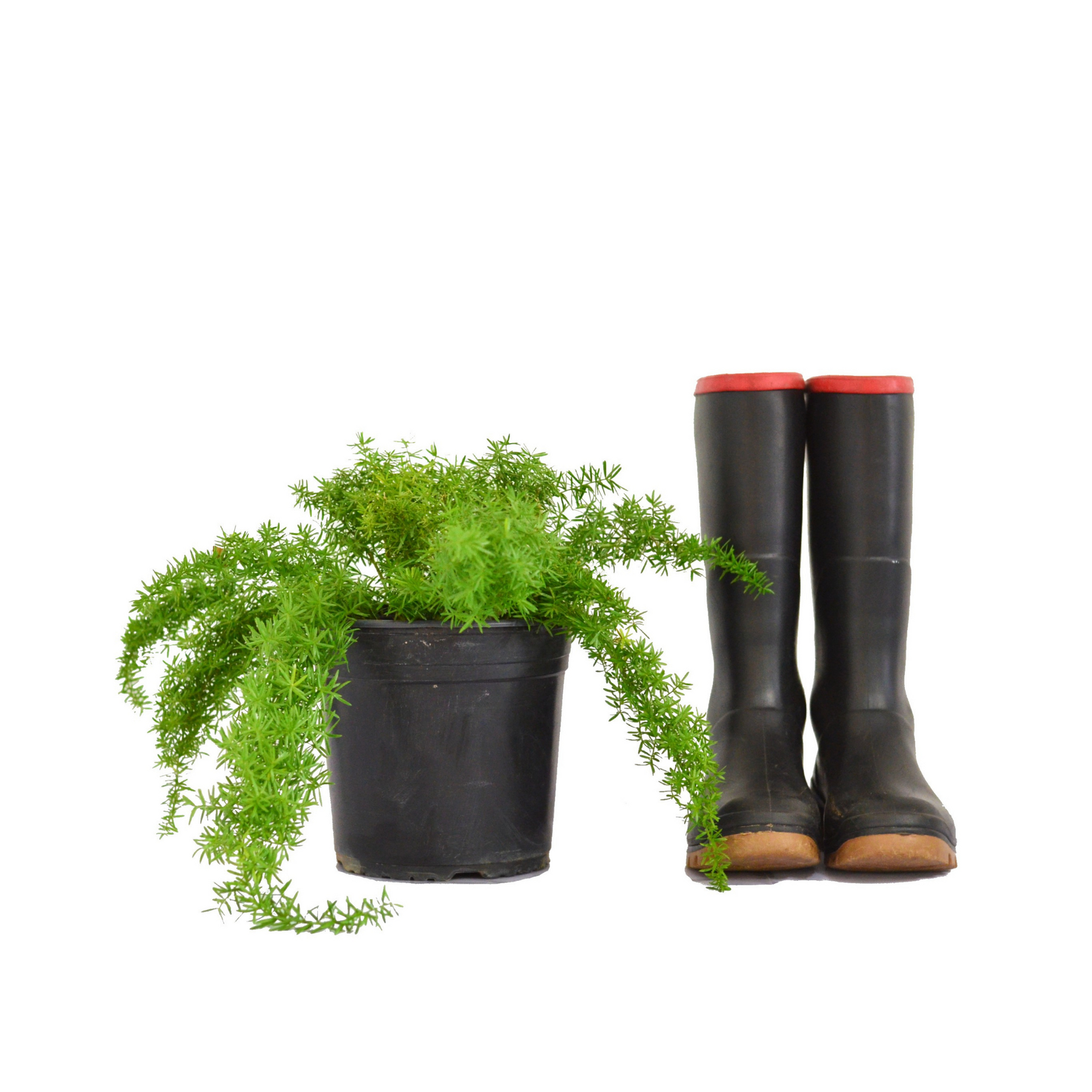
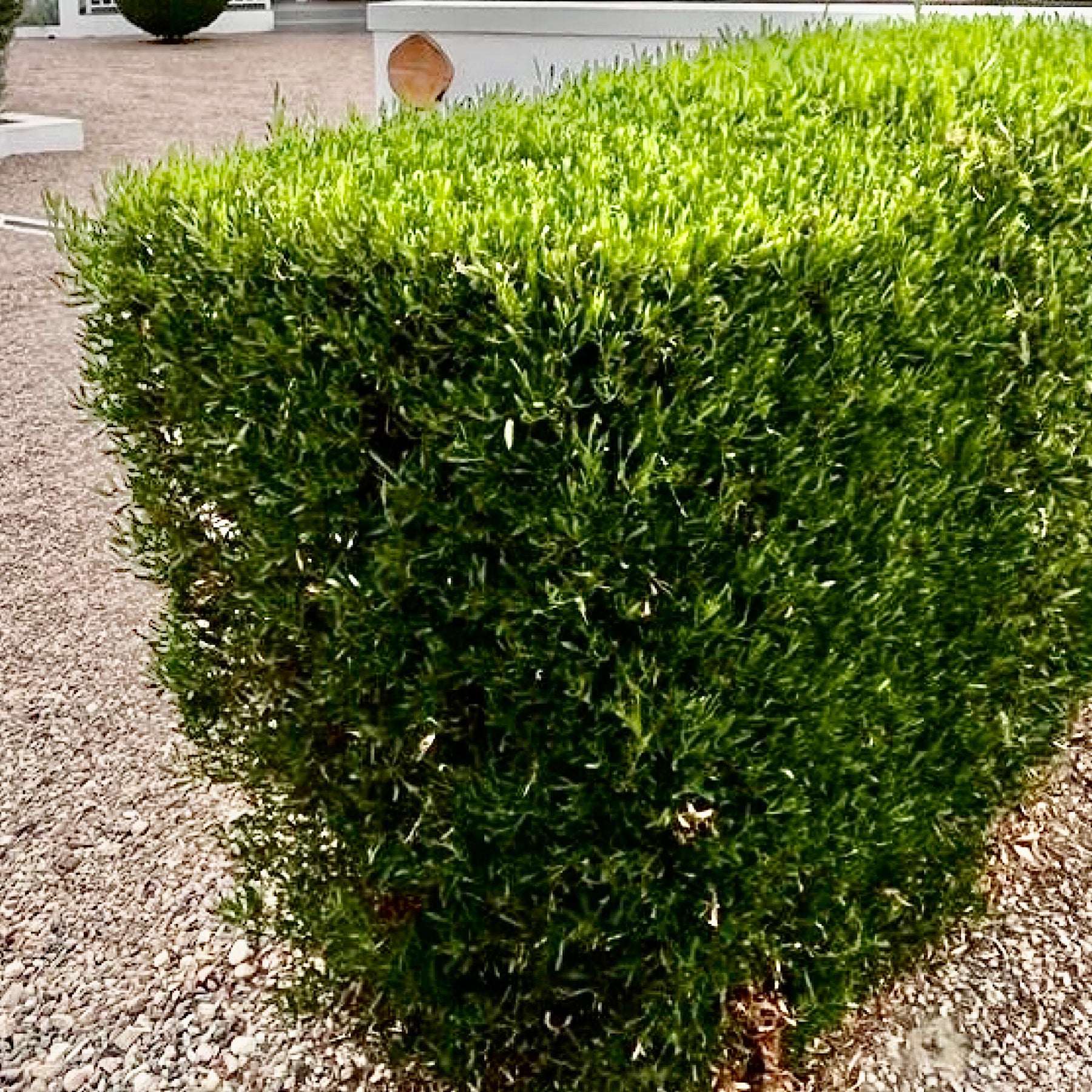
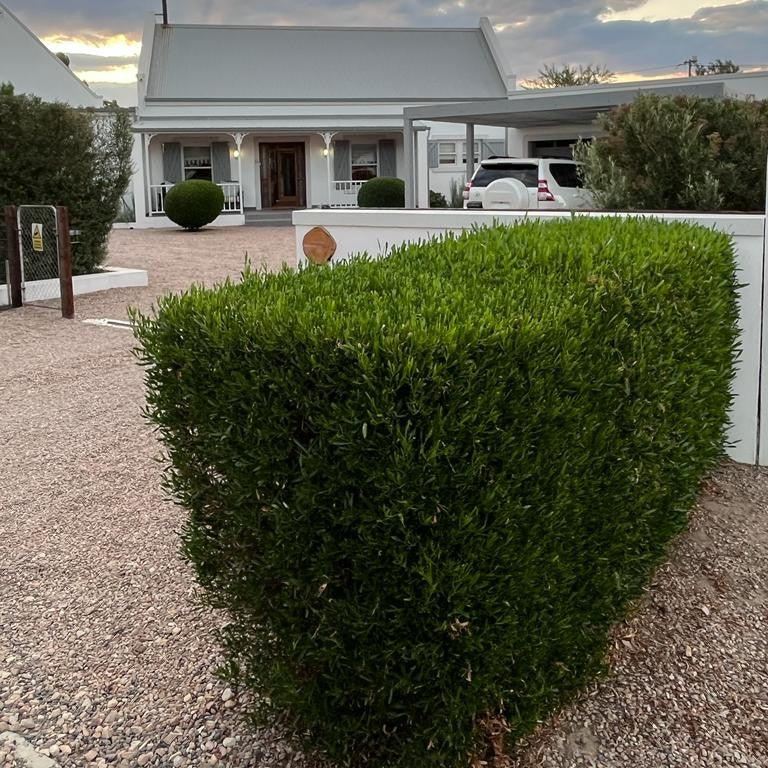
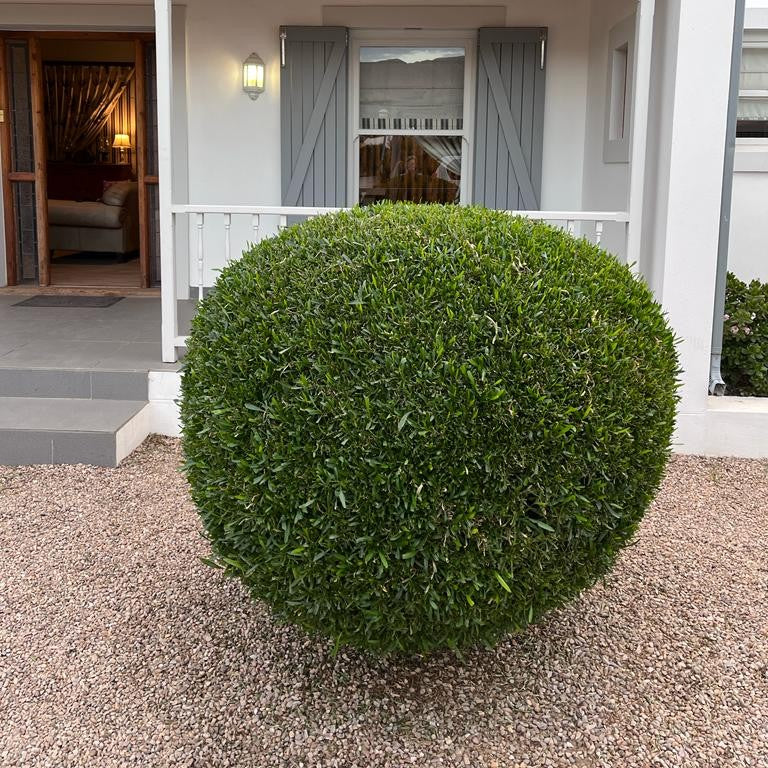
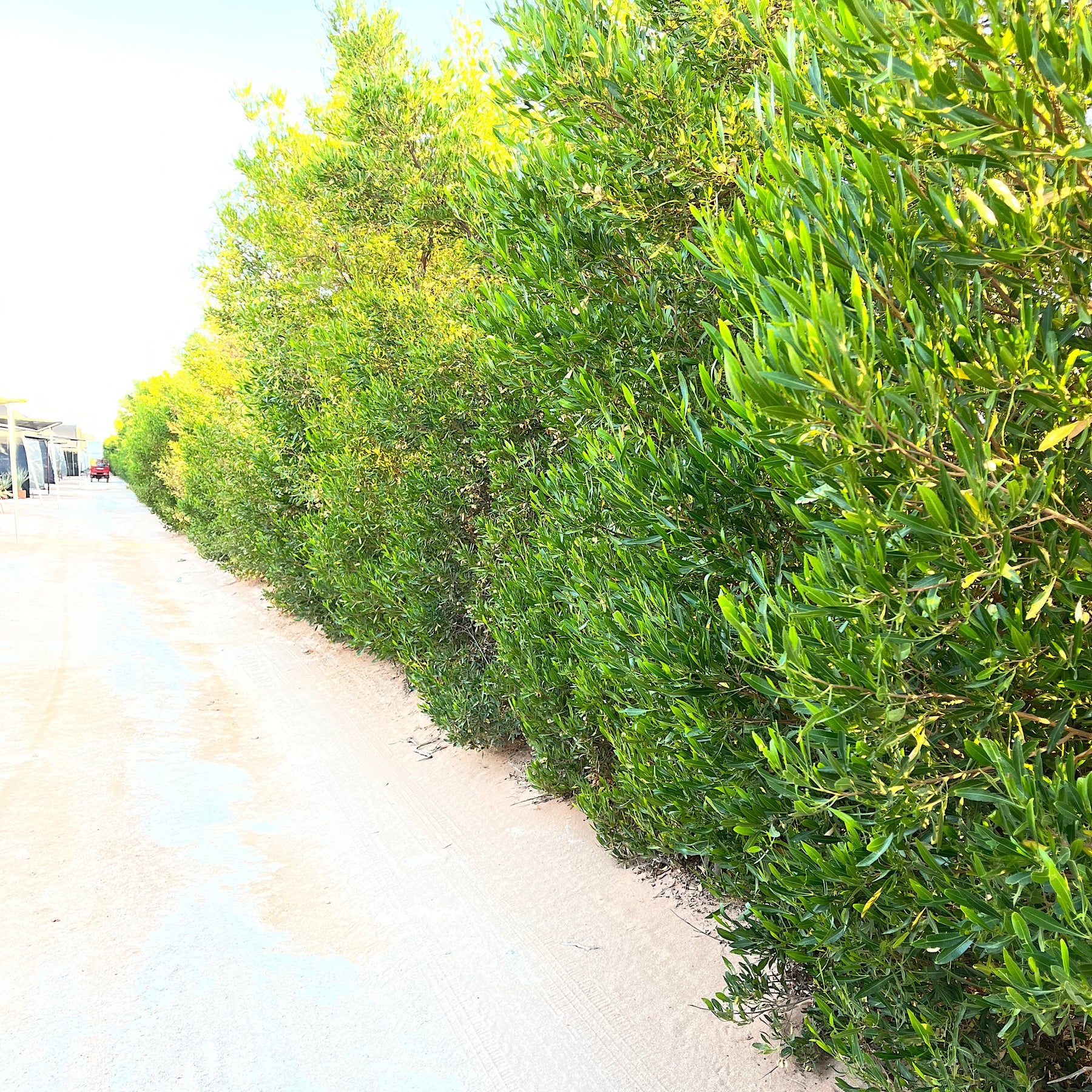
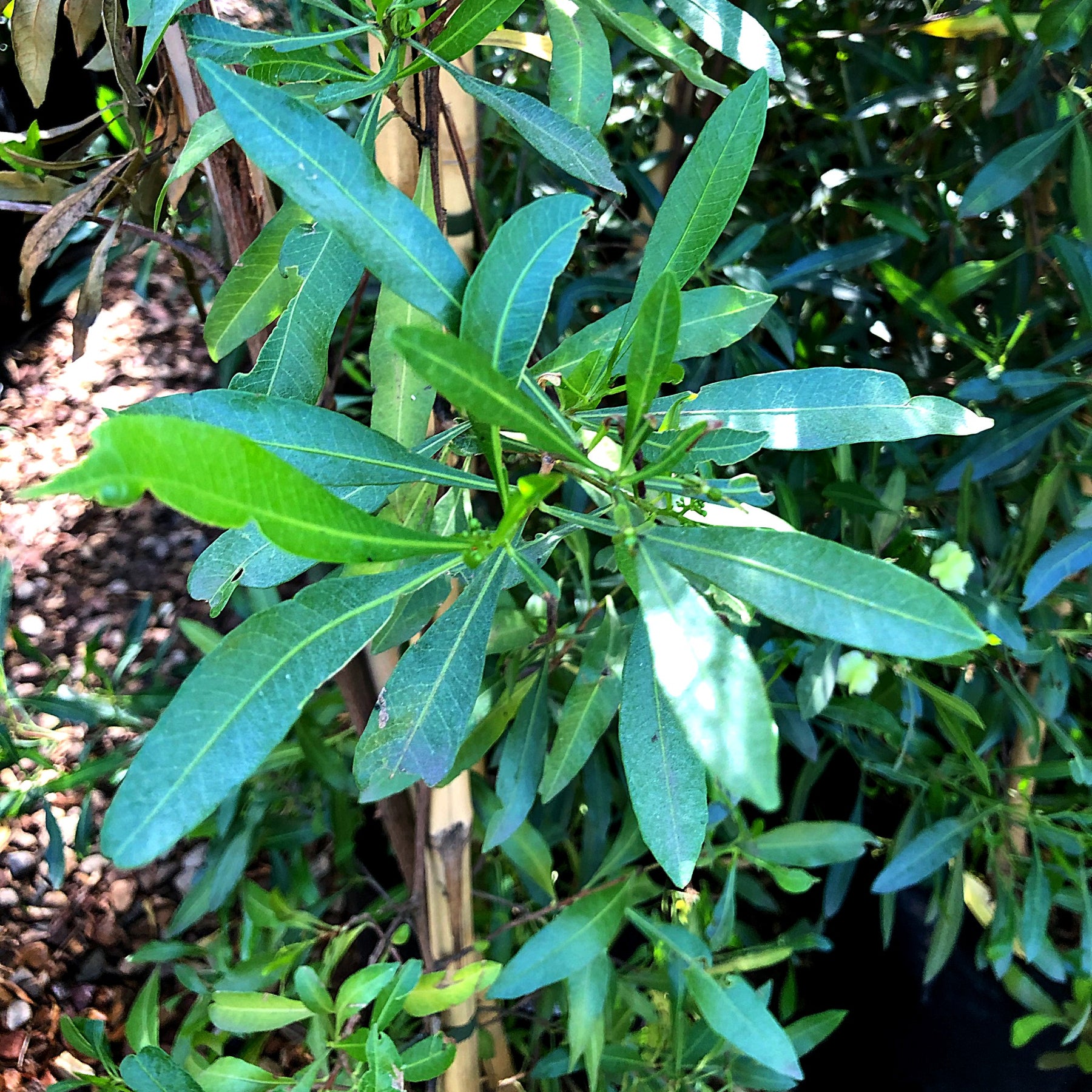
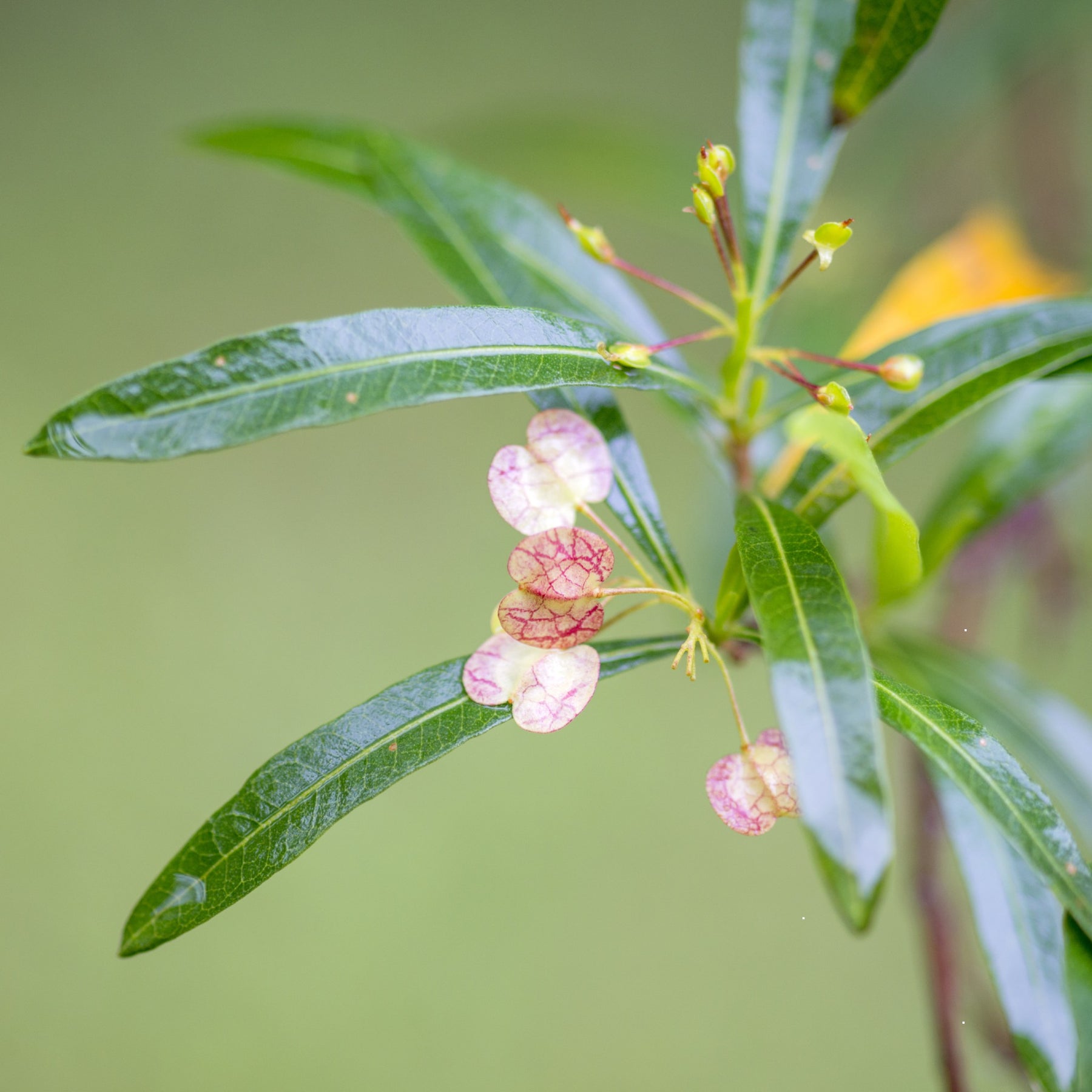
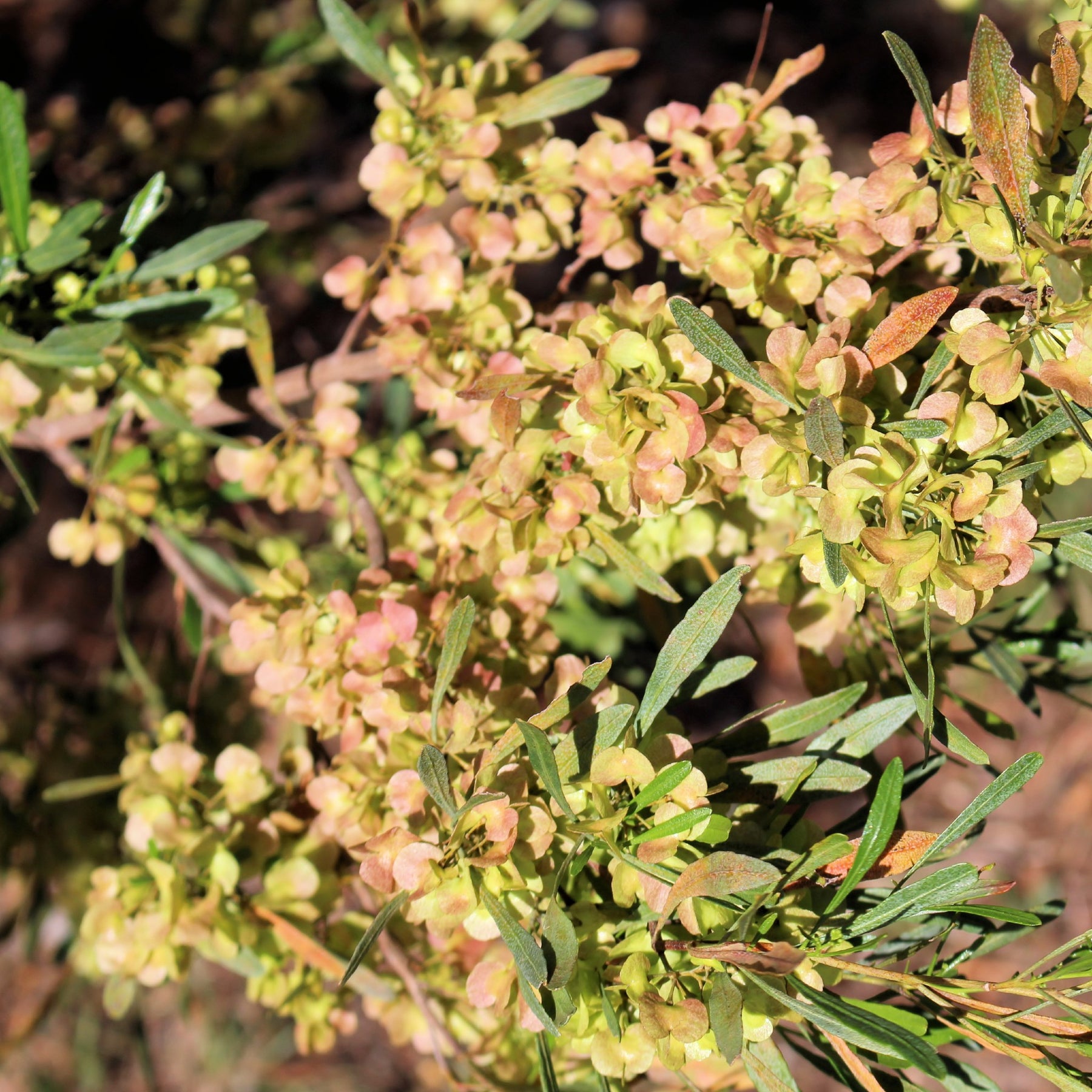
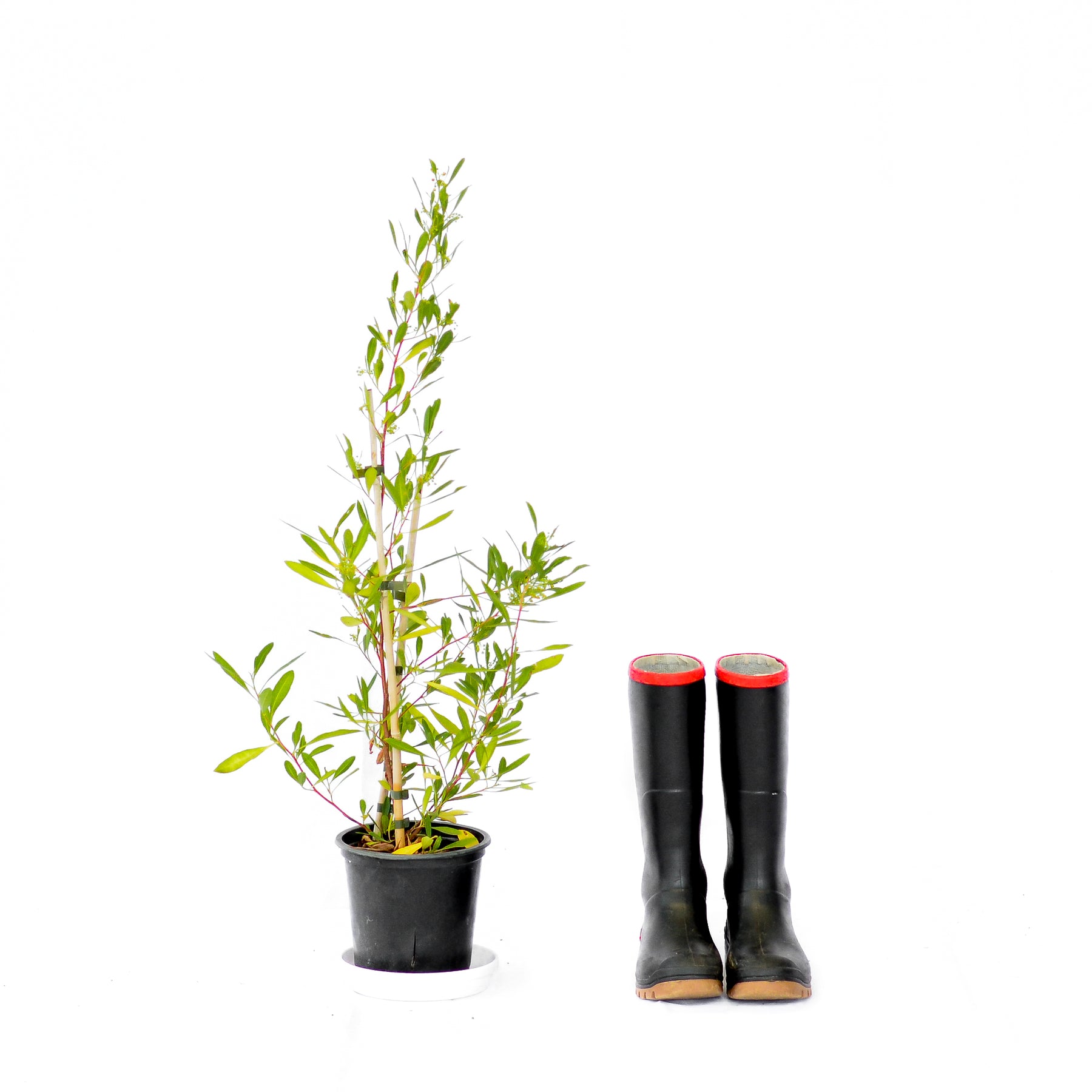
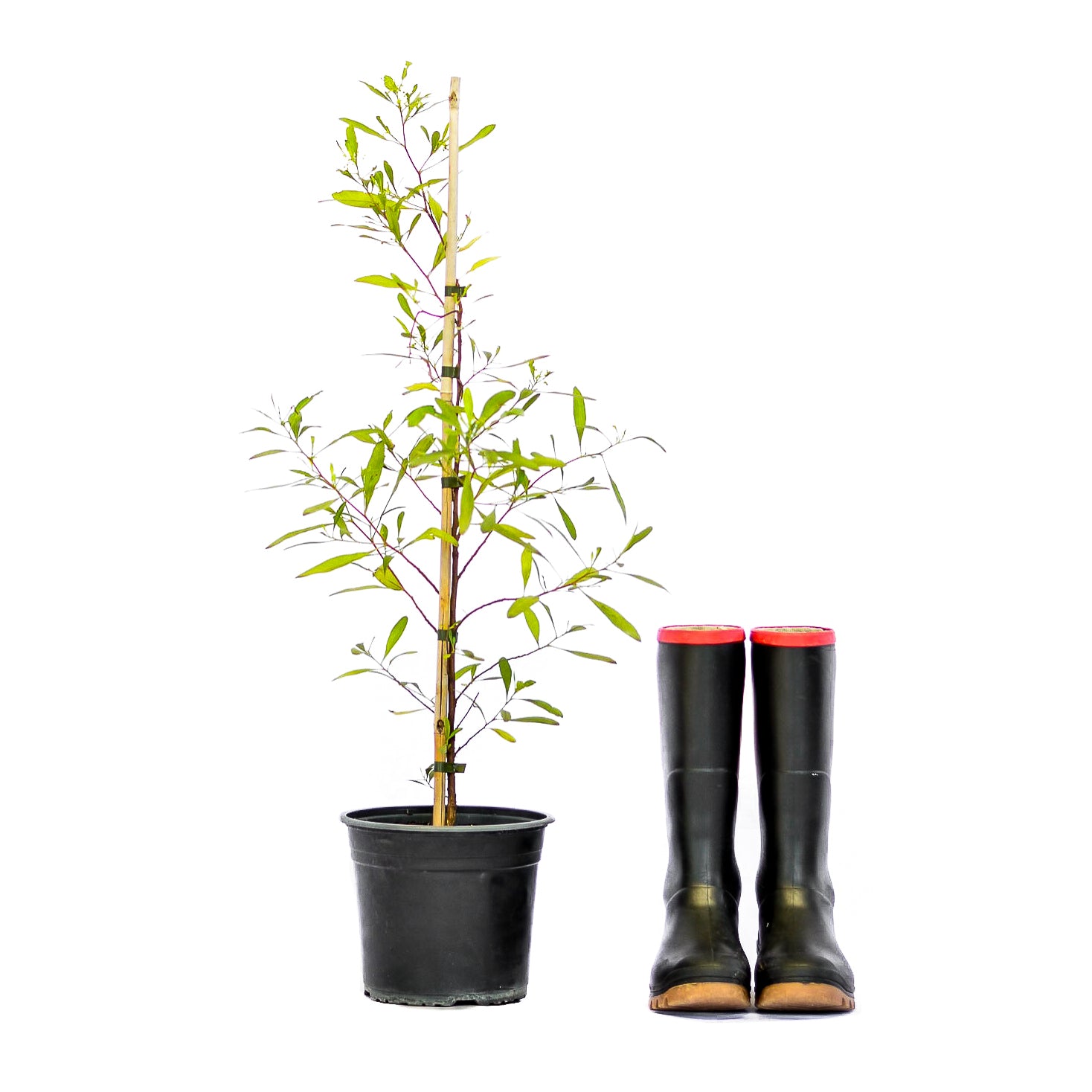
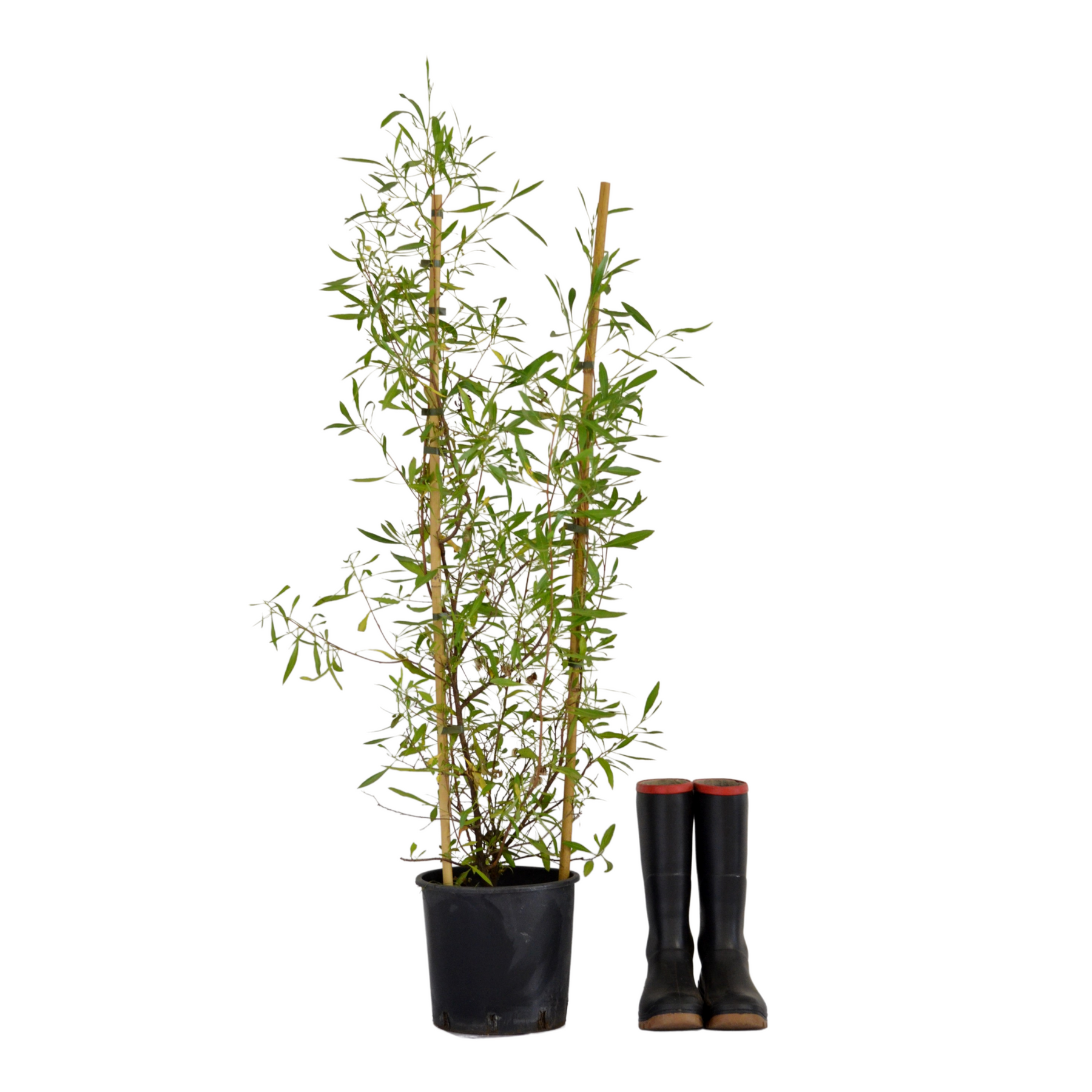
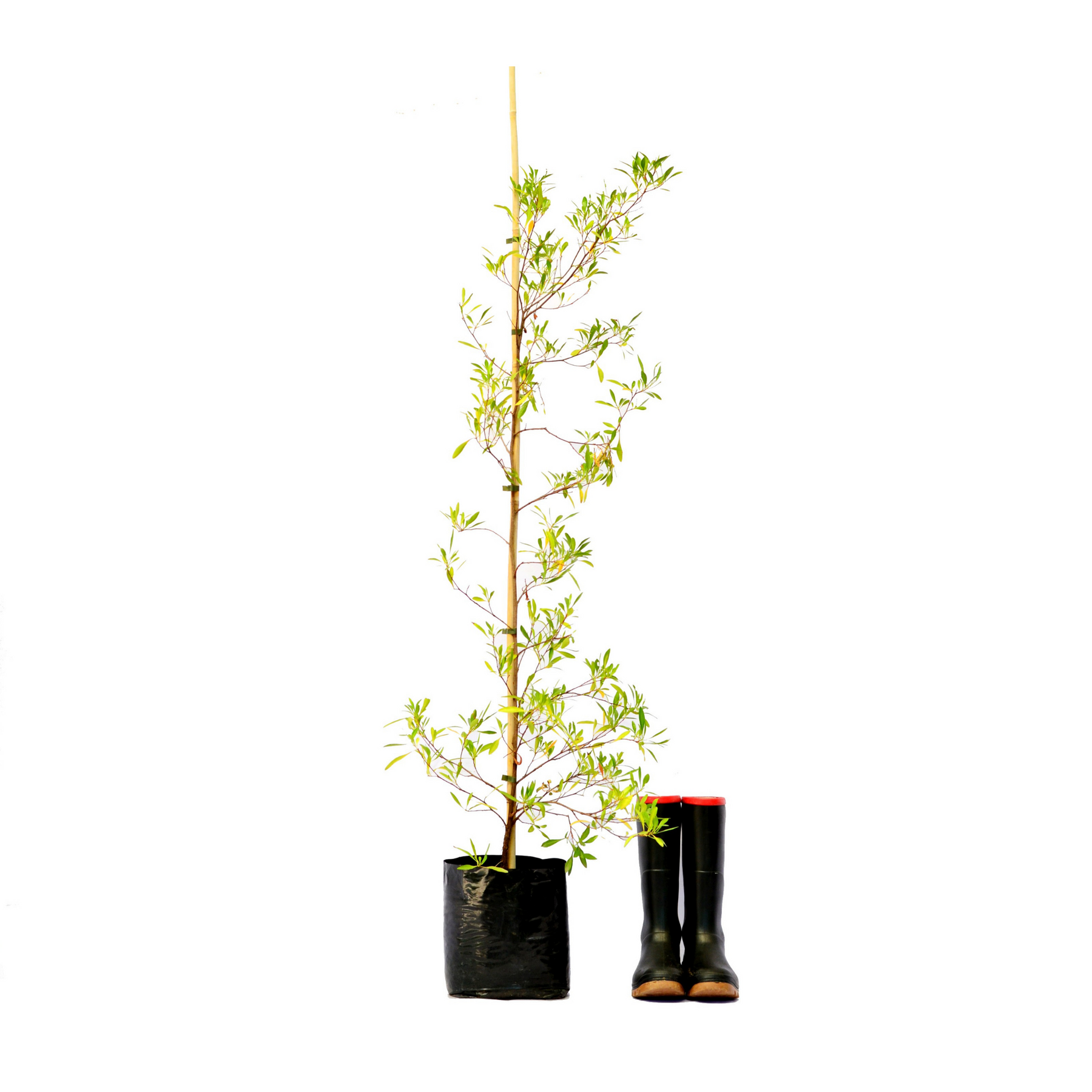
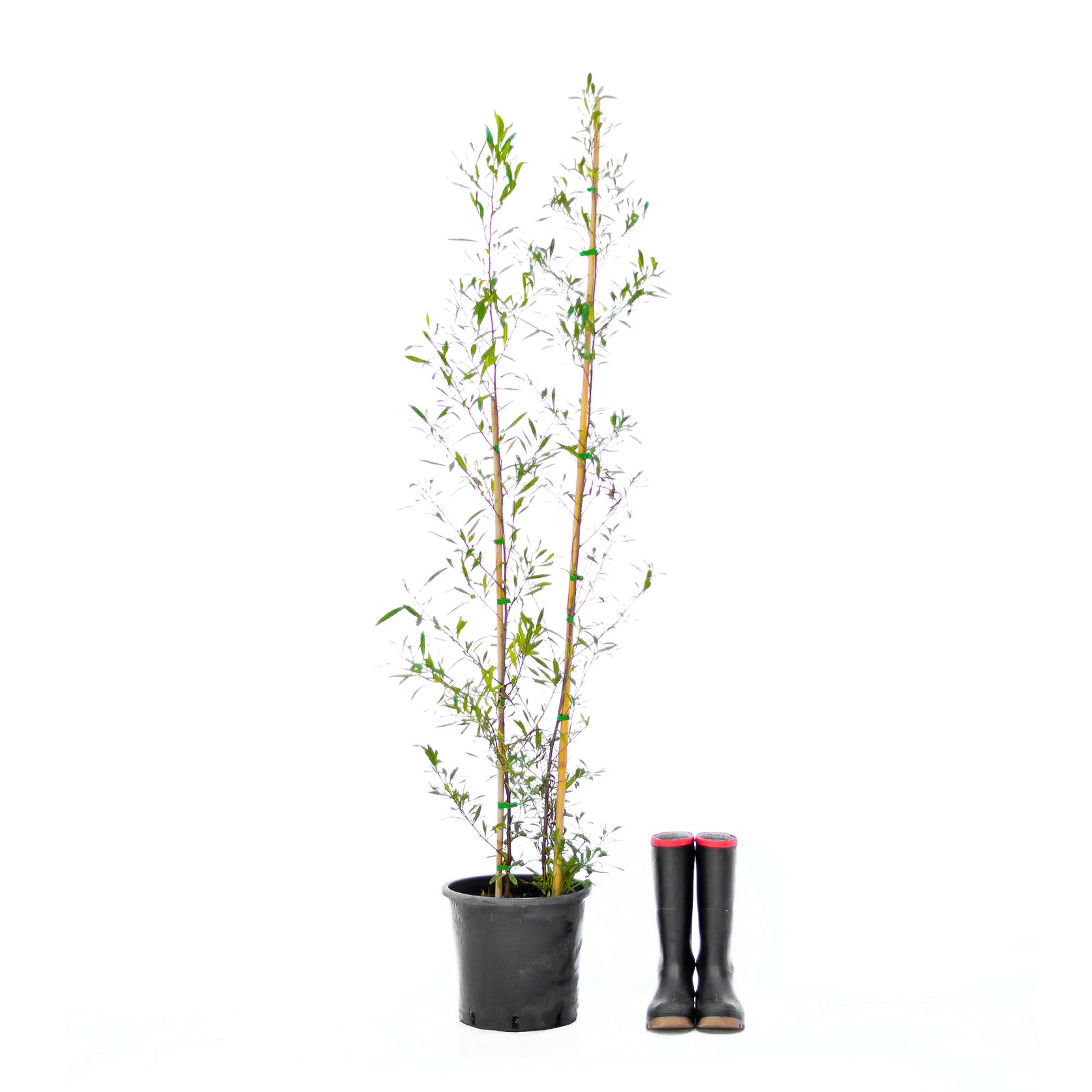
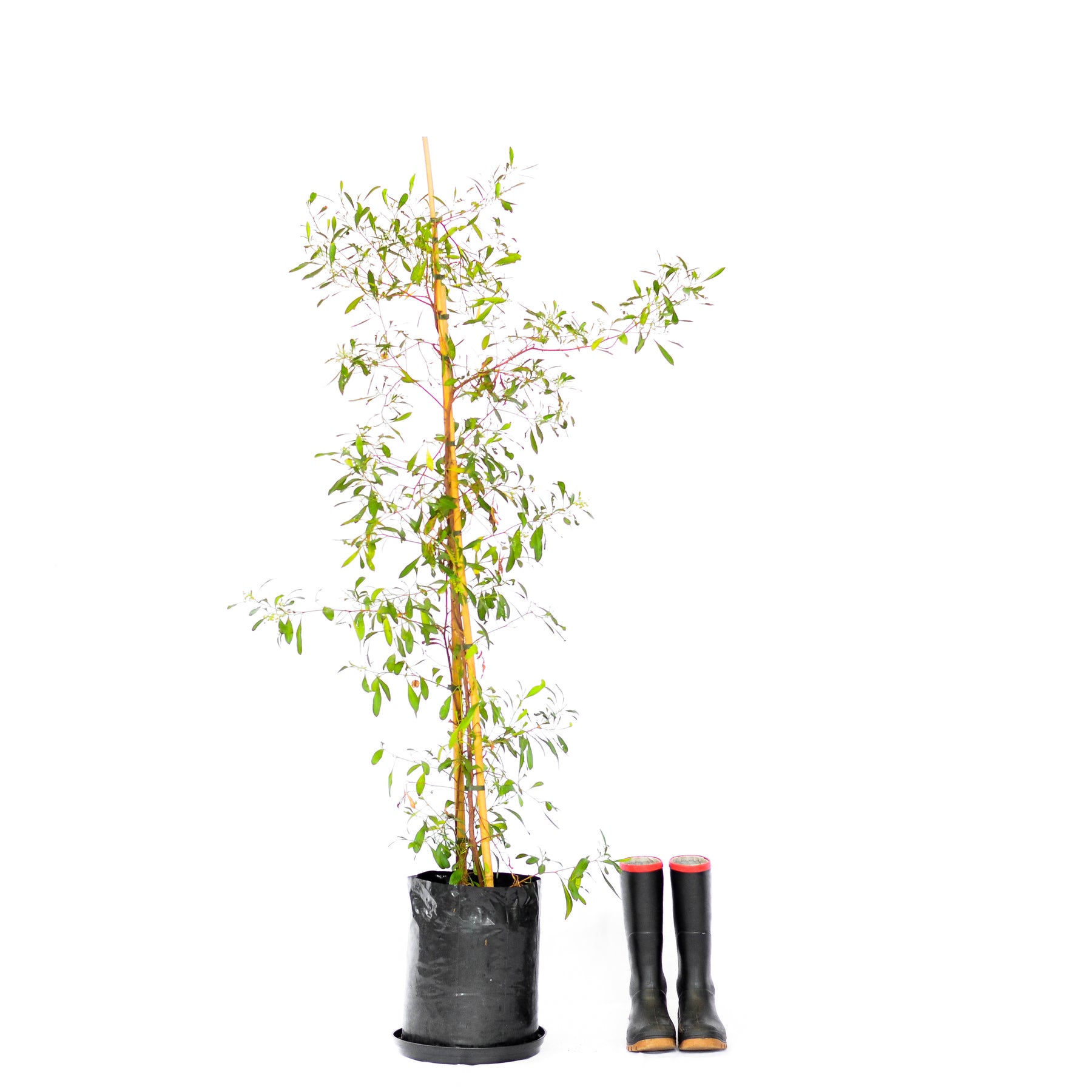
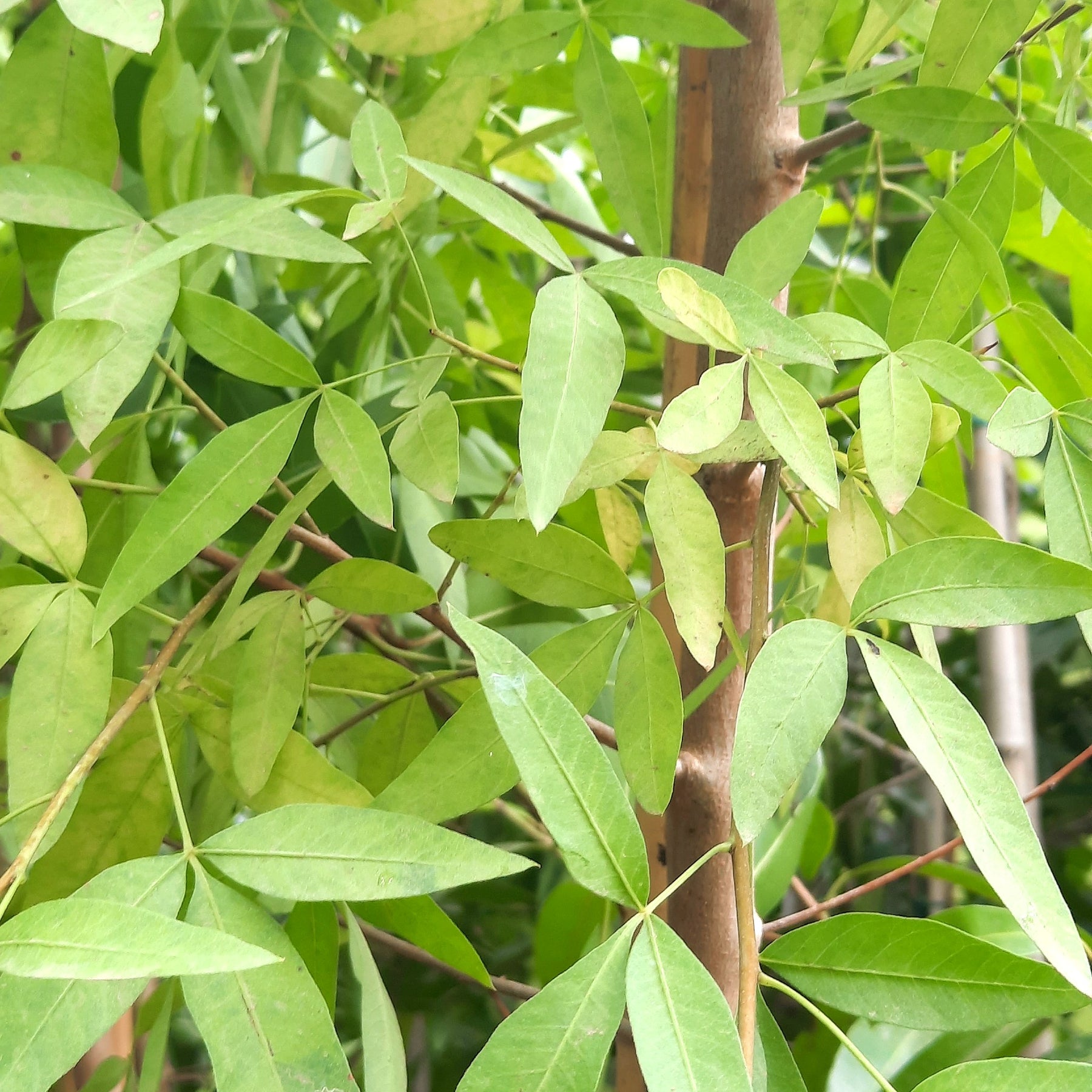
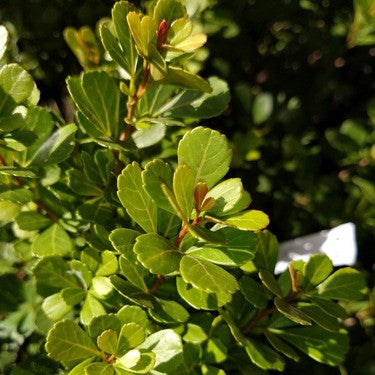
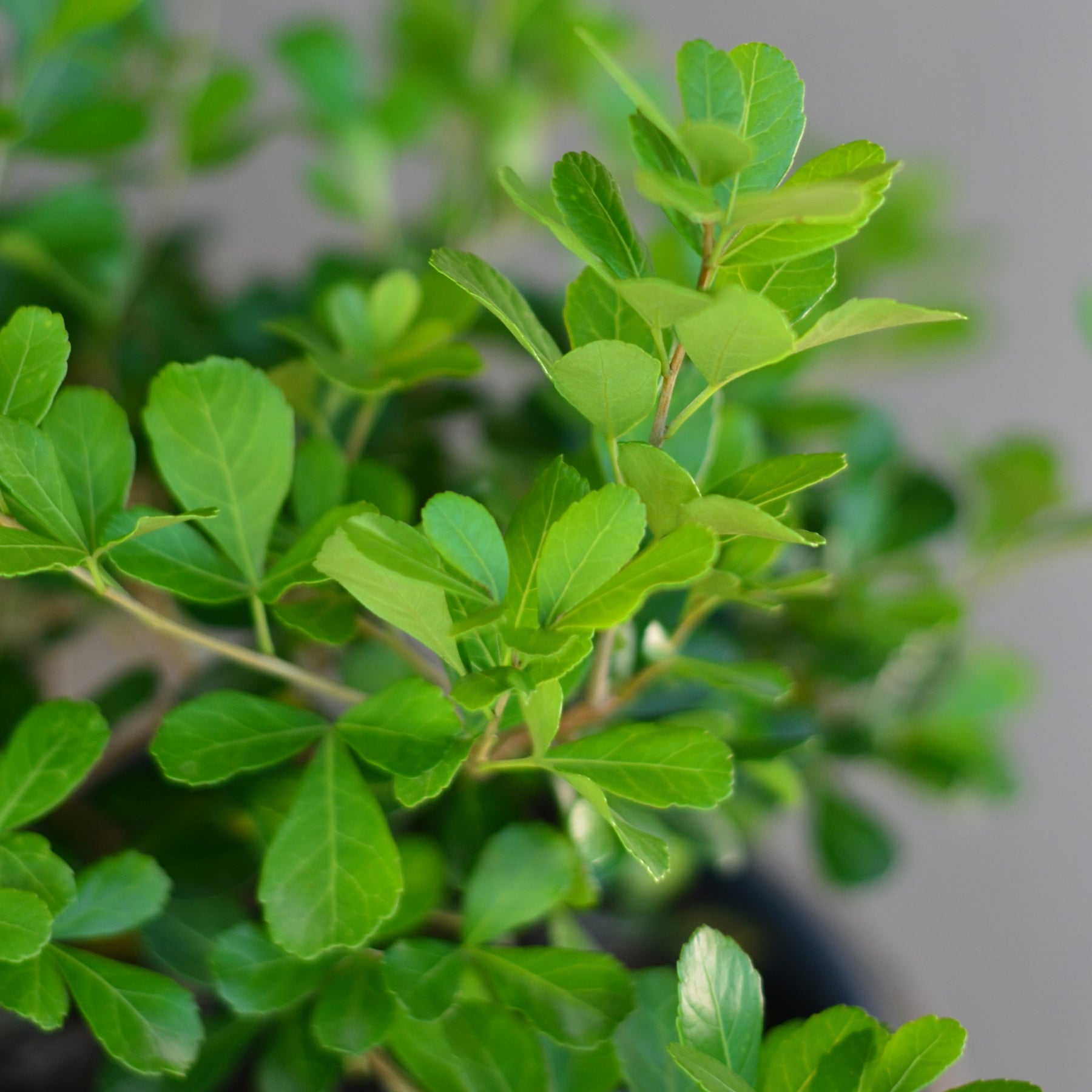
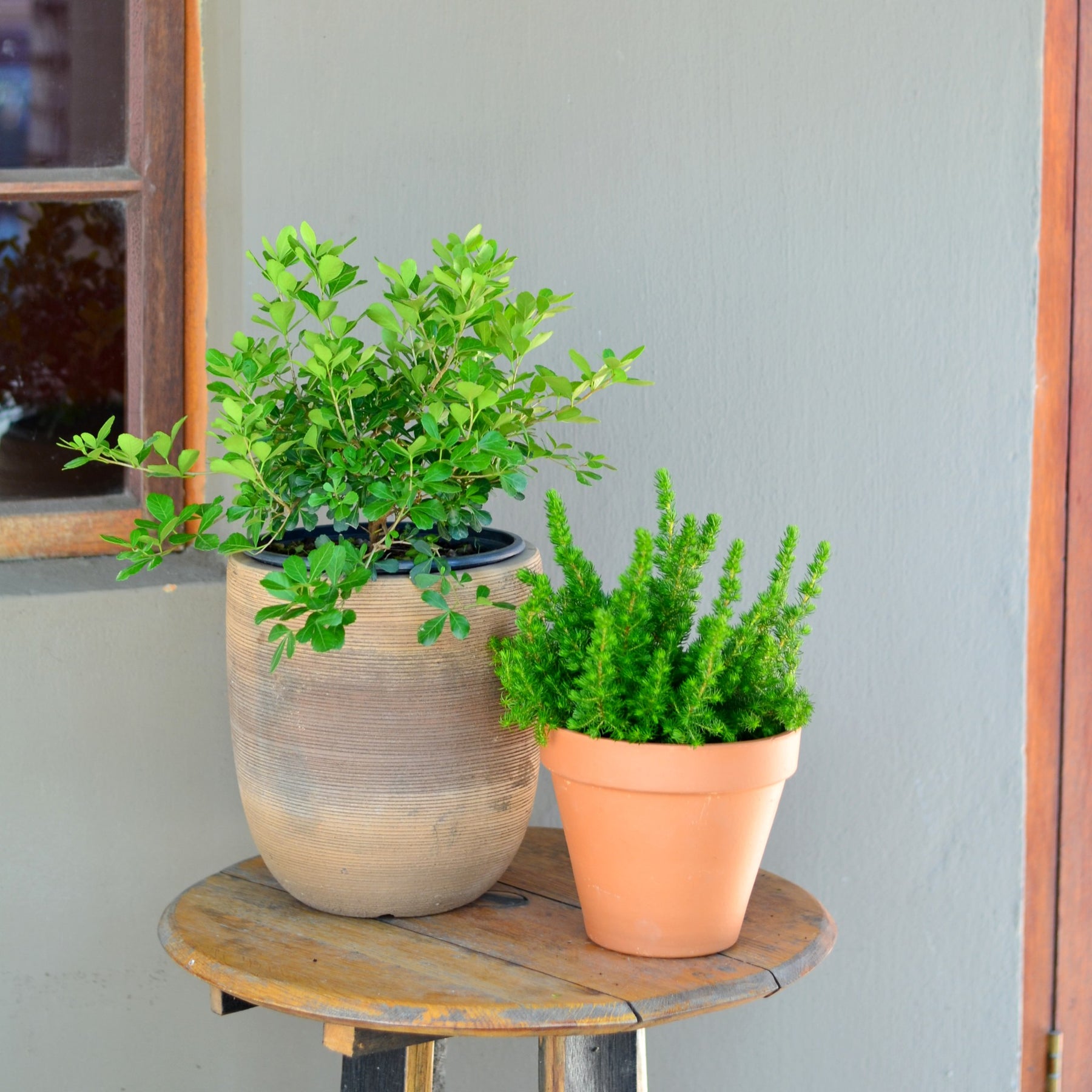
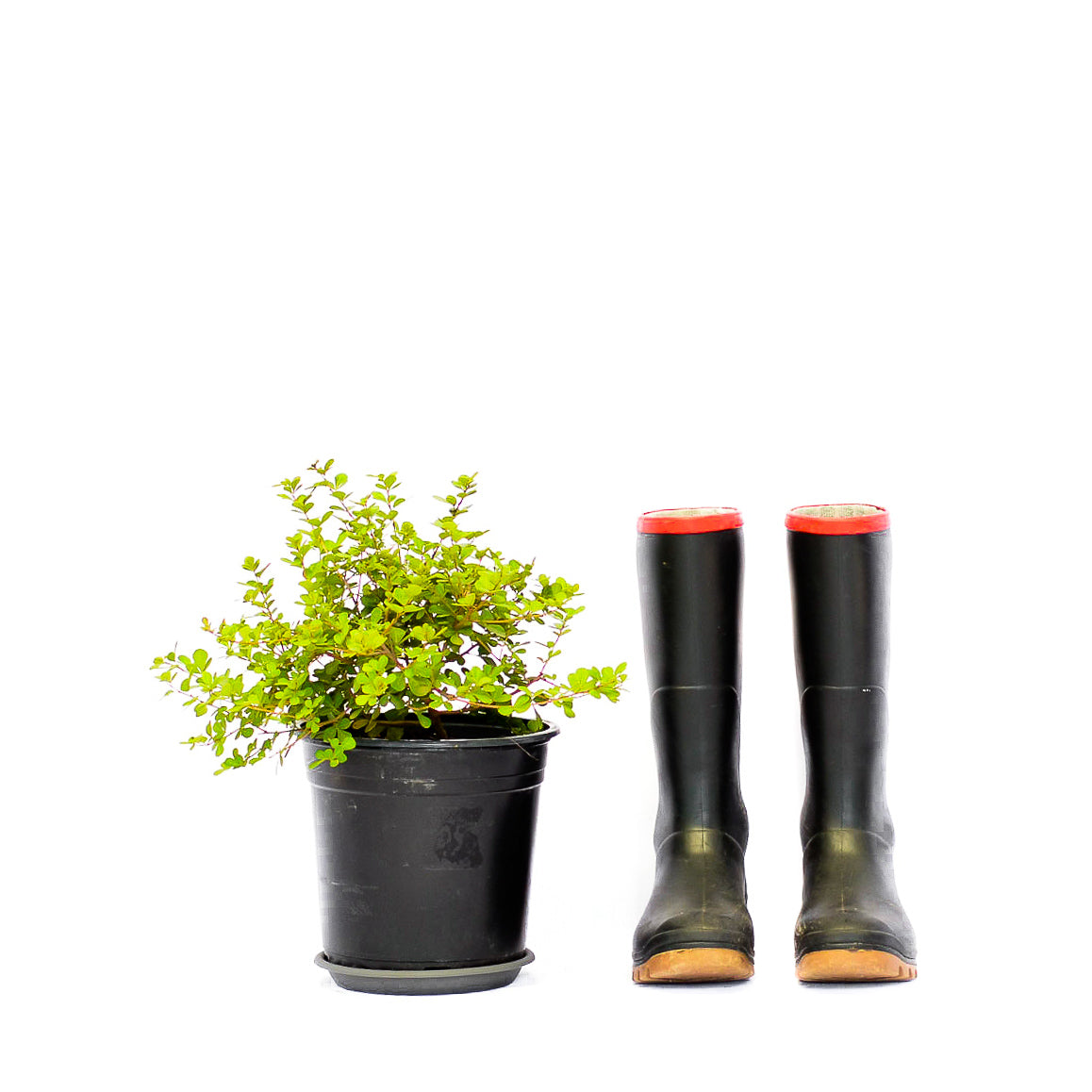
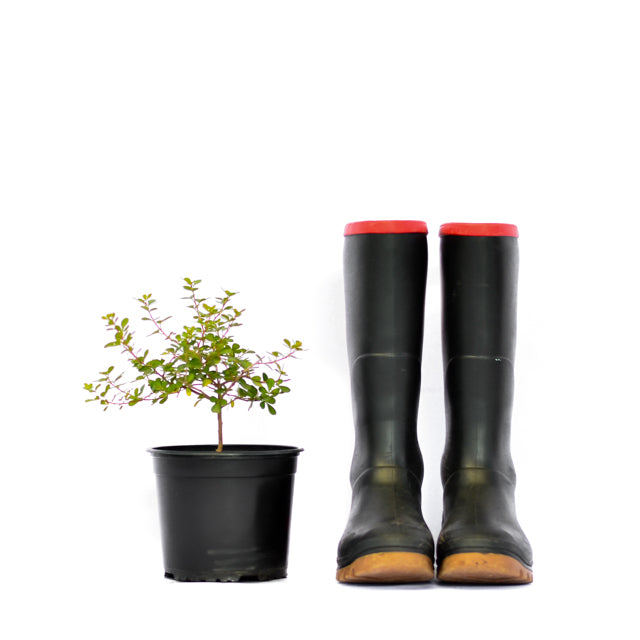
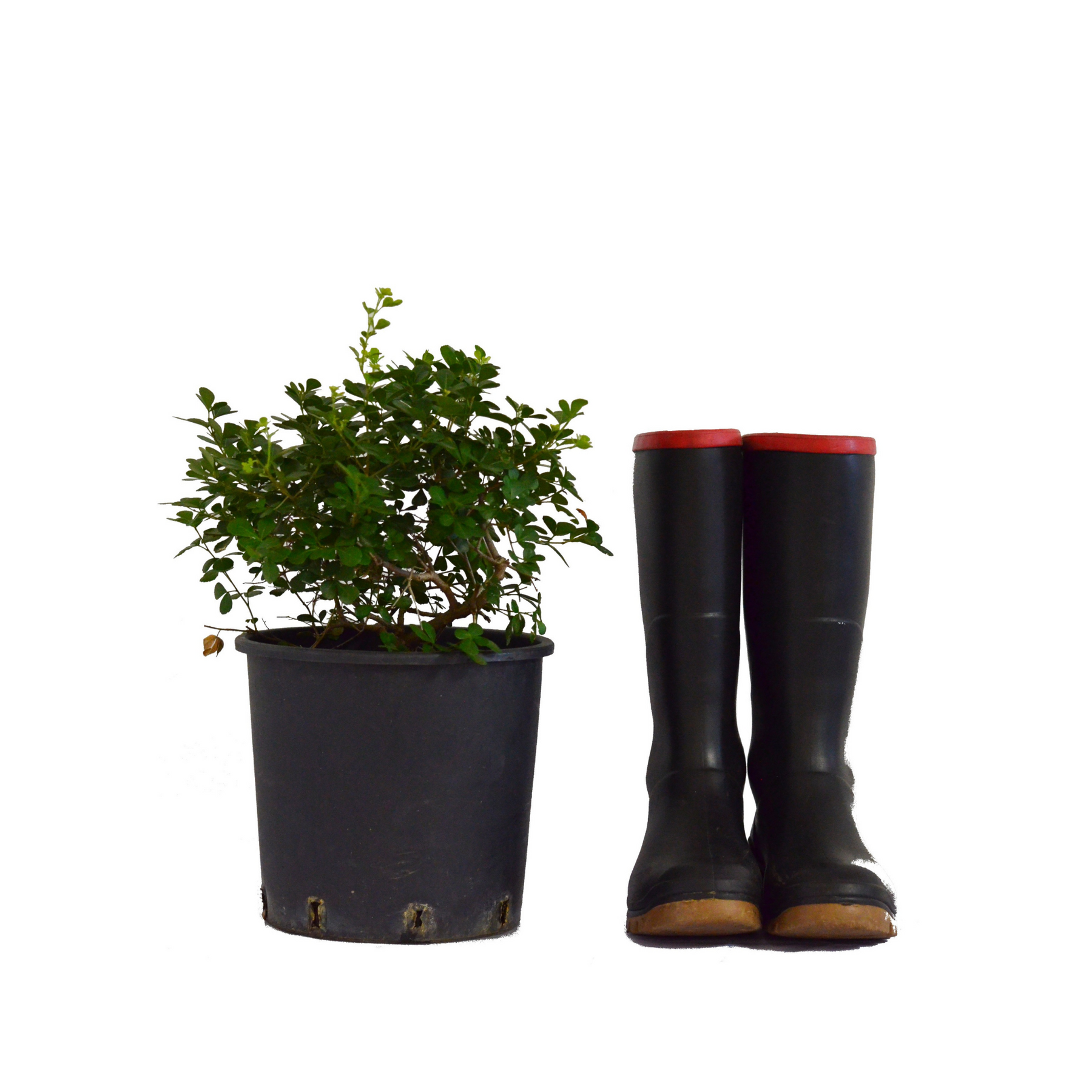
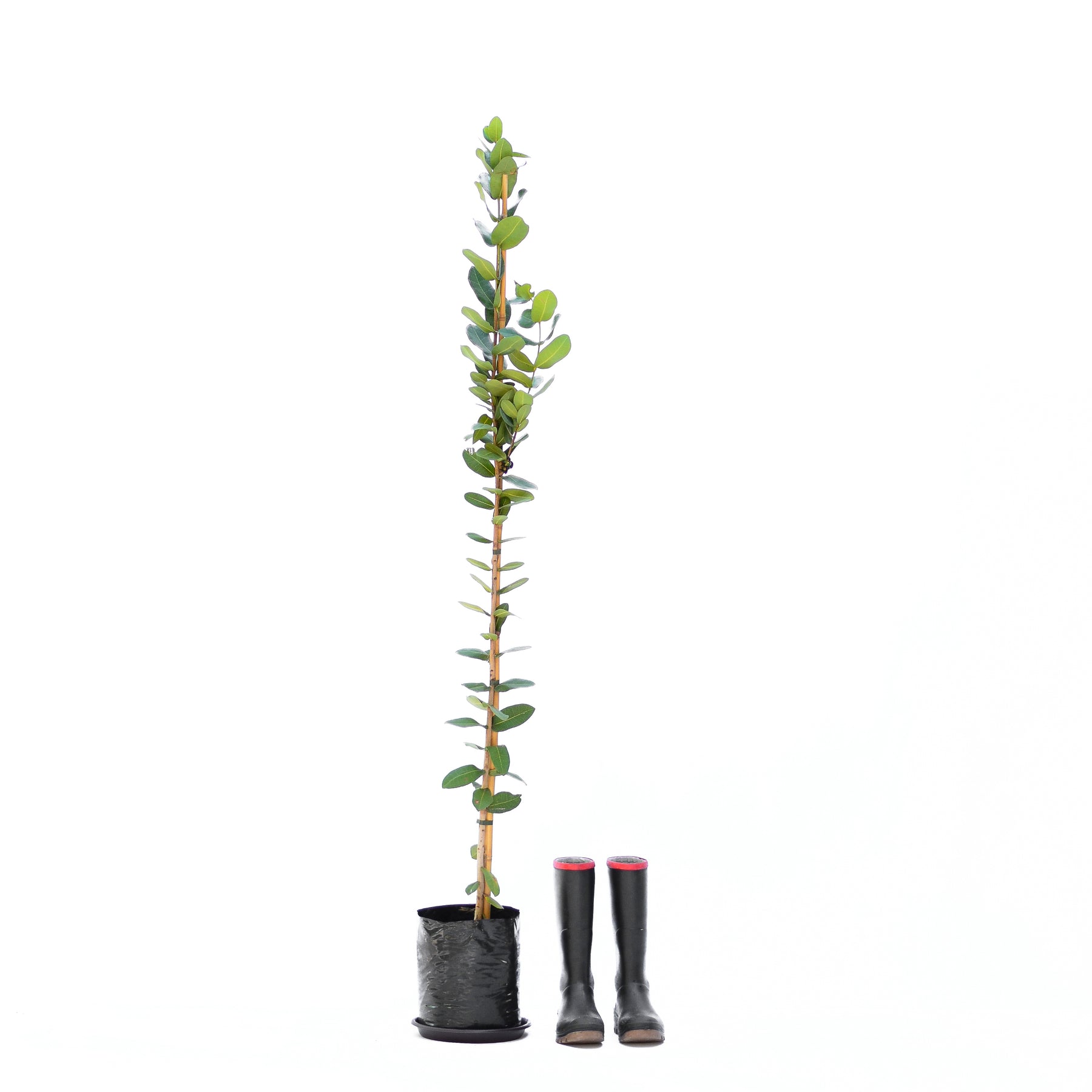
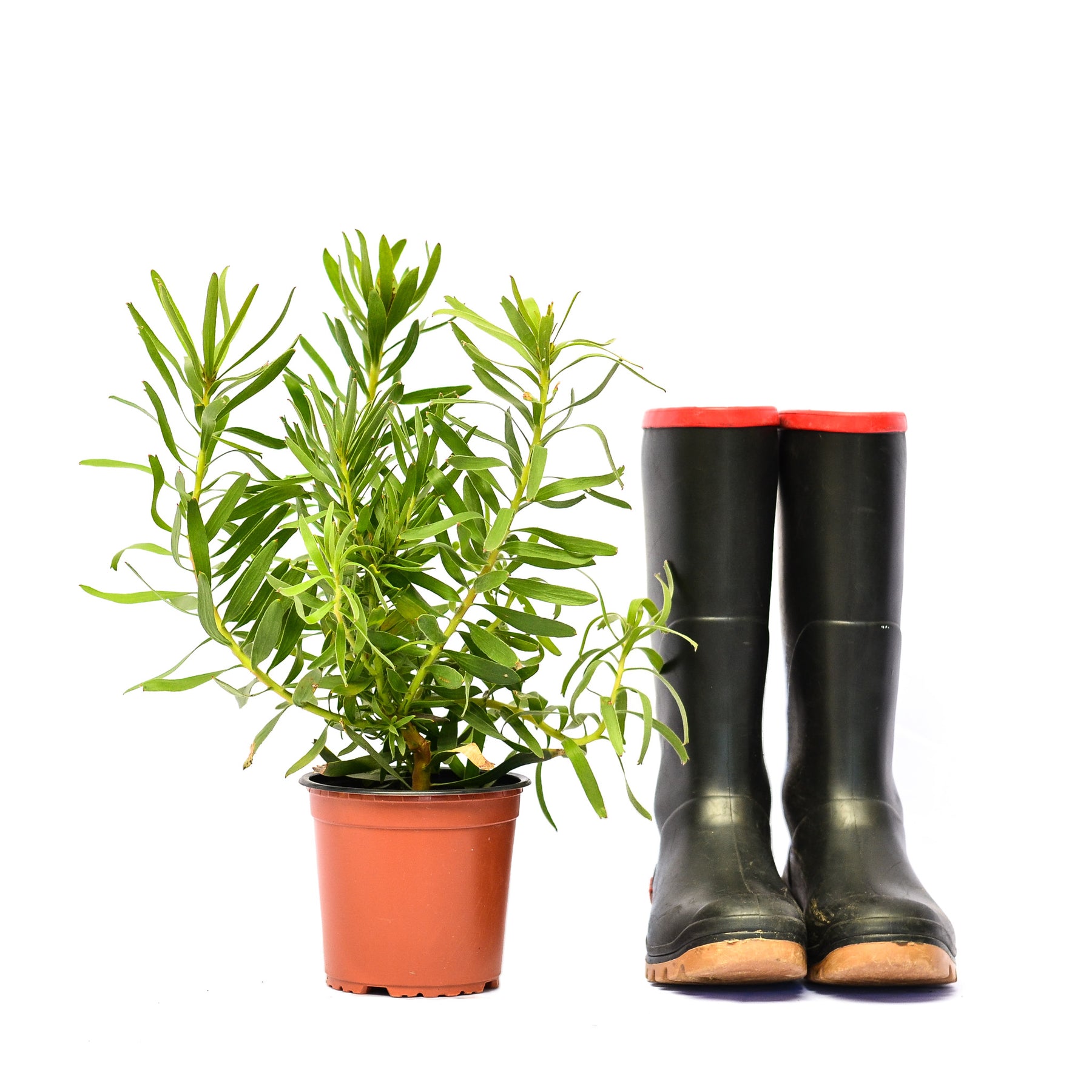
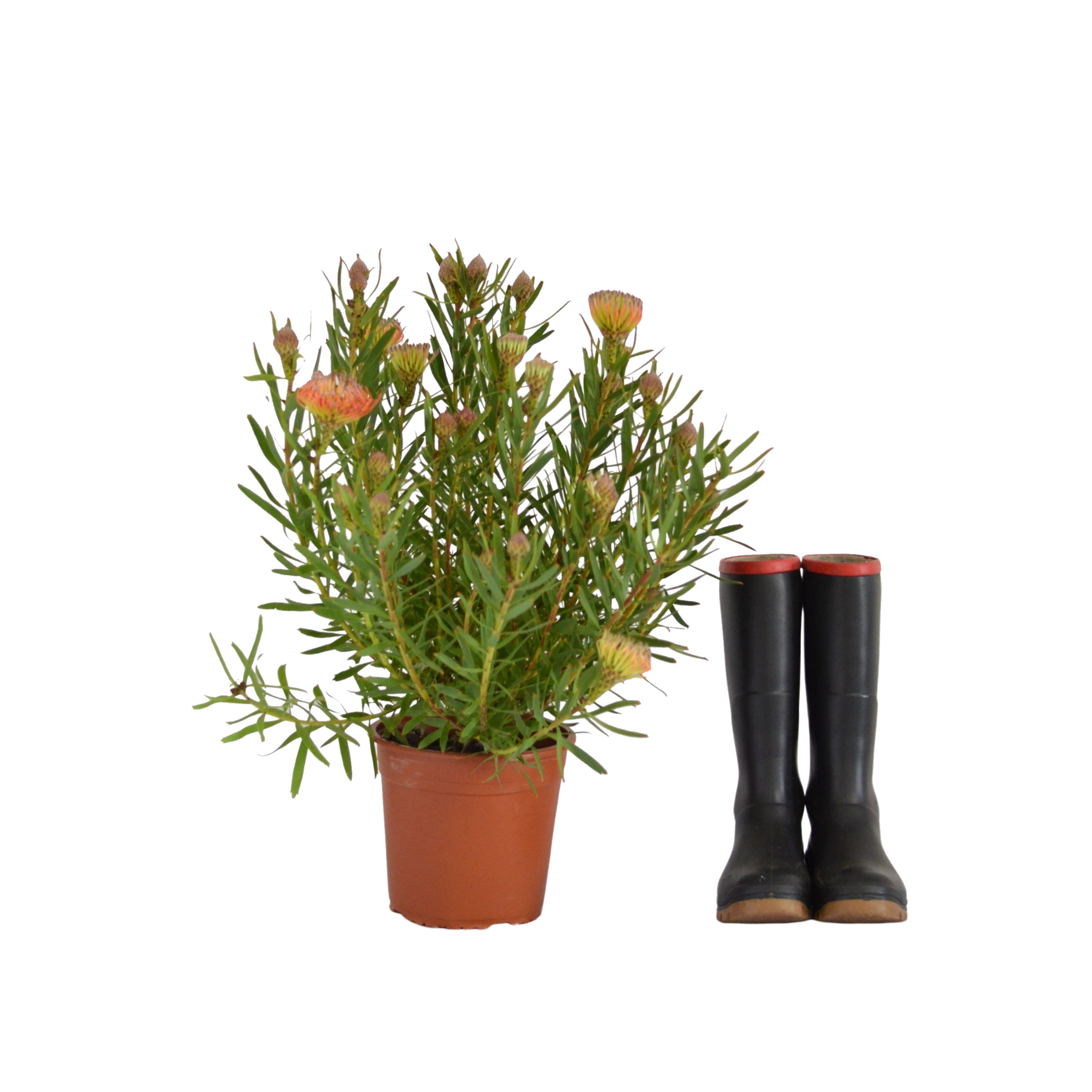
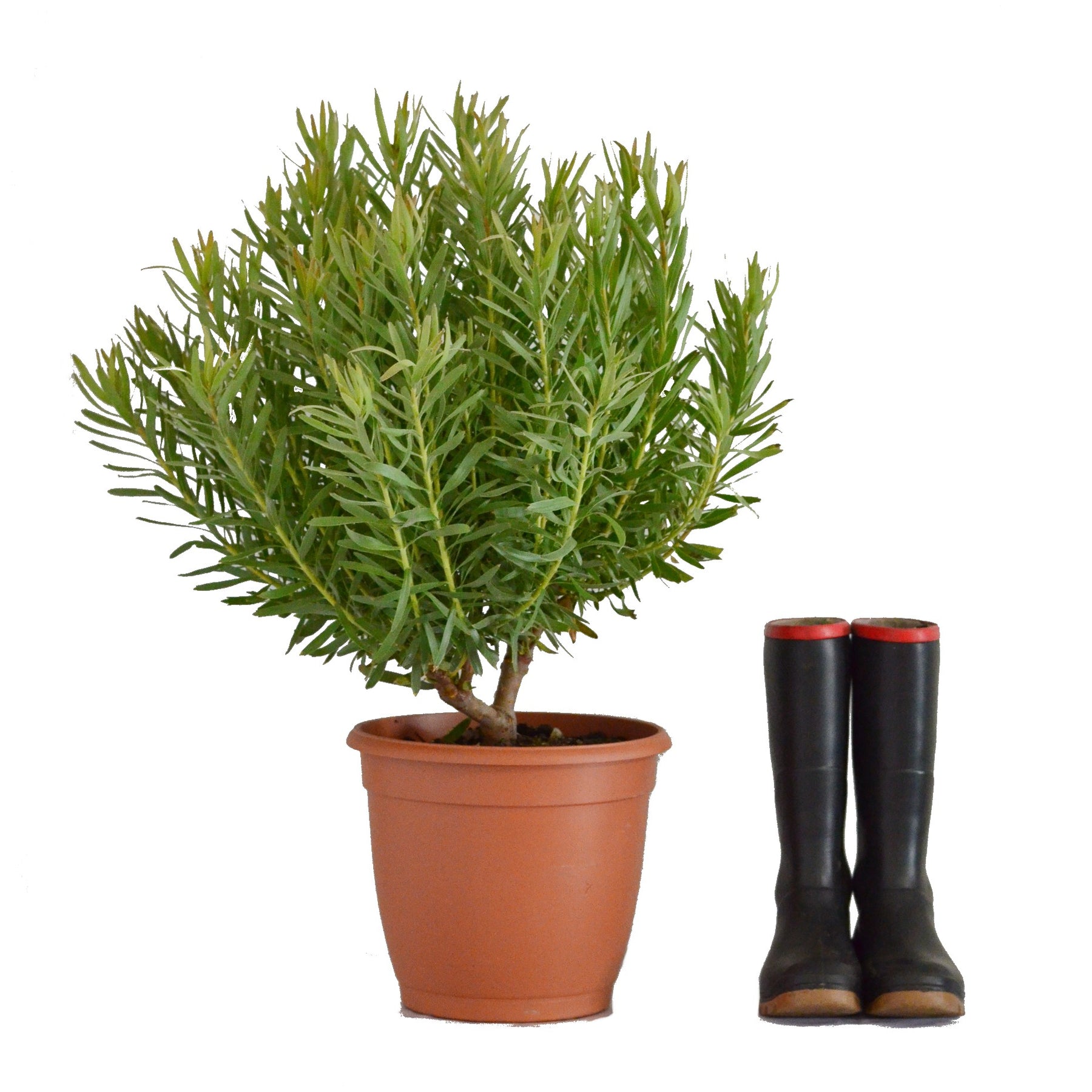
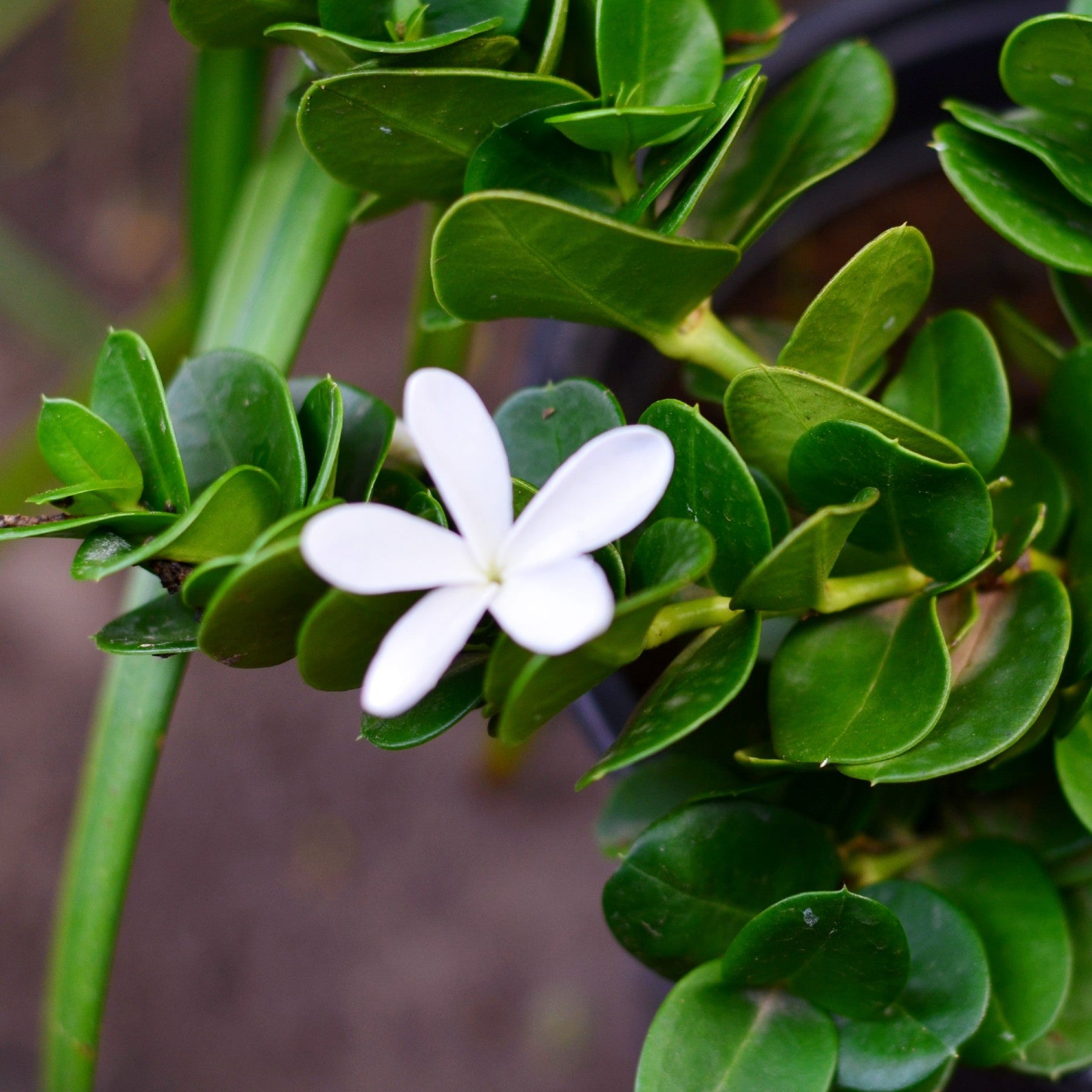
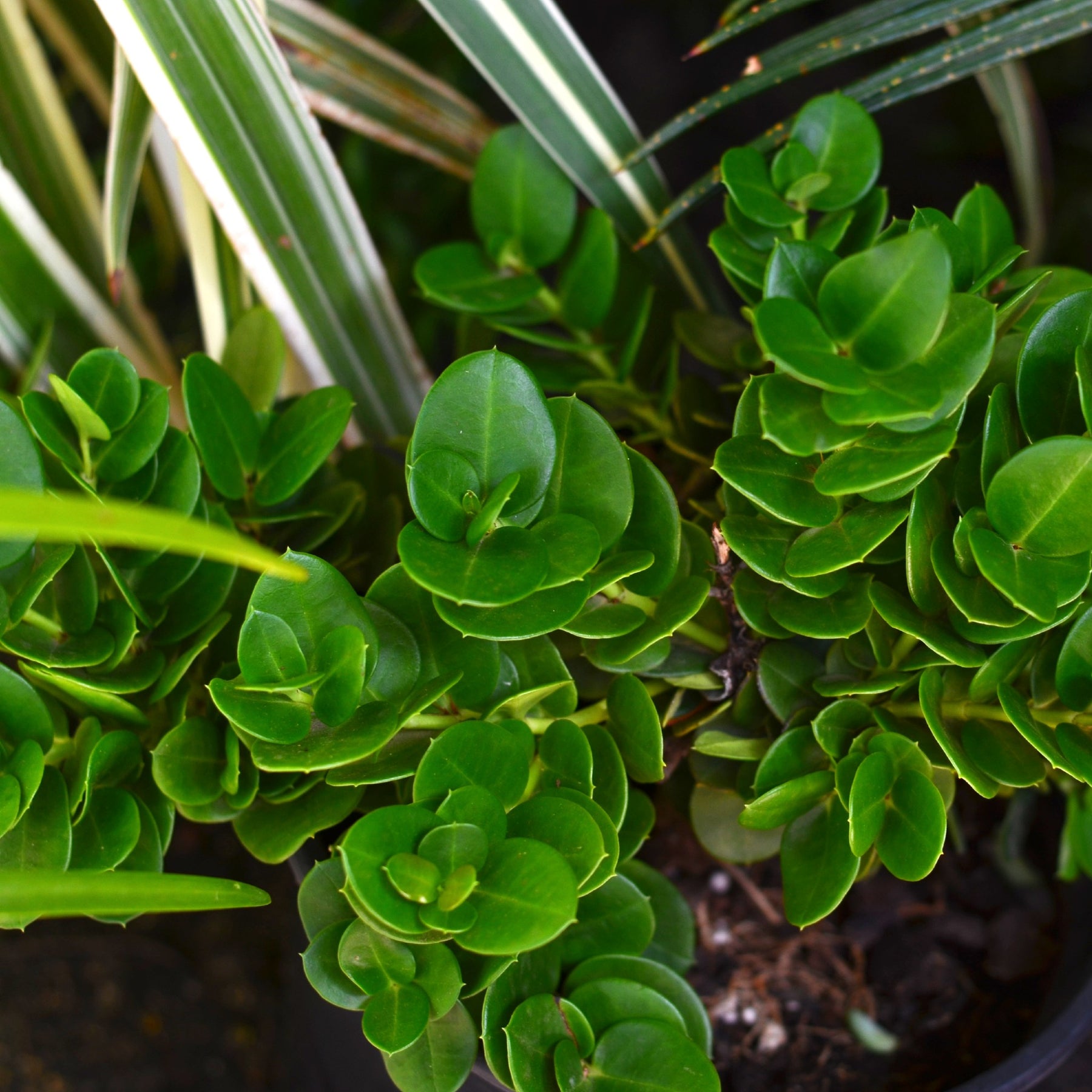
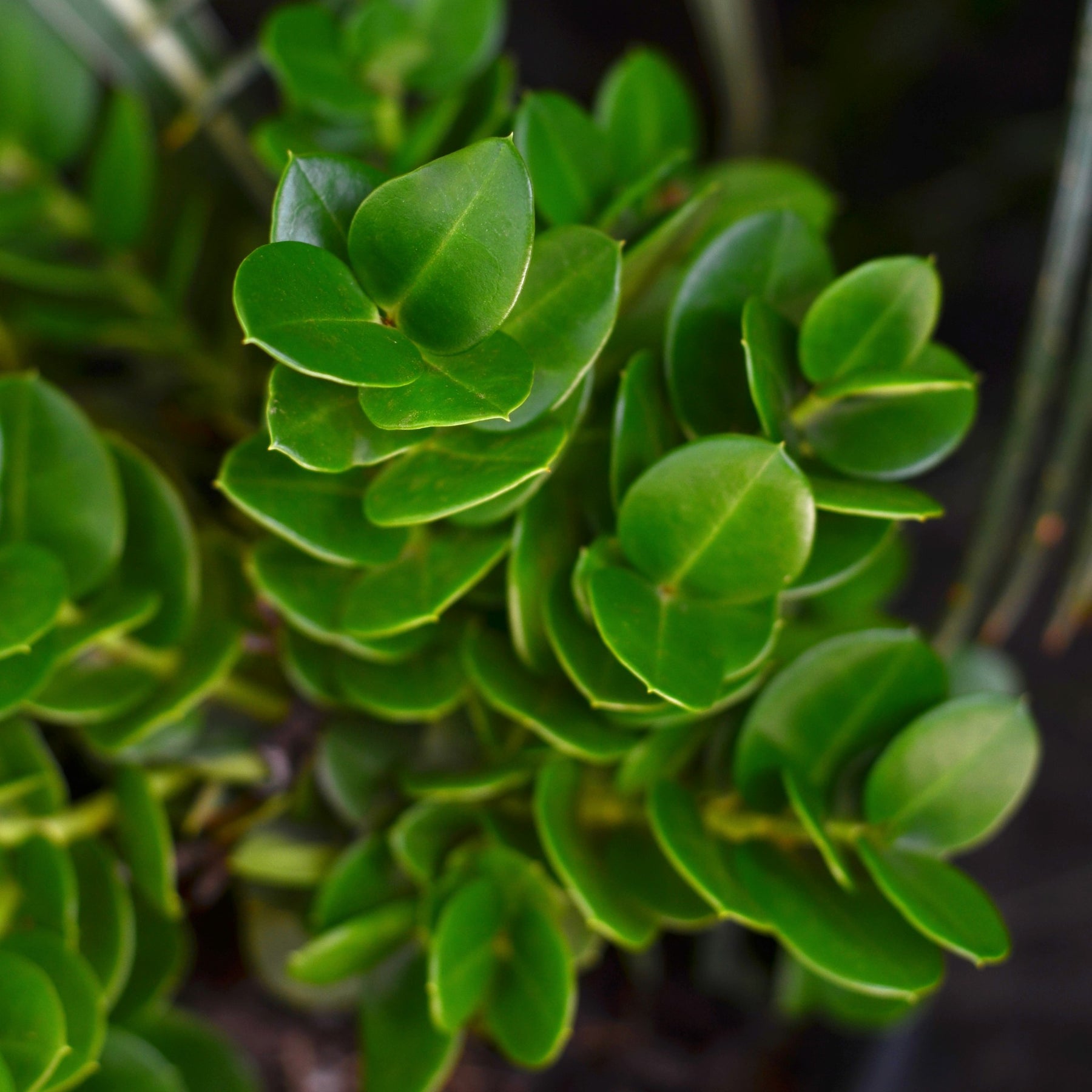
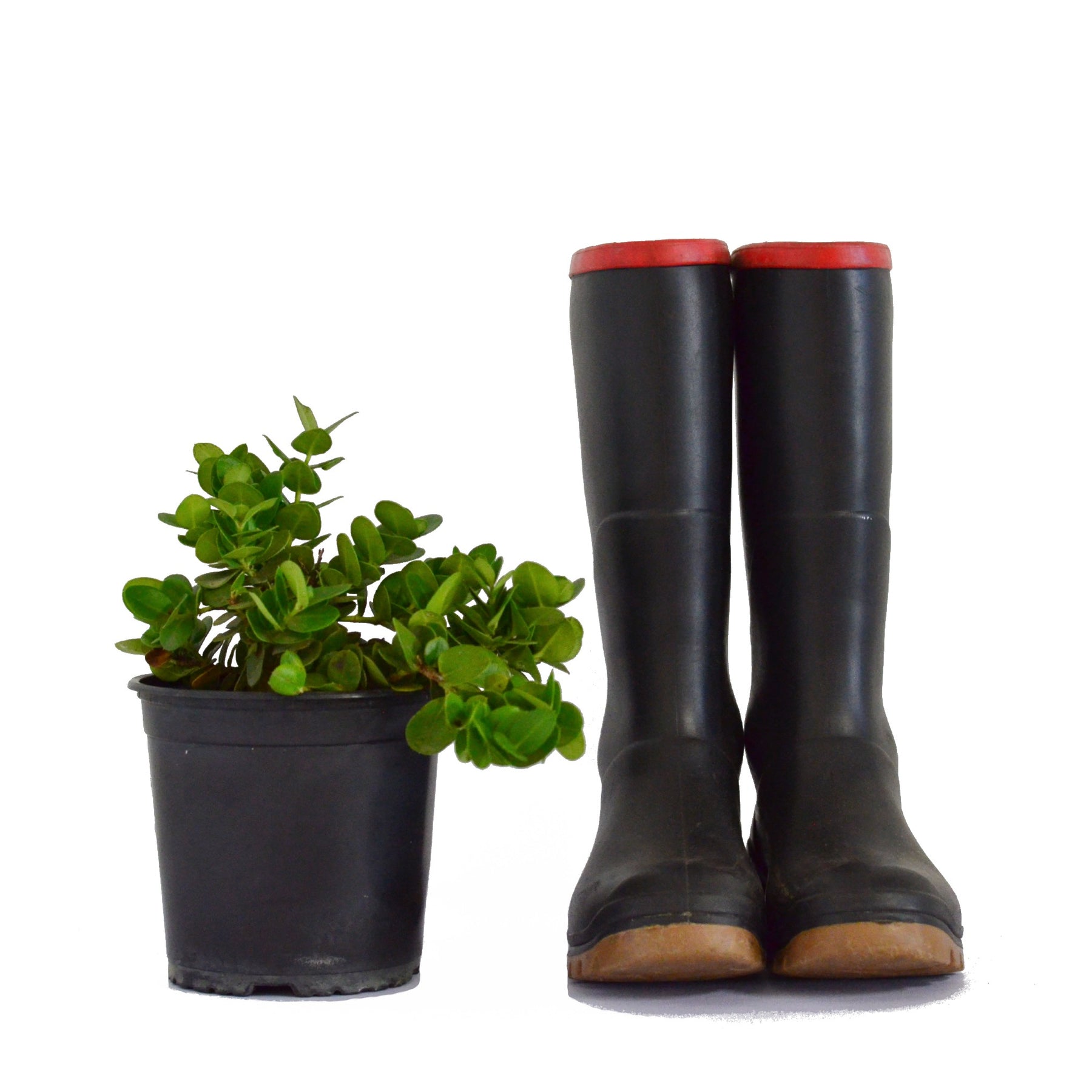
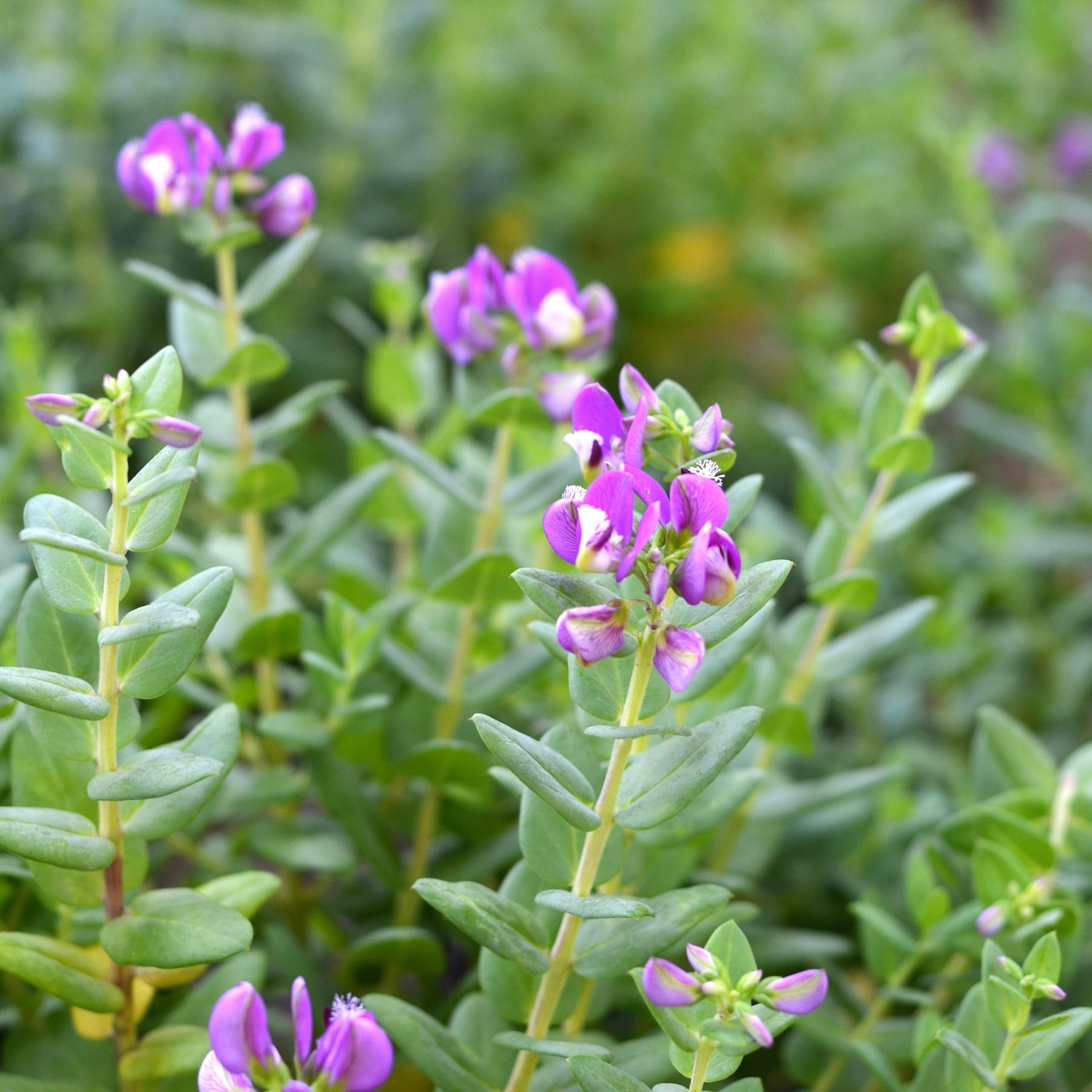
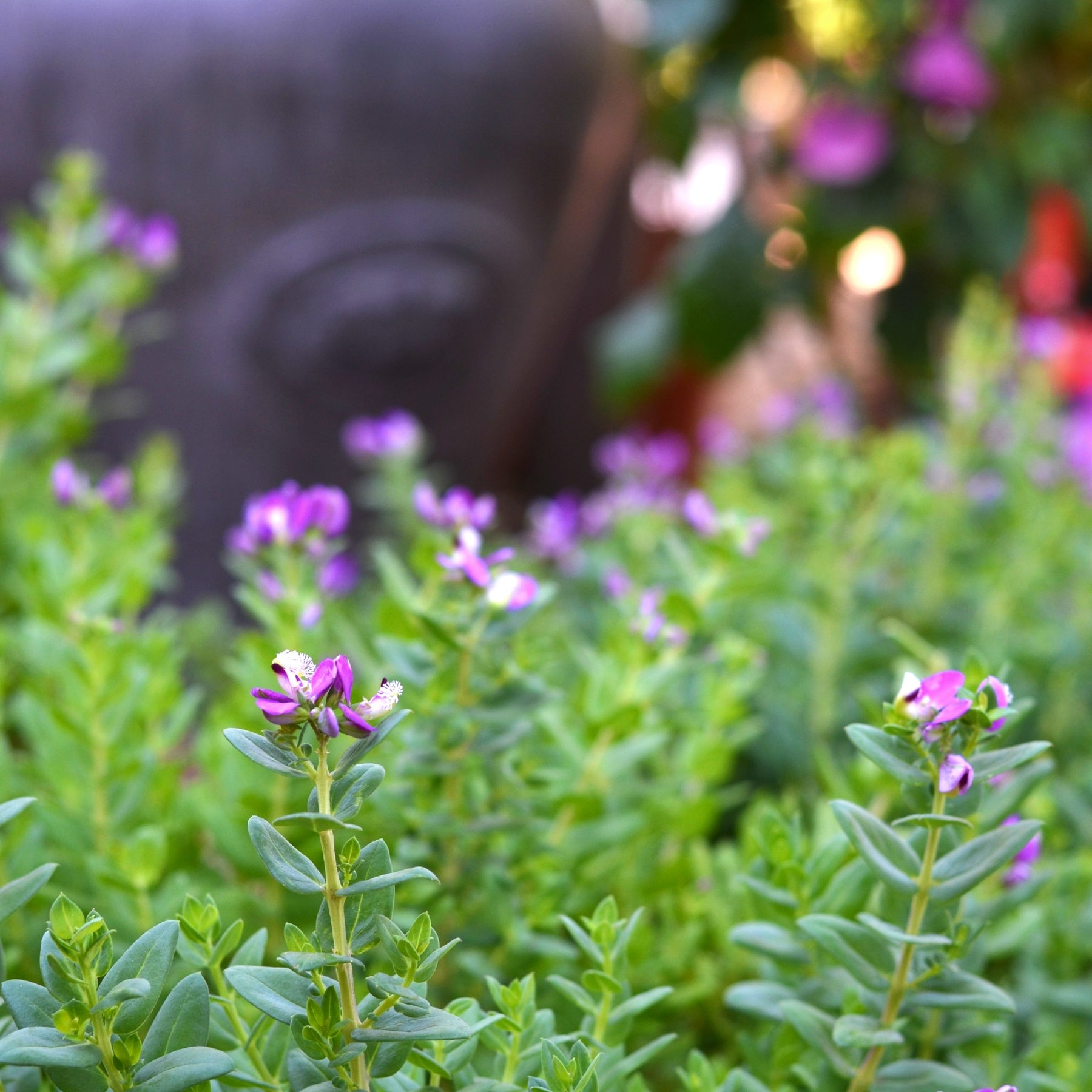
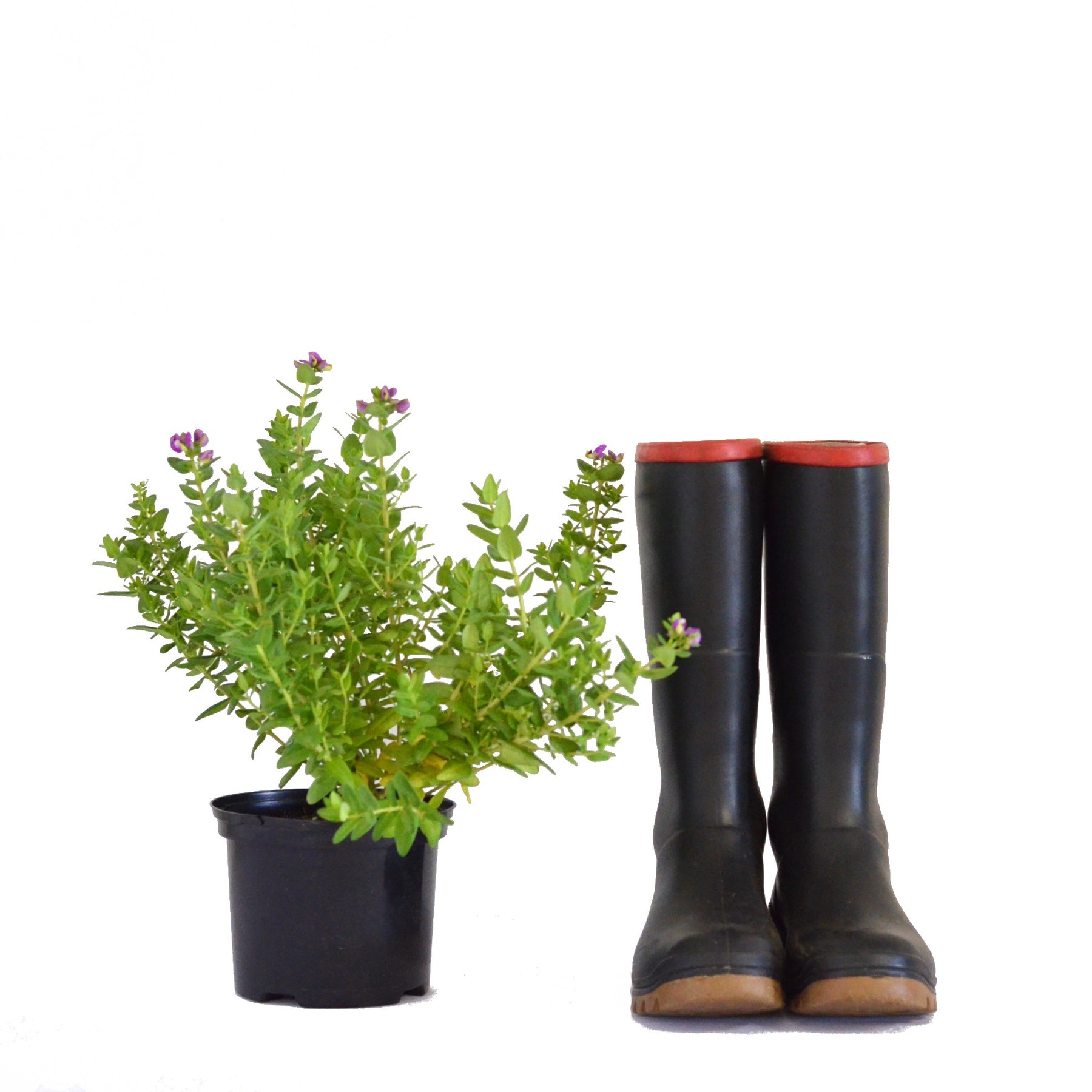
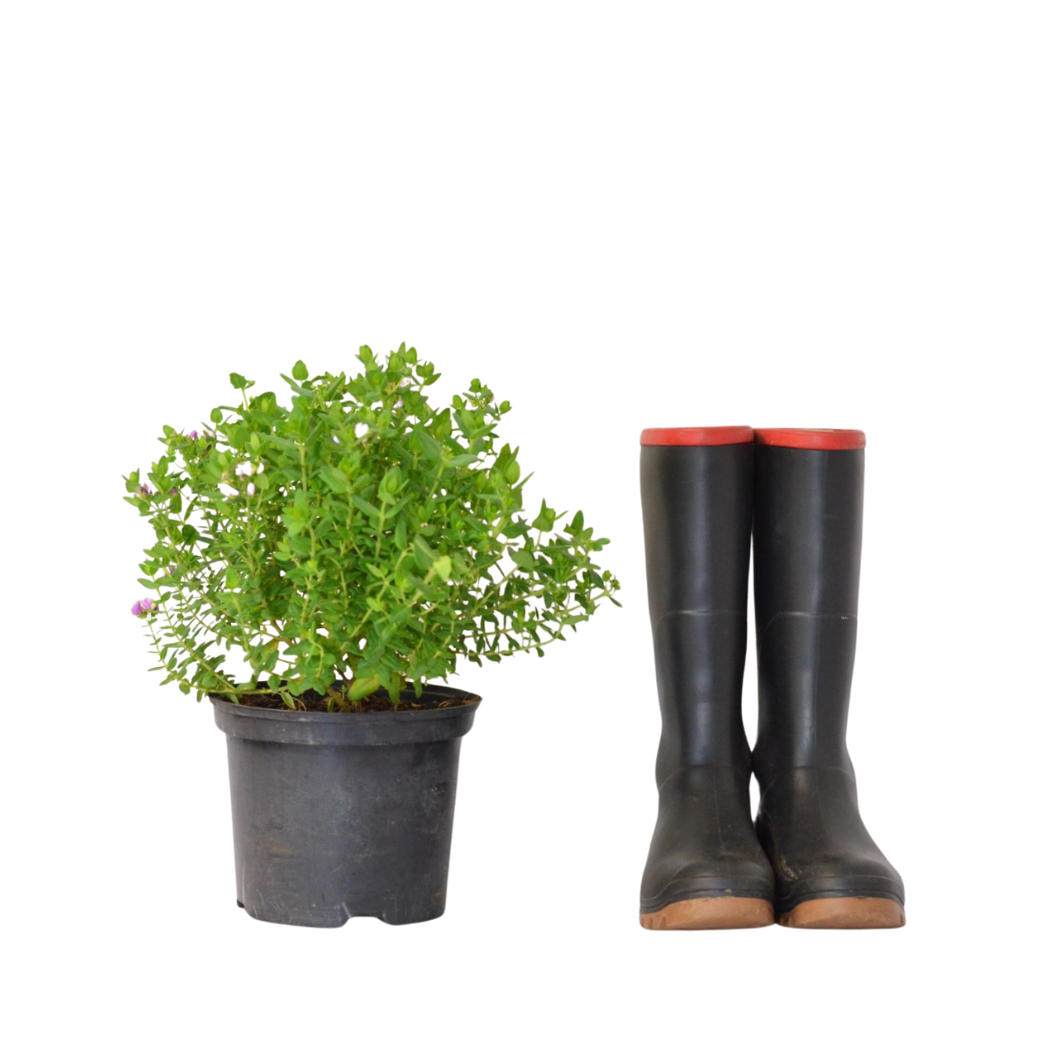
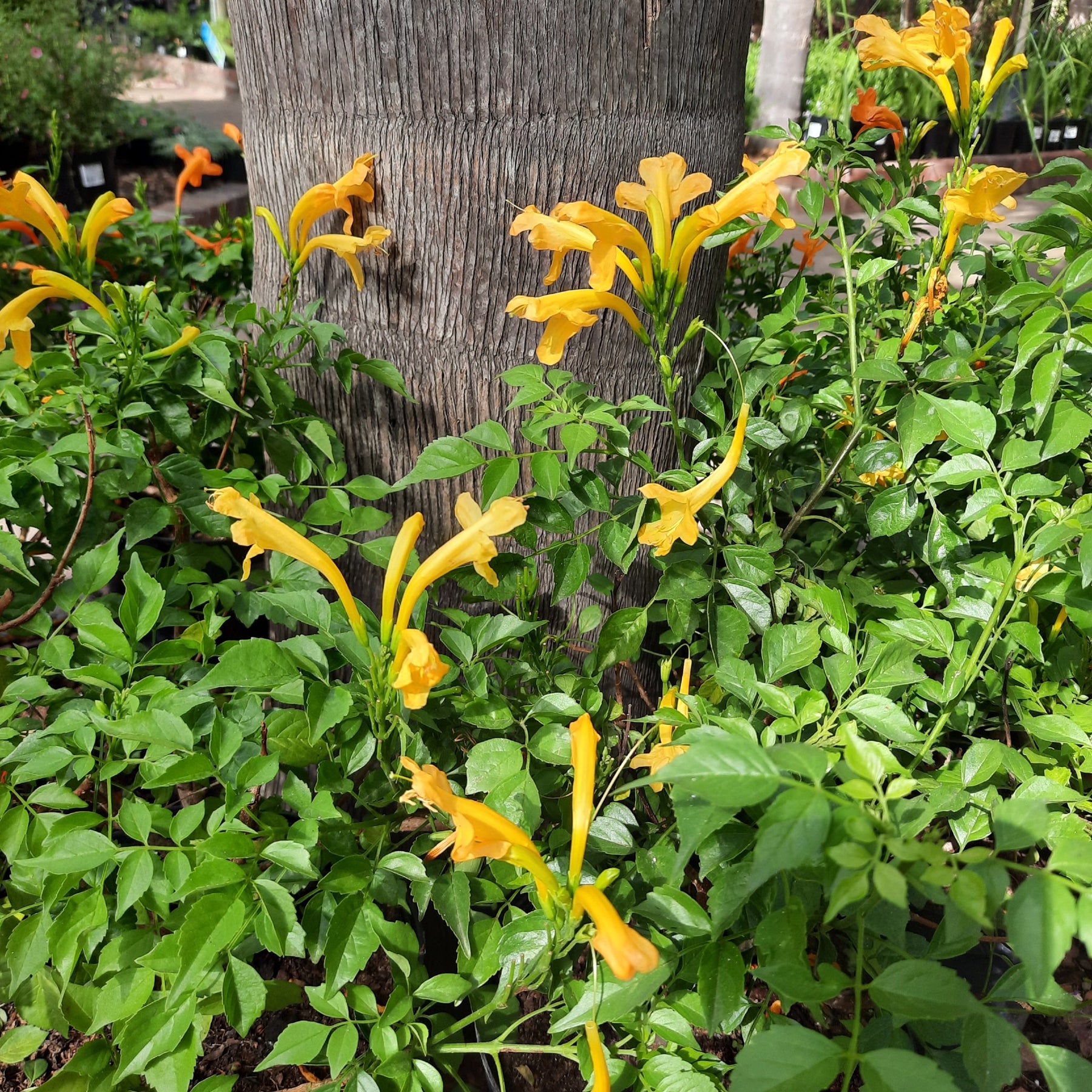
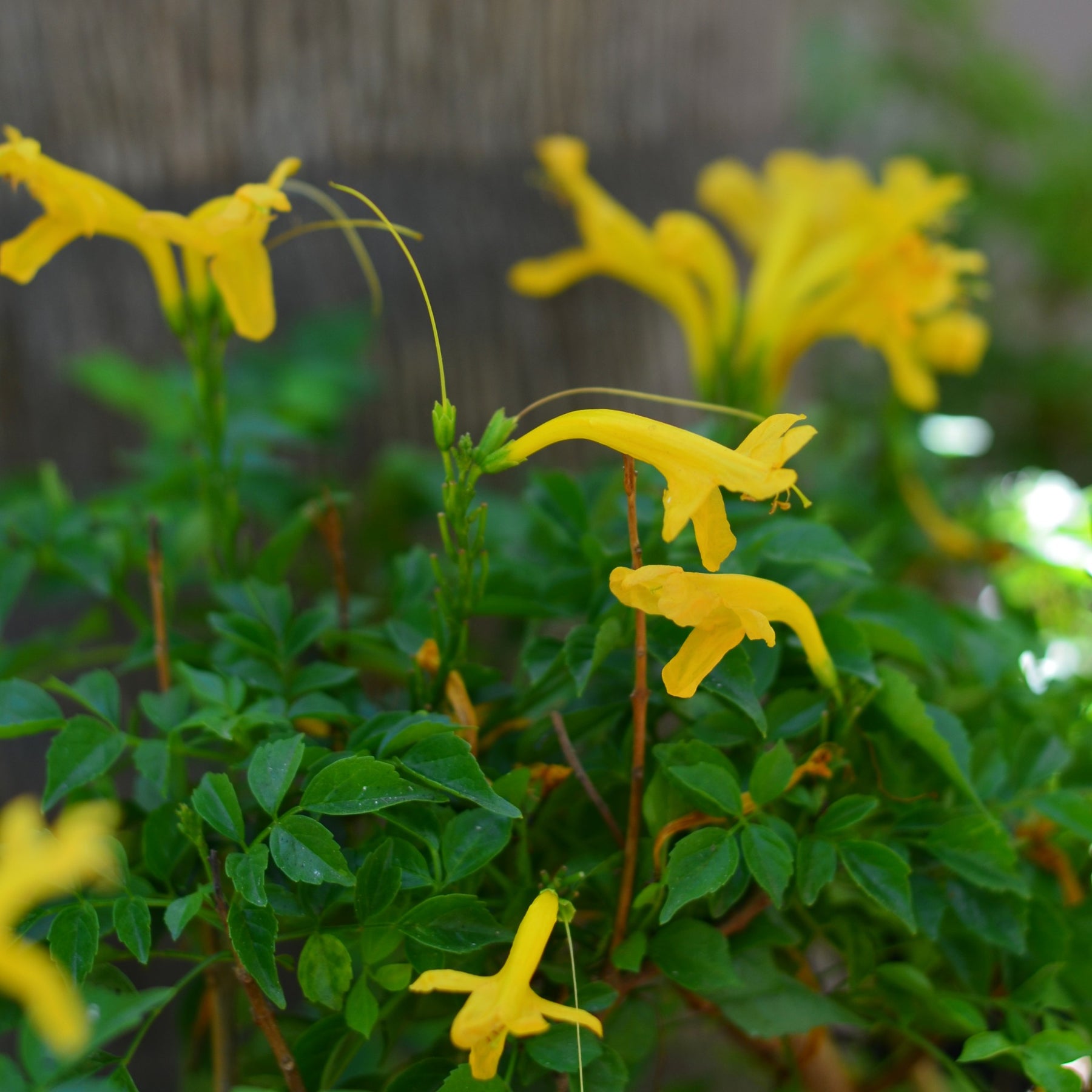
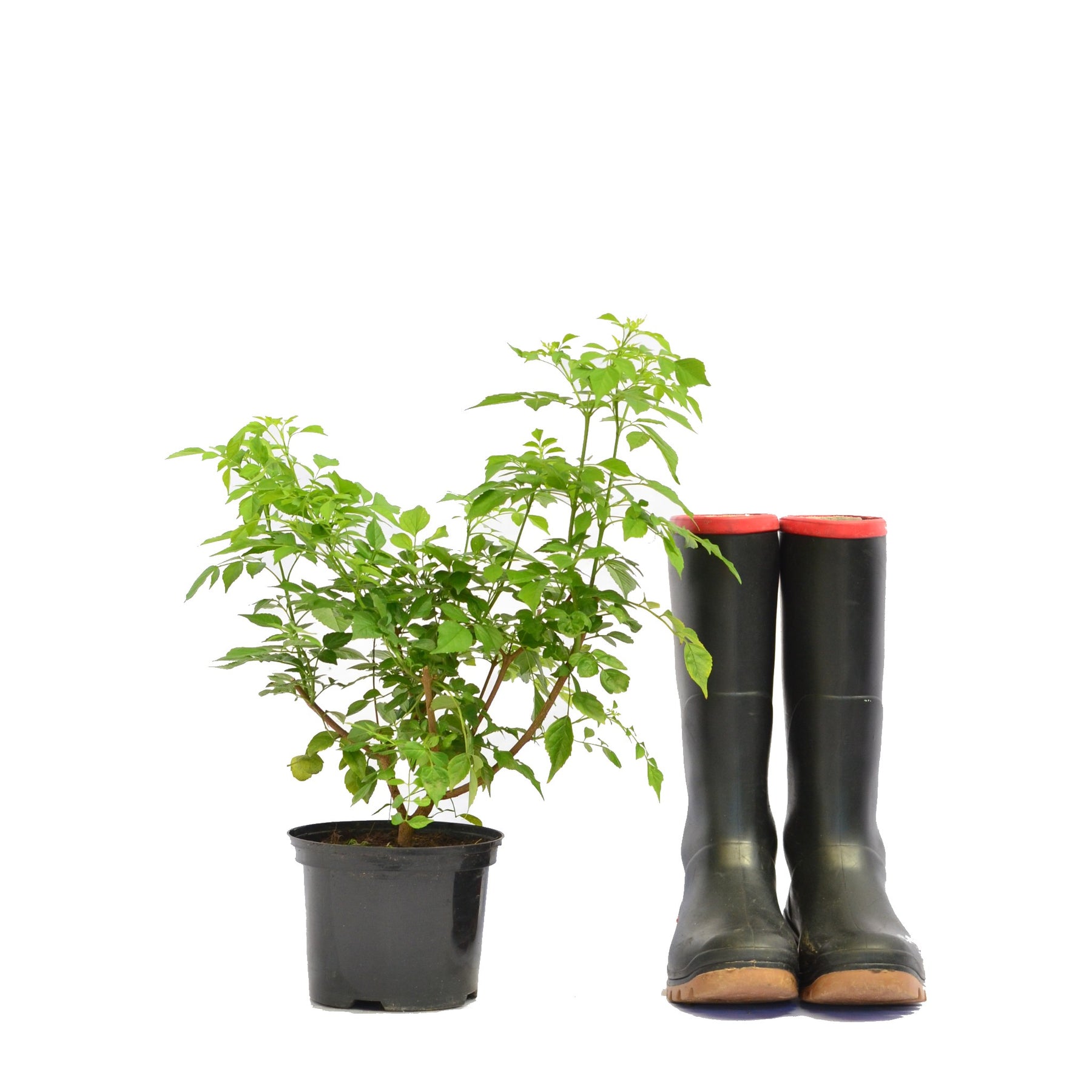
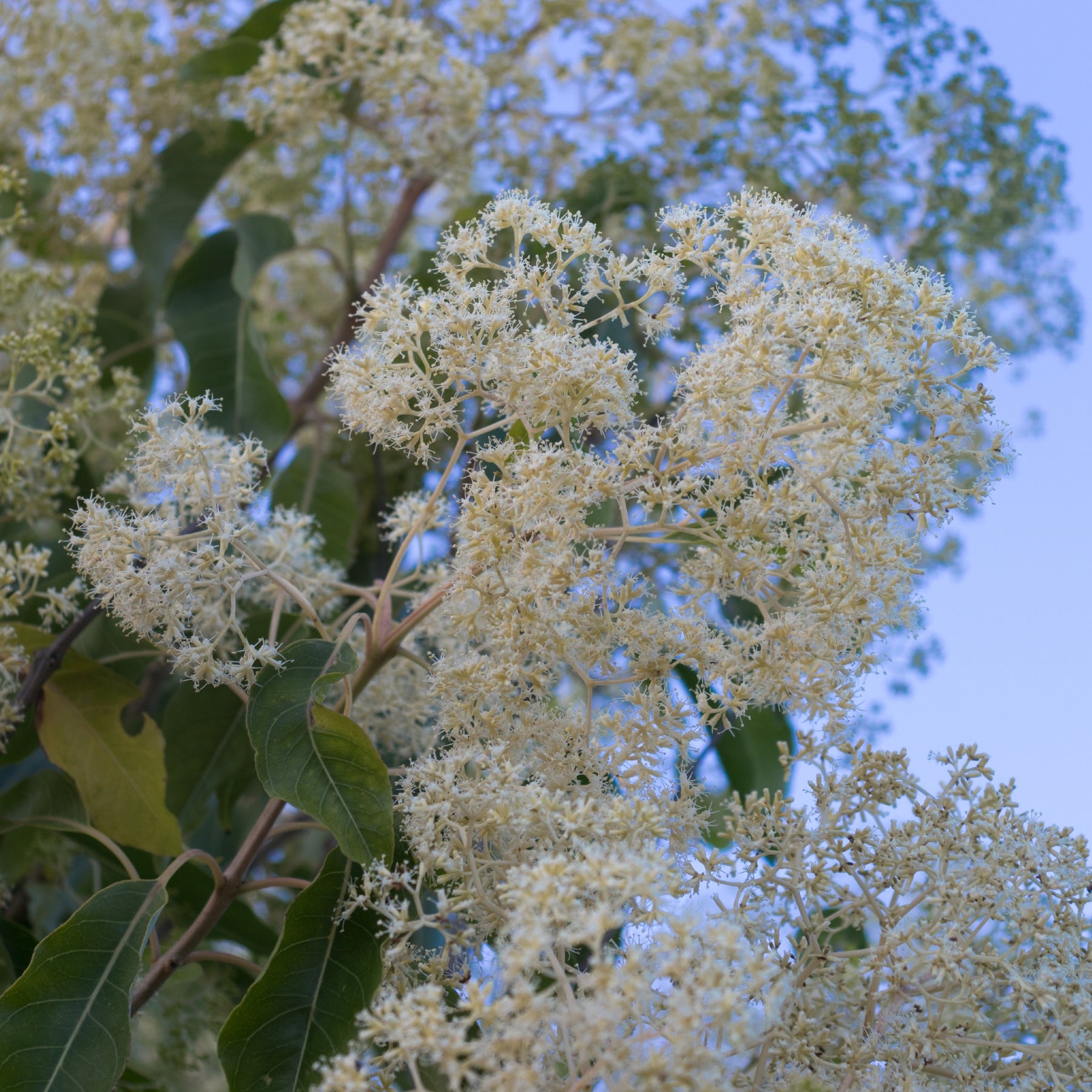
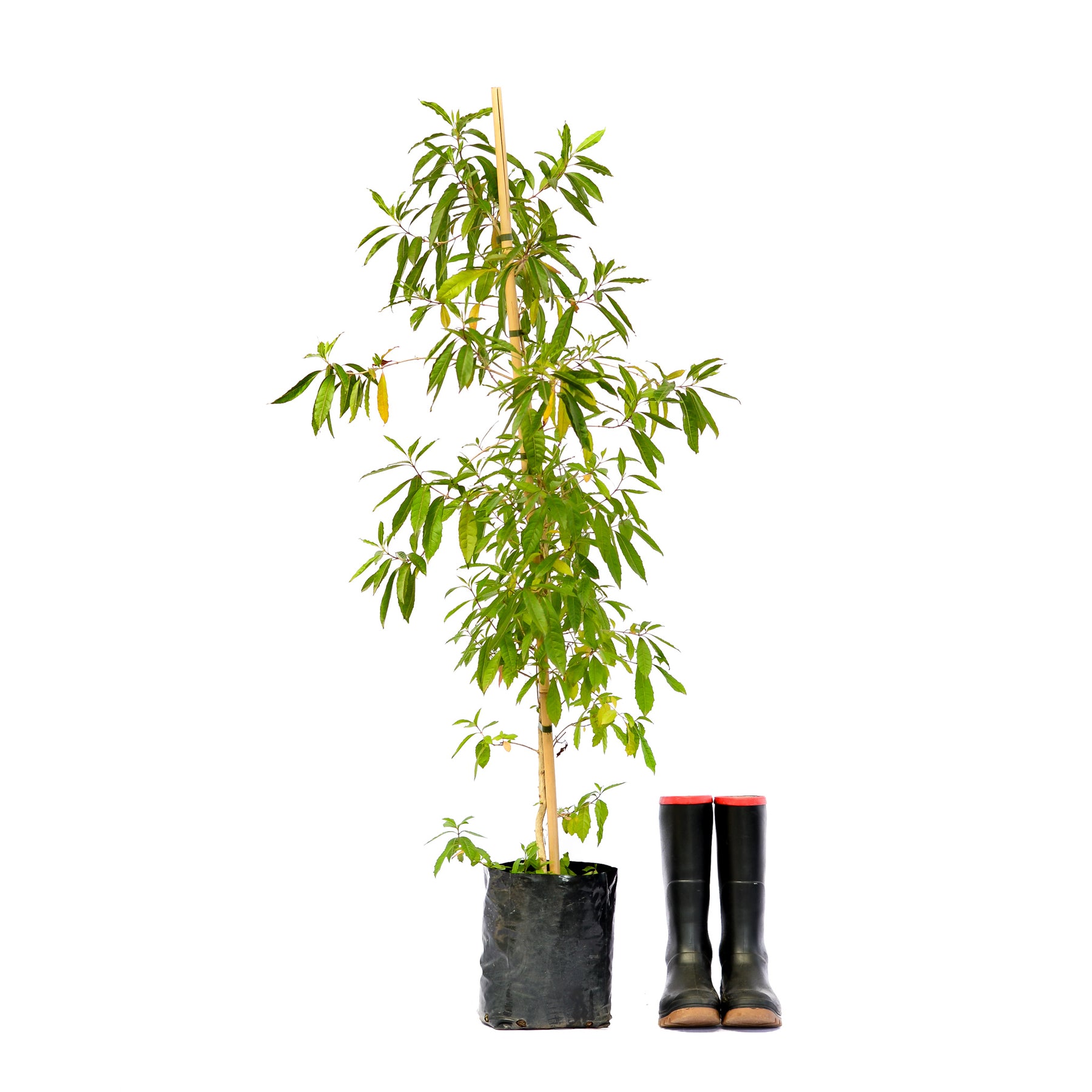
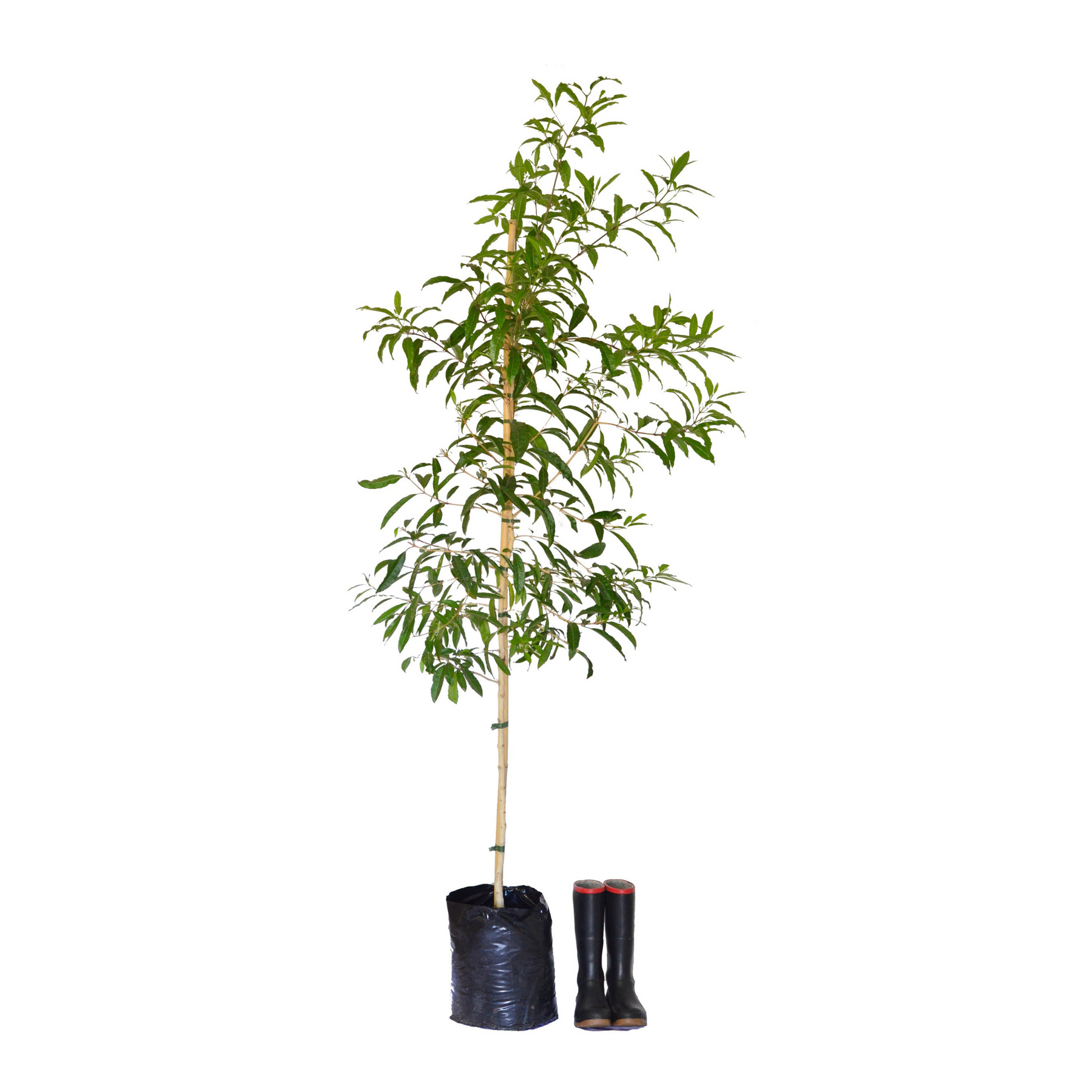
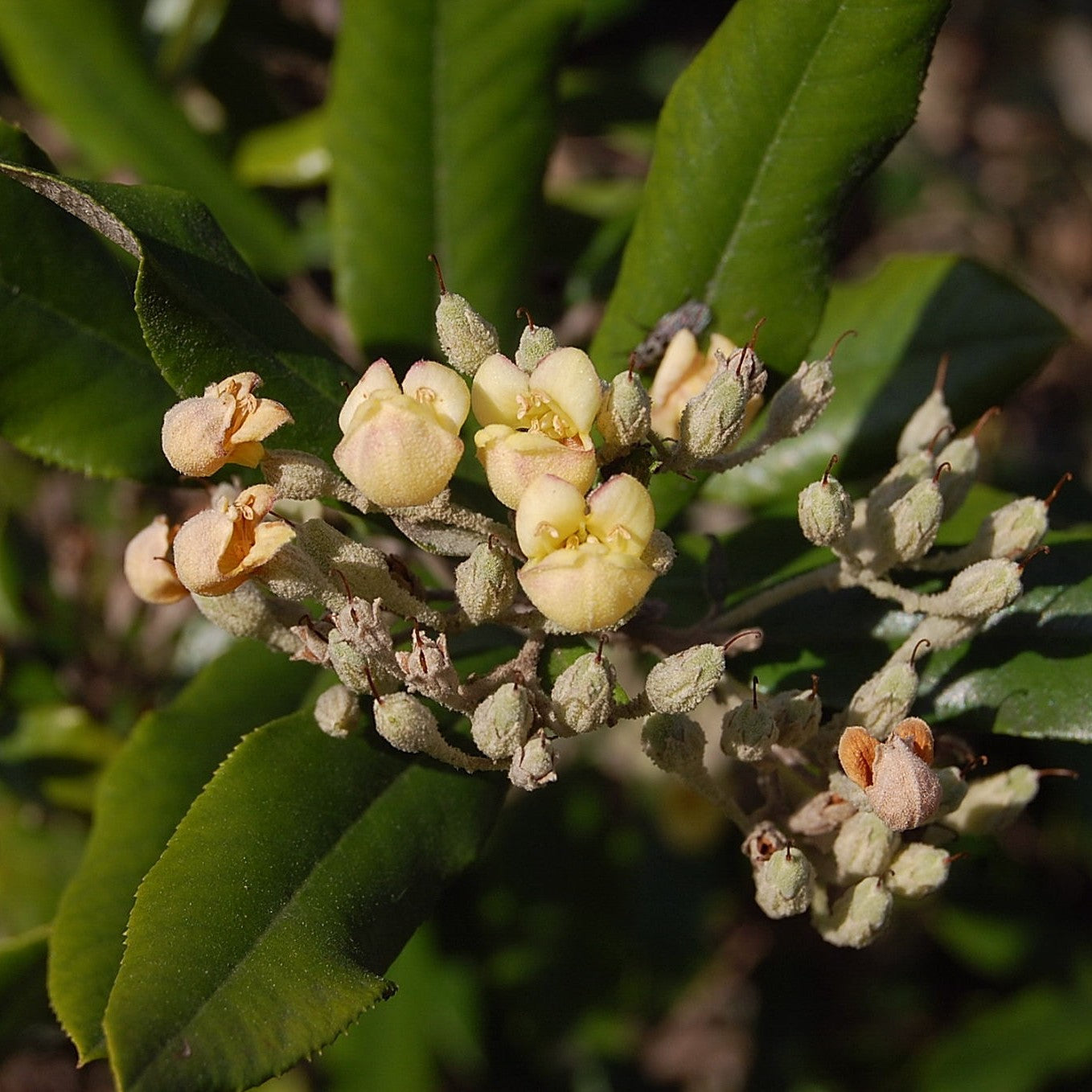
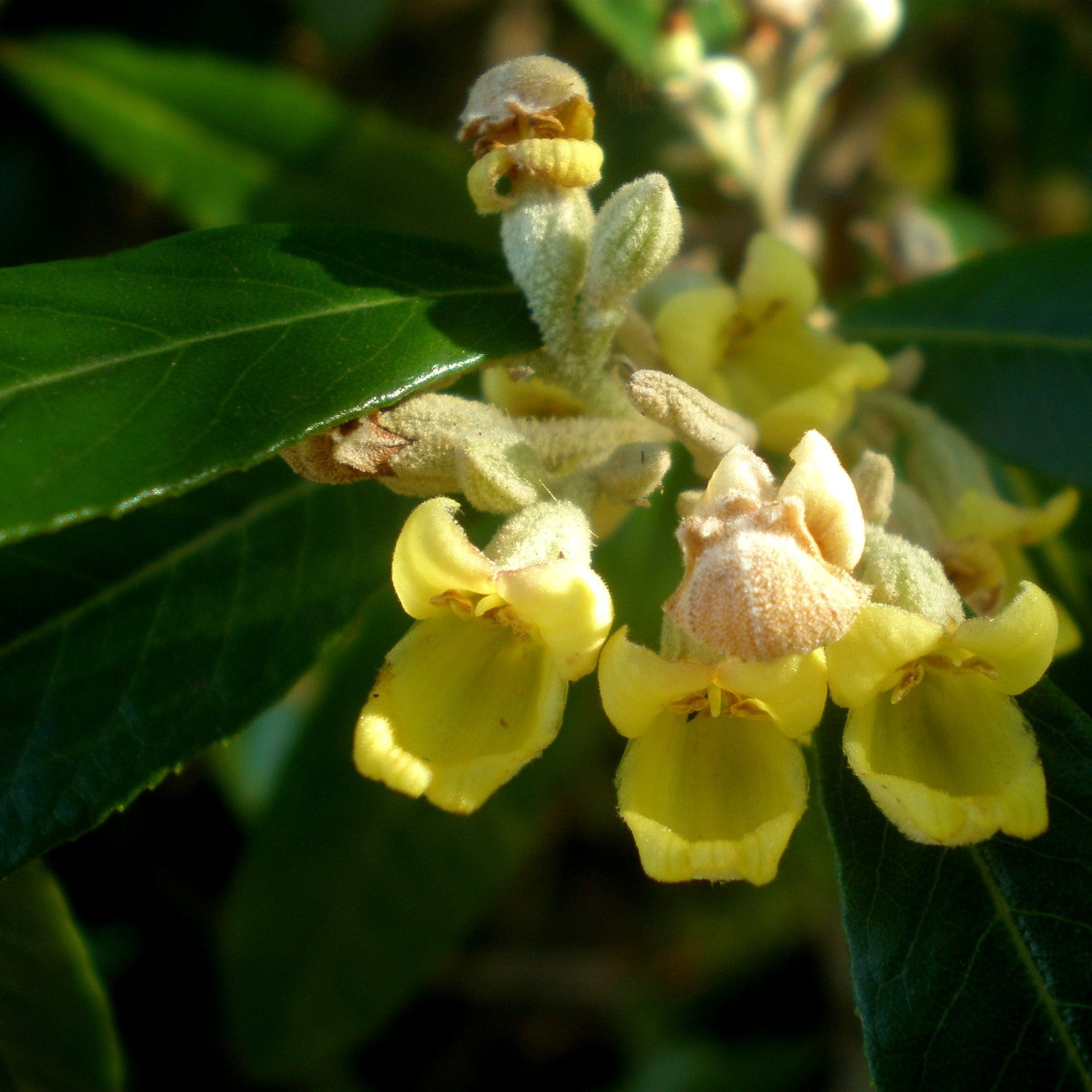
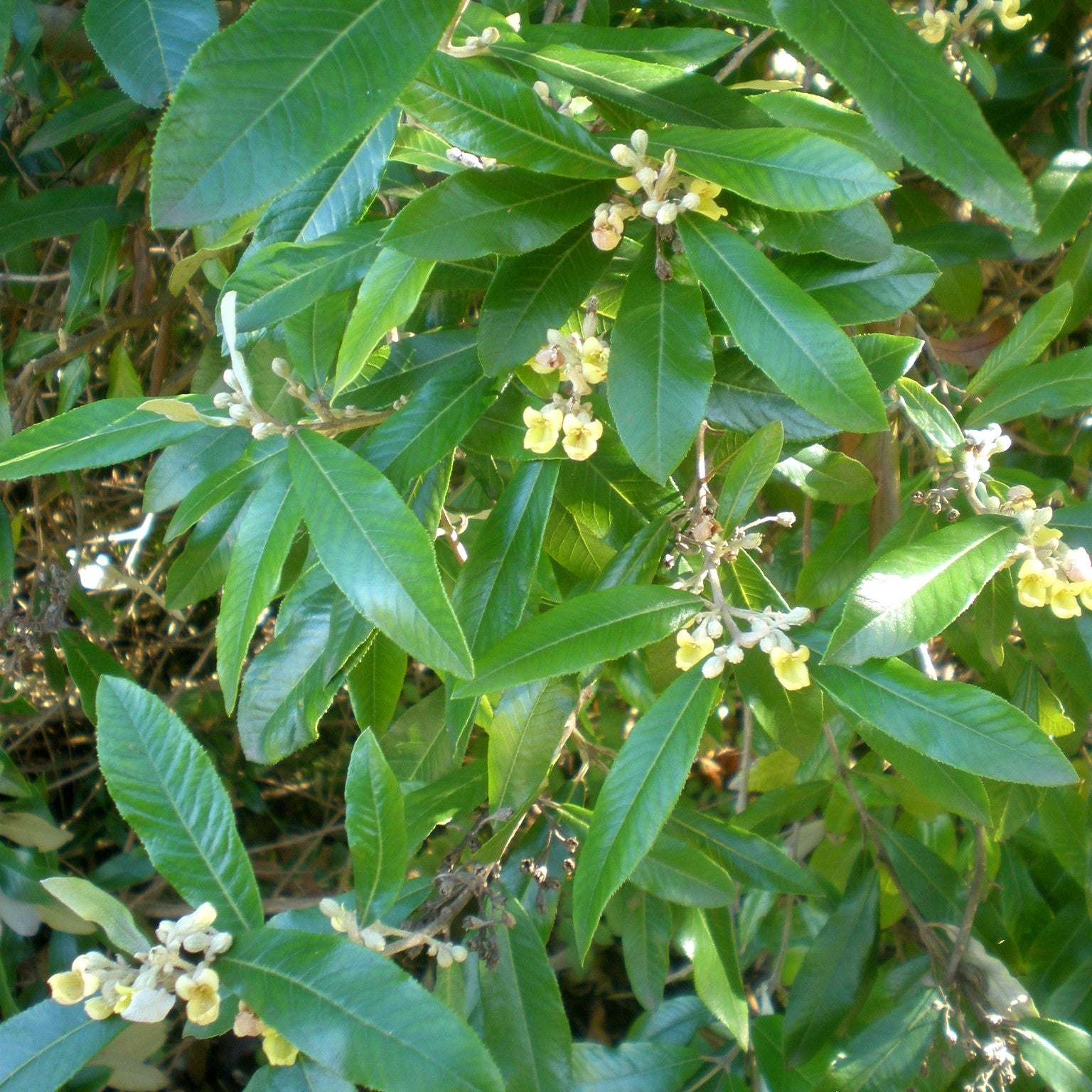
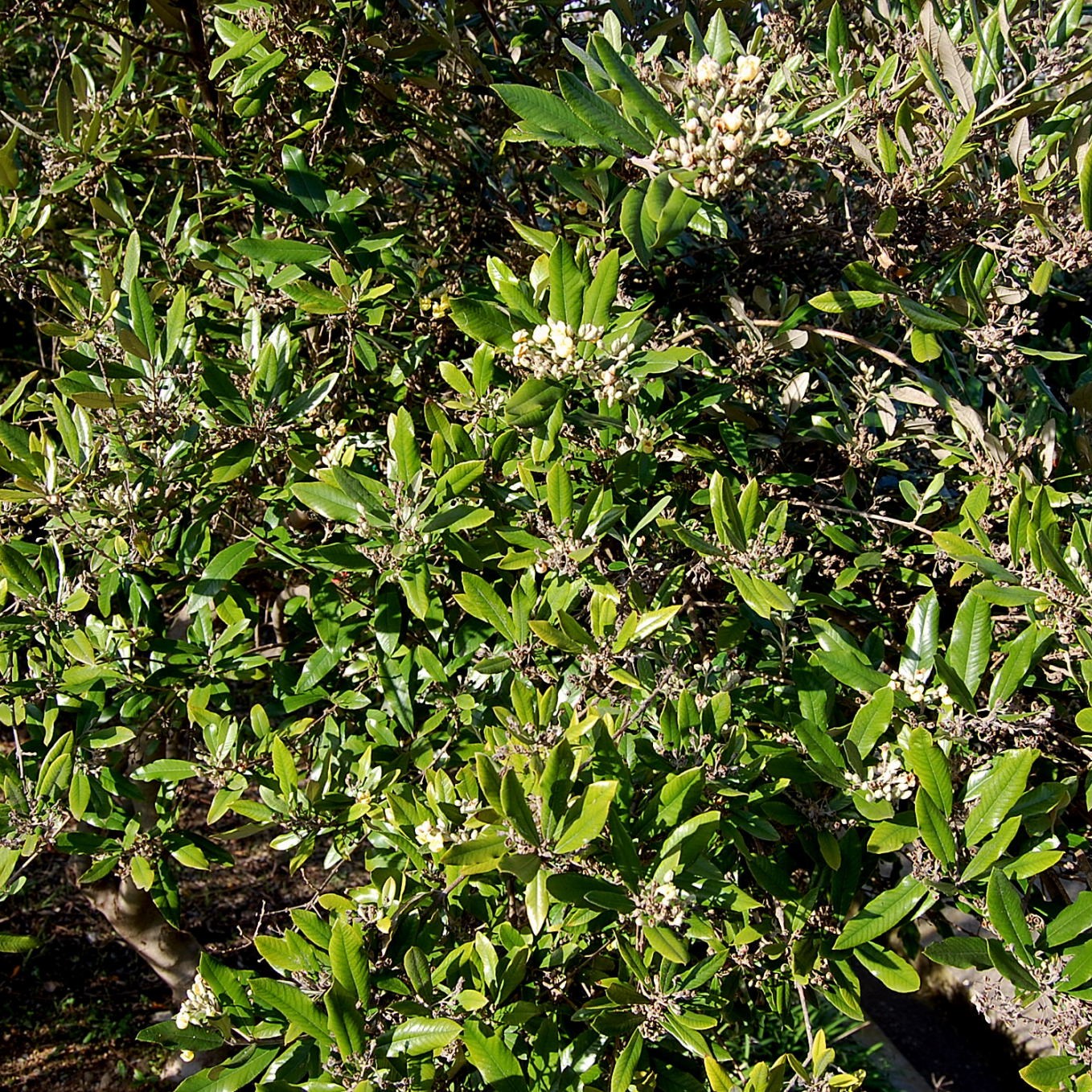
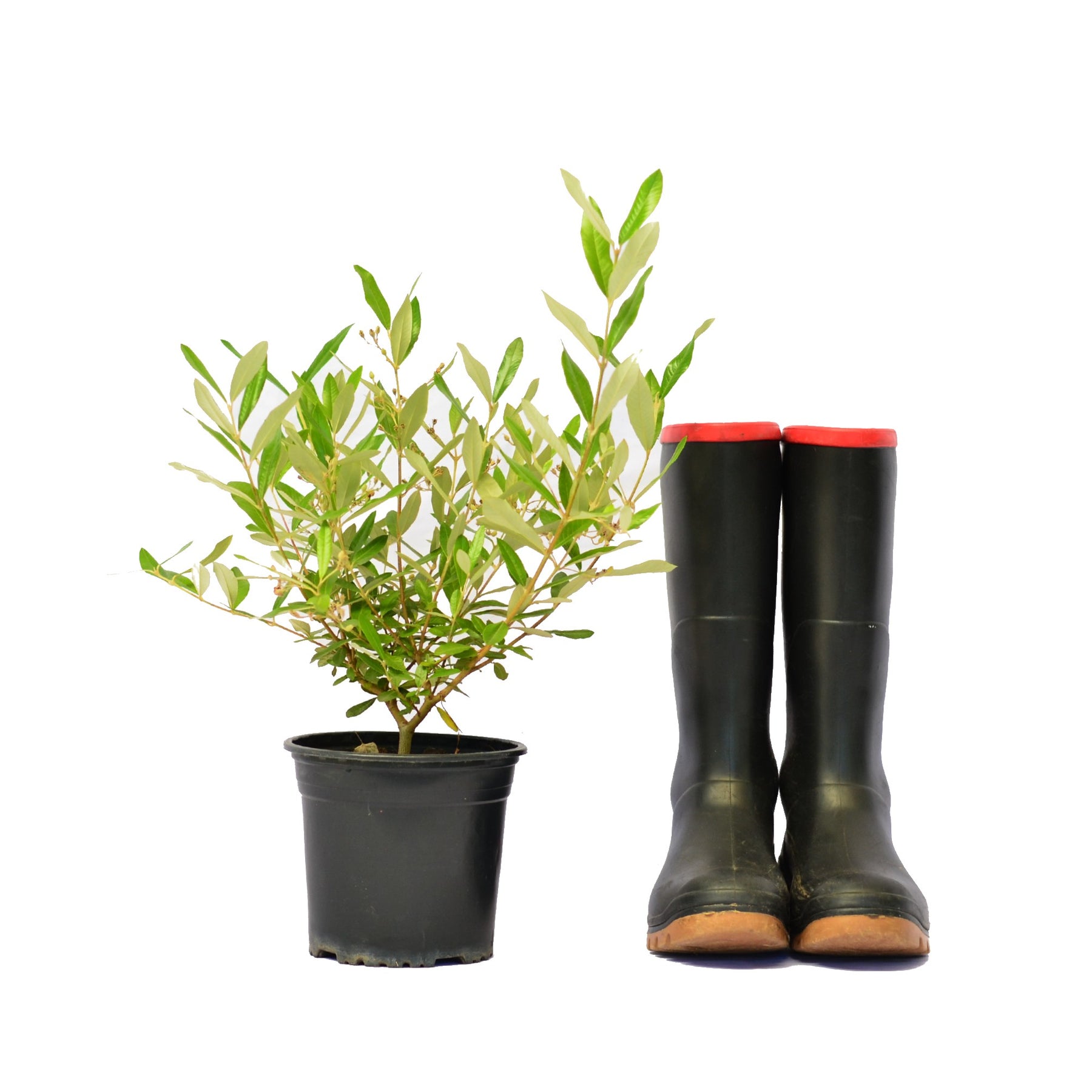
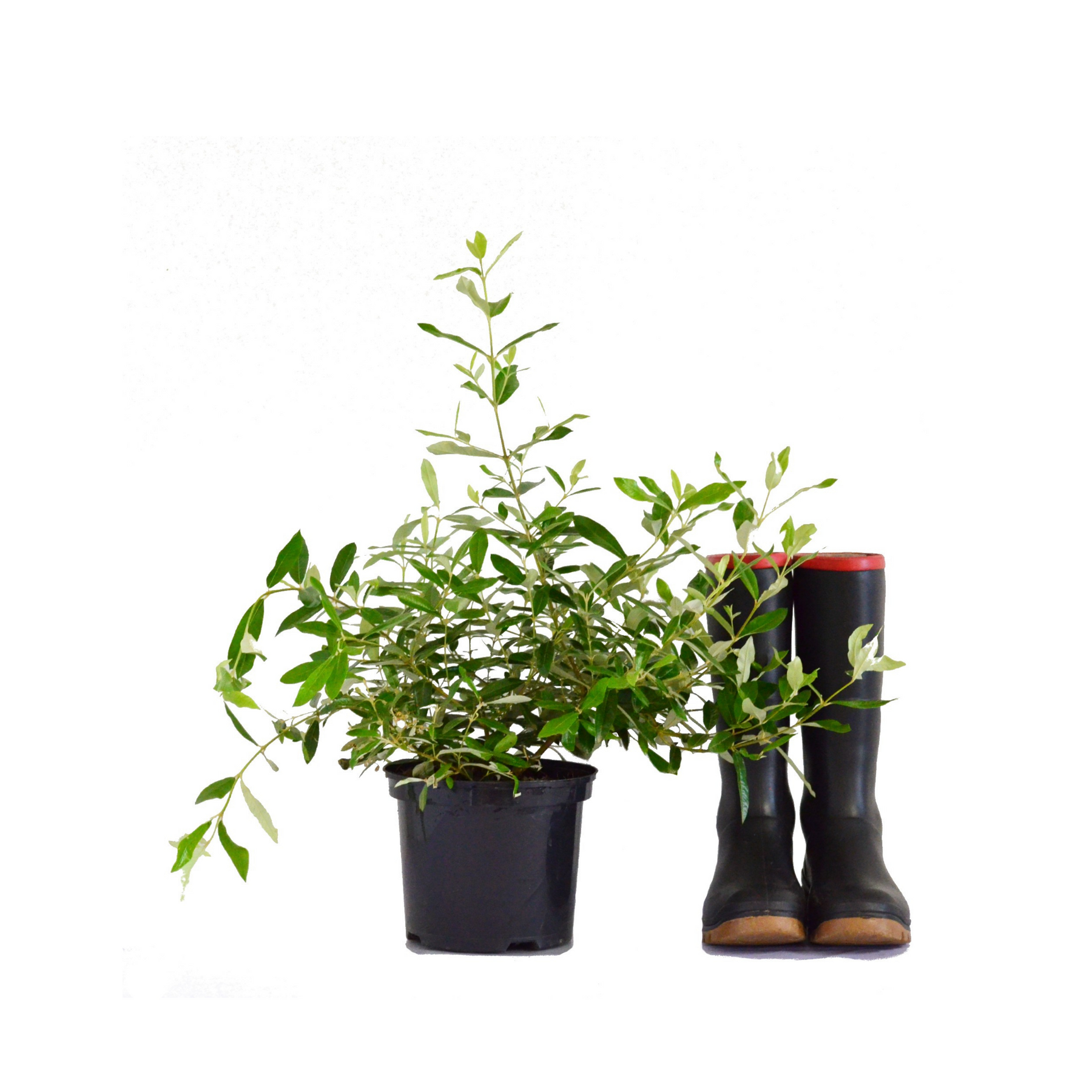
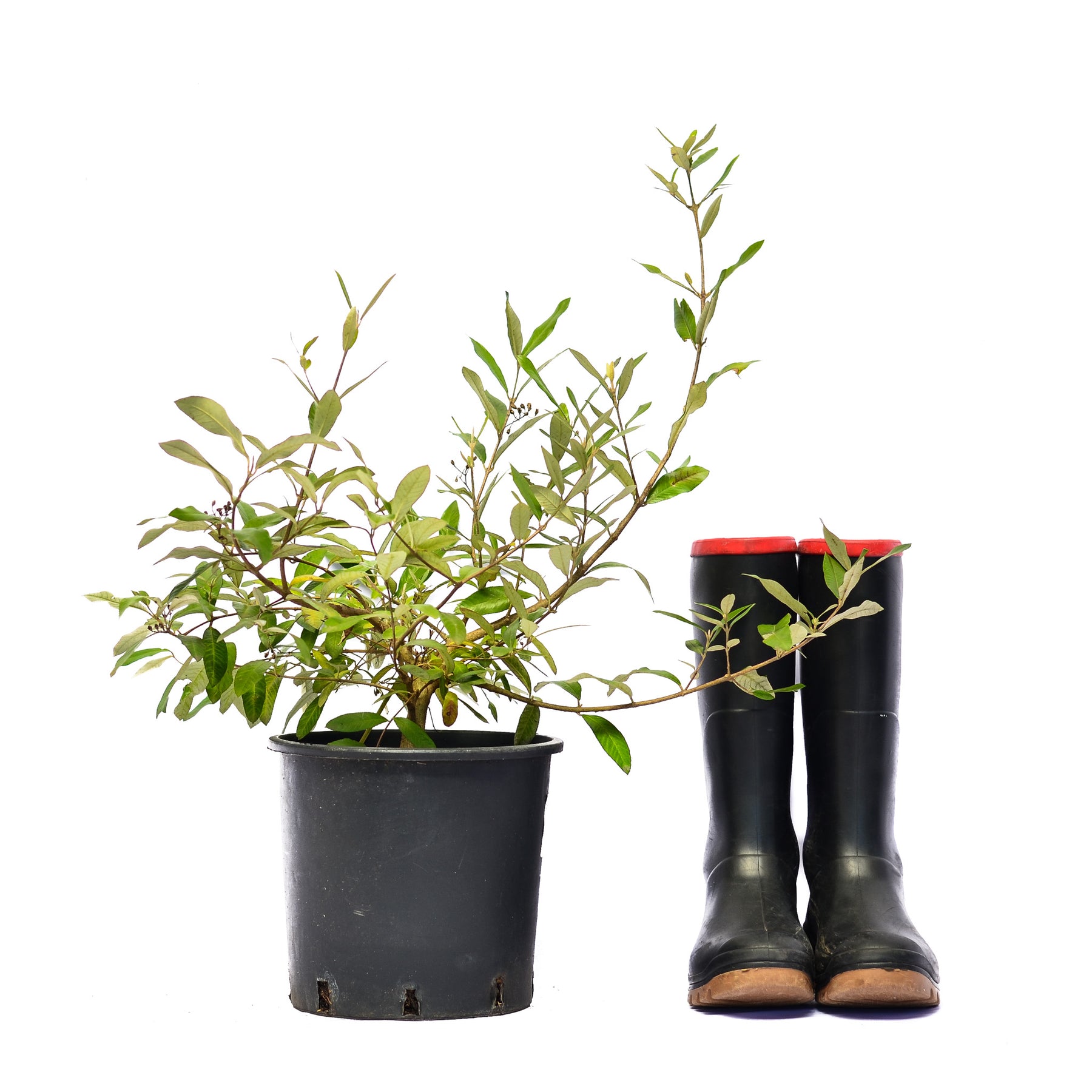
The Dune Crowberry is a tough yet beautiful indigenous shrub, perfectly adapted to South Africa’s coastal landscapes. With its dense, glossy green foliage and rounded form, it provides year‑round greenery and structure while thriving in sandy soils, salty winds, and harsh coastal conditions. In spring, it produces tiny clusters of creamy flowers, followed by small, berry‑like fruits that attract birds and wildlife, making it both ornamental and ecologically valuable. In Cape Town’s climate, Searsia crenata is a champion of water‑wise gardening, tolerating drought once established and requiring minimal care. It is ideal for screening, hedging, and stabilising dunes, while also adding ornamental value to indigenous gardens.
Why You’ll Love It
- Indigenous, water‑wise shrub perfect for Cape gardens.
- Dense evergreen foliage for screening and hedging.
- Thrives in sandy soils, wind, and salt spray.
- Provides food and shelter for birds and wildlife.
- Adds resilience and structure to coastal gardens.
Plant & Care
Plant in sandy, well‑drained soil in full sun. Water moderately during establishment, then reduce as the plant becomes drought‑tolerant. Prune lightly to shape hedges or screens. Ideal for coastal gardens, wildlife‑friendly landscapes, and stabilising dunes.
Did You Know?
The Dune Crowberry is more than just a hardy shrub. It's a guardian of the coastline. For generations, it has been used to stabilise shifting sands, protecting homes and farmlands from erosion. Its berries, though small, are relished by birds, making it a keystone species in coastal ecosystems. Planting Searsia crenata means you’re not only greening your garden, but also preserving South Africa’s natural heritage and supporting biodiversity.
| Botanical Name |
Searsia (Rhus) Crenata Alex |
|
Growth Expectancy
|
2-4m H x 2-3m W
|
|
Position
|
Sun to Semi-Shade
|
| Water Smart |
Semi Water Smart |
| Indigenous |
Yes |